

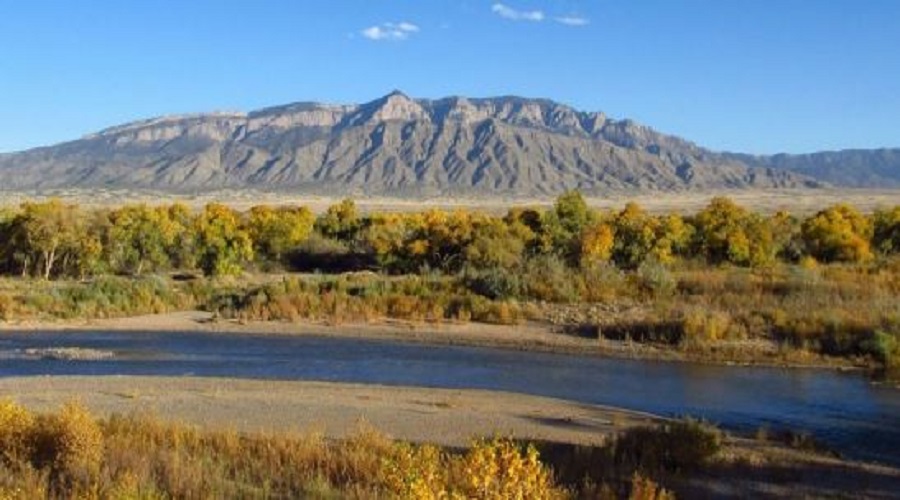
A Vancouver-based company’s uranium drill plan in the Chama Basin has unleashed a fierce debate over energy security, environmental legacy, and the future of the basin, where the headwaters of the Rio Chama nourish one of the Southwest’s most vital river systems.
Gamma Resources Ltd. has filed a notice of intent with the U.S. Forest Service to conduct exploratory uranium drilling on about 900 to 4,500 acres of claims within the Carson National Forest. The area is approximately two miles south of the small Rio Arriba County community and about 20 miles north of Ghost Ranch, the home of Georgia O’Keeffe.
The Mesa Arc Project plans as many as 12 boreholes, each up to 500 feet deep, along a four-mile stretch. According to investors, the site has as much as three million pounds of uranium. If viable, the project would mark the first new uranium operation in decades on Carson National Forest land.
Swift, broad opposition against uranium drill plan
The proposal comes amid a resurgence worldwide in uranium demand. This resurgence is partly fueled by interest in nuclear power as a carbon-free energy source. But in northern New Mexico — a state already strained by the environmental and health heritage of past uranium mining, particularly on Navajo Nation lands — the plan has provoked swift and massive opposition.
“We will not allow this proposal to move forward without a full environmental review,” U.S. Sen. Ben Ray Luján, a Democrat, said in a statement. Luján, along with Sens. Martin Heinrich and Rep. Teresa Leger Fernández, urged the Forest Service to require a sweeping Environmental Impact Statement rather than a quick review. They are also drafting legislation to permanently withdraw the Chama Watershed from new mineral development.
Local leaders have joined the skirmish. Rio Arriba County commissioners unanimously passed a resolution opposing the planned project. The Upper Chama Soil and Water Conservation District and groups like New Mexico Wild have sprung into action. They cite risks to water, wildlife and traditional acequia irrigation systems.
Ghost Ranch officials have voiced alarm over possible risks to the landscape’s pristine air, land and cultural heritage. “We share the concerns of Northern New Mexico communities regarding uranium drilling here, and strongly oppose any activity that would jeopardize the pristine air, land, water, and wildlife that make this area so special,” said David Evans, Ghost Ranch’s chief executive officer.
What’s at stake
The Rio Chama is a major tributary of the Rio Grande. It supplies water to communities, serves as a lifeline to farms, and provides recreation and biodiversity. Opponents said that even exploratory drilling — building new roads and pads that could disturb radioactive materials — may introduce contaminants into surface and water sources.
New Mexico has a historical burden from uranium extraction. It is home to more than 1,000 traditional mining and milling sites, many of which have been abandoned, with ongoing Site rehabilitation issues and community impacts. Cleaning up these abandoned uranium sites requires a significant investment over the next decades, according to the New Mexico Uranium Reclamation 2024 Strategic Plan.
Advertisement
Gamma Resources describes the project as responsible exploration, which could help the U.S. achieve energy independence. The energy company has emphasized its focus on the Mountain West and has conducted preparatory archaeological surveys.
The Forest Service is still conducting a review of the completeness of the company’s notice as of late spring this year. No drilling has started. But the level of the required environmental analysis remains a flashpoint.
Deeper tensions
Rep. Leger Fernández visited the site in May along with local leaders. The lawmaker feared the Forest Service would only conduct a typical exploratory permit review that requires no cultural, economic, or environmental analyses. “So the company is not forced to explain to the community what the impact would be if they move forward with the whole project,” she said. “Those few wells are not the problem. The problem would be the larger mining operation itself.”
The planned uranium drill has ignited controversy, reflecting deeper tensions over how to balance the nation’s demand for critical minerals and clean energy with the need to safeguard the environment and Indigenous communities. These stakes are immediate — and personal for residents near Canjilon and downstream along the Chama.