

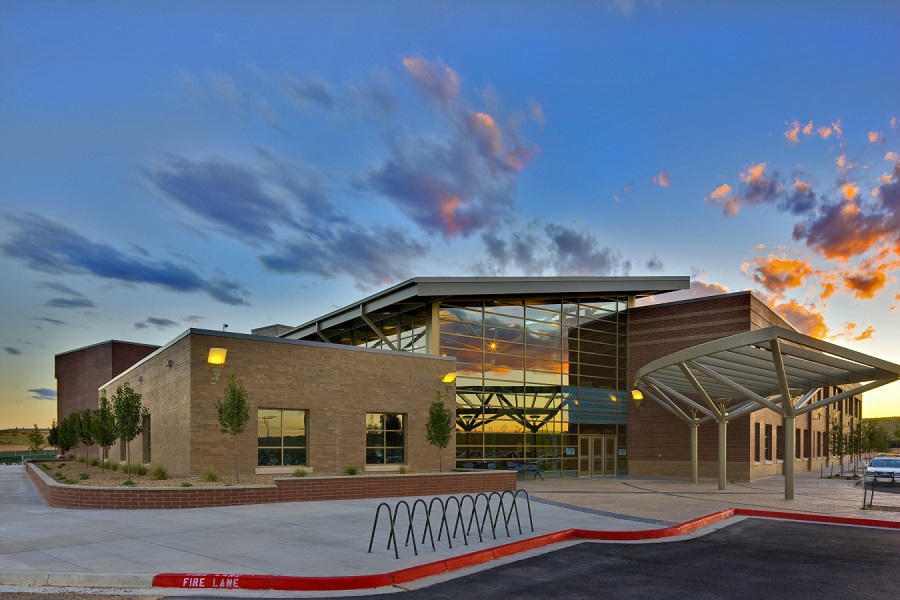
Central New Mexico Community College is tapping the energy beneath the earth to cut energy use and boost sustainability on its campuses — one geothermal loop at a time.
New Mexico’s largest community college has installed geothermal heat pump systems in three buildings across its Rio Rancho, Westside, and Main Campus in Albuquerque. The systems provide steady all-year-round comfort, keeping temperatures at 72 degrees even during large events at Smith Brasher Hall.
CNM uses the buildings as “living laboratories,” with instructional signage explaining geothermal technology, daylighting, water reuse, and recycling to students, faculty, and visitors. The college requires all facilities, new or renovated, to meet at least the standards of Leadership in Energy and Environmental Design (LEED) Silver Certification.
Rio Rancho was built in 2011. It earned LEED Gold and is one of New Mexico’s largest higher education buildings to achieve the distinction. CNM’s Westside Campus, completed in 2013, achieved LEED Silver. CNM redesigned Smith Brasher Hall in 2017 into an all‑electric LEED Gold facility.
Adopting geothermal technology has challenges. CNM grappled with the absence of local contractors to do the work and continues to train staff to manage building automation and HVAC controls. The college solved the gap by offering courses in geothermal system operation and maintenance.
Despite early hurdles, CNM officials say the investment will pay off. “We build our buildings to last 50 years,” said Marvin Martinez, Physical Plant Executive Director. “These geothermal heat pump systems will operate throughout the buildings’ lifetimes, which will make a huge difference for the college.”