


Child Care in New Mexico Now Costs More Than College

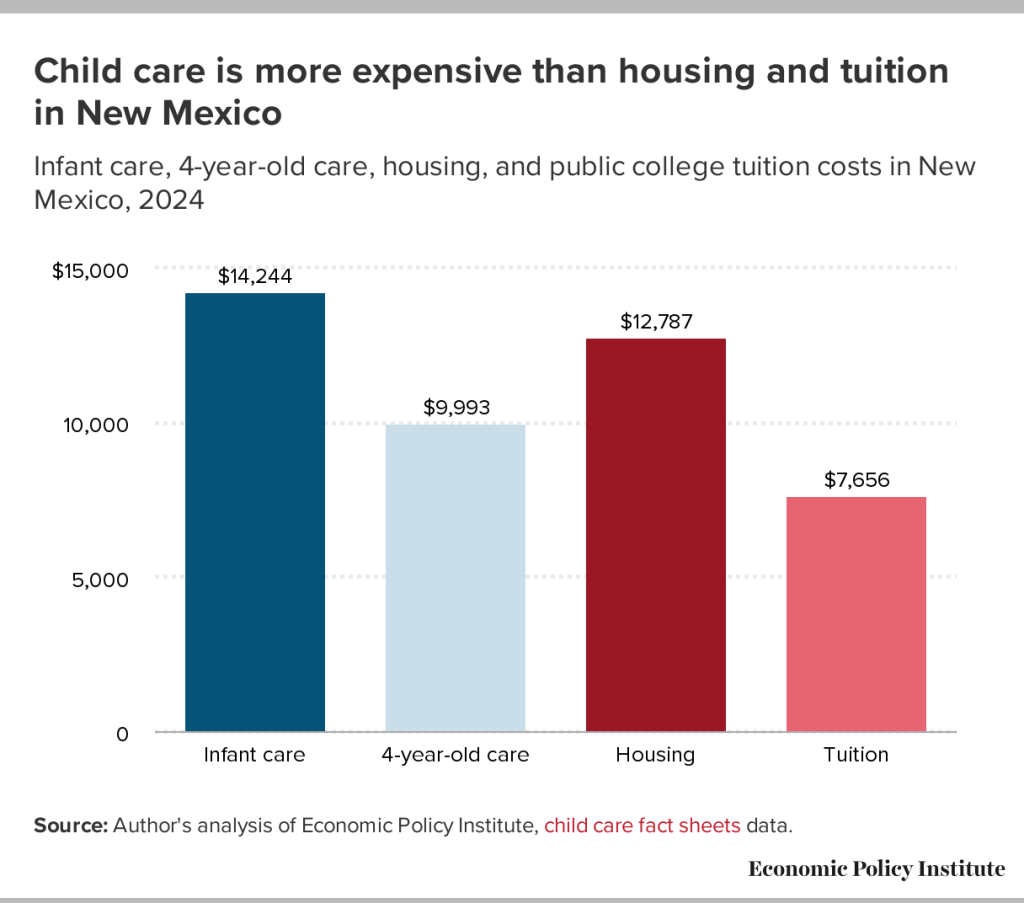
Parents in New Mexico are paying more to keep their infant in child care for a year than it costs to send a student to a four-year public university in the state. At $14,000 annually, infant care now runs 86 percent higher than in-state college tuition. For minimum-wage workers, that means spending nearly two-thirds of their entire income on child care for one child. The financial burden is forcing families into difficult choices and leaving many young children without access to early learning experiences that research shows are critical for long-term success. While the state has expanded subsidies and eliminated co-payments for many families, gaps remain for parents working non-traditional hours, those in rural areas, and families with special needs children.

Parents in New Mexico face a stark financial reality: keeping their infant in child care for a year costs more than sending a college student to a four-year public university in the state.

According to the Economic Policy Institute, infant care in New Mexico averages $14,000 annually, about $1,167 each month. That is 86 percent higher than what families pay for in-state college tuition. For parents earning minimum wage, the math gets even harder. They would need to devote 64 percent of their entire yearly income just to cover child care for one baby.

The federal government considers child care affordable when it accounts for no more than 7 percent of household income. By that measure, most New Mexico families are paying far beyond what experts say is sustainable.

The cost drops somewhat as children age. Care for a four-year-old runs about $9,993 per year, still a significant chunk of most family budgets. But for parents with infants and toddlers, the financial squeeze can force impossible choices about whether to stay in the workforce at all.

Early Learning Gets Priced Out

The consequences reach beyond family bank accounts. When quality early childhood education becomes unaffordable, children miss out on critical learning experiences before kindergarten. Research consistently shows that early learning gaps tend to widen rather than close over time.

Children who arrive at kindergarten without exposure to structured learning environments often lack foundational skills in literacy, numeracy, and social interaction. Schools then face increased pressure to provide remedial support and special education services, straining already stretched resources.

The economic ripple effects hit families hard as well. Many parents, particularly mothers, scale back their work hours or leave jobs entirely when child care costs become untenable. That loss of income can create instability that affects children’s educational trajectories for years.
New Mexico Tries to Respond

State officials have taken several steps to address the crisis. New Mexico expanded child care subsidies to families earning up to 400 percent of the federal poverty level and eliminated co-payments that once created barriers for low and middle-income households. The state also raised wages for early childhood educators and secured long-term funding through a constitutional amendment.

These changes have made a real difference. More families can now access child care at no cost, removing a major obstacle to both parental employment and children’s early learning.

But gaps remain. The University of New Mexico’s Cradle to Career Policy Institute found that families still struggle to find care that matches their specific circumstances. Parents working night shifts, weekends, or irregular hours often cannot find programs that align with their schedules. Families in rural areas face limited options. Parents of children with special needs report difficulty locating appropriate care.

“More families than ever before are accessing child care and getting it for free, which is making a huge difference for them, but there’s more work to do to ensure that child care is available during the hours families need,” said Hailey Heinz, deputy director of the institute.

Transportation poses another challenge. Even when subsidized care exists, families without reliable vehicles or access to public transit may find it out of reach.

What Comes Next

Policy experts say sustained progress will require more than just subsidies. States need to calculate the true cost of providing quality care, develop compensation systems that give early childhood educators pay comparable to K-12 teachers, and create incentives for new child care providers to open in underserved areas.

The question is whether New Mexico’s current investments can evolve to meet these broader needs. Demographic shifts, economic changes, and workforce patterns all affect what families require from the child care system. Programs that work today may need adjustment tomorrow.

For now, thousands of New Mexico families continue to navigate the tension between affording child care and ensuring their children receive the early learning opportunities that shape long-term success. The state has made meaningful progress, but the gap between policy and practical access remains wide for many.

For corrections, news tips, and any other content requests, please send us an email at [email protected].

Hot this week

Gas, Drought, and Survival: Albuquerque Farmers Brace for a Tough Season at the Rail Yards Market

As Albuquerque’s Rail Yards Market opens for the season, local farmers say soaring fuel costs and worsening drought conditions are threatening their livelihoods. Some growers are raising prices to survive, while others absorb losses to keep produce affordable. Community-supported programs at the market are helping small farms weather mounting economic and climate pressures.

New Mexico Just Expanded Disability Rights — and It Could Change Lives Across the State

New Mexico is deepening its role as a national leader in disability rights after expanding insurance coverage for complex rehabilitation technology devices. Advocates say the new law could improve mobility, healthcare access and quality of life for thousands of disabled residents across the state.

Hospitals and Doctors Rally Behind HB 99 to Keep Care Local

New Mexico’s healthcare community is rallying behind House Bill 99, a medical malpractice reform designed to protect patient access to care. Physicians and hospitals warn that without reform, liability pressures will worsen the state’s physician shortage and destabilize community hospitals. HB 99 promises to reduce wait times, keep care closer to home, and create a fairer medical liability system, ensuring New Mexicans can access essential services when they need them most.

Deadly Hantavirus Raises Alarm Following Cruise Ship Illnesses

Health officials suspect hantavirus caused a cruise ship outbreak that killed three passengers and left others seriously ill. The rodent‑borne virus, rare but deadly, has a fatality rate of up to 35% in severe cases. WHO continues its investigation, while experts stress rodent control and early medical attention as the best defenses against future outbreaks.

Lujan Grisham Urges Parents: Enroll Kids in Summer Reading Program

Registration for the Summer Reading Program is ongoing, along with application for site partners and instructors.

Topics

Gas, Drought, and Survival: Albuquerque Farmers Brace for a Tough Season at the Rail Yards Market

As Albuquerque’s Rail Yards Market opens for the season, local farmers say soaring fuel costs and worsening drought conditions are threatening their livelihoods. Some growers are raising prices to survive, while others absorb losses to keep produce affordable. Community-supported programs at the market are helping small farms weather mounting economic and climate pressures.

New Mexico Just Expanded Disability Rights — and It Could Change Lives Across the State

New Mexico is deepening its role as a national leader in disability rights after expanding insurance coverage for complex rehabilitation technology devices. Advocates say the new law could improve mobility, healthcare access and quality of life for thousands of disabled residents across the state.

Hospitals and Doctors Rally Behind HB 99 to Keep Care Local

New Mexico’s healthcare community is rallying behind House Bill 99, a medical malpractice reform designed to protect patient access to care. Physicians and hospitals warn that without reform, liability pressures will worsen the state’s physician shortage and destabilize community hospitals. HB 99 promises to reduce wait times, keep care closer to home, and create a fairer medical liability system, ensuring New Mexicans can access essential services when they need them most.

Deadly Hantavirus Raises Alarm Following Cruise Ship Illnesses

Health officials suspect hantavirus caused a cruise ship outbreak that killed three passengers and left others seriously ill. The rodent‑borne virus, rare but deadly, has a fatality rate of up to 35% in severe cases. WHO continues its investigation, while experts stress rodent control and early medical attention as the best defenses against future outbreaks.

Lujan Grisham Urges Parents: Enroll Kids in Summer Reading Program

Registration for the Summer Reading Program is ongoing, along with application for site partners and instructors.

Edgewood and Santa Fe County Move Toward EMS and Fire Services Agreement After Community Outcry

After weeks of public anger and fears over emergency response times, Edgewood and Santa Fe County are nearing a deal to preserve fire and ambulance services for residents in the growing New Mexico town.

Does Moisture in New Mexico Helps Reducing Fire Risk?—State Forestry Answers

With the moisture season coming in late to the State, many locals wonder if this could help eliminate fire risk.

CYFD and ABQ Police Should Have Done More to Protect Kids from Their Mother – Family says

A grandmother of two kids and a family friend think CYFD and APD could have done more to resolve a family issue involving children's safety.

Related Articles