


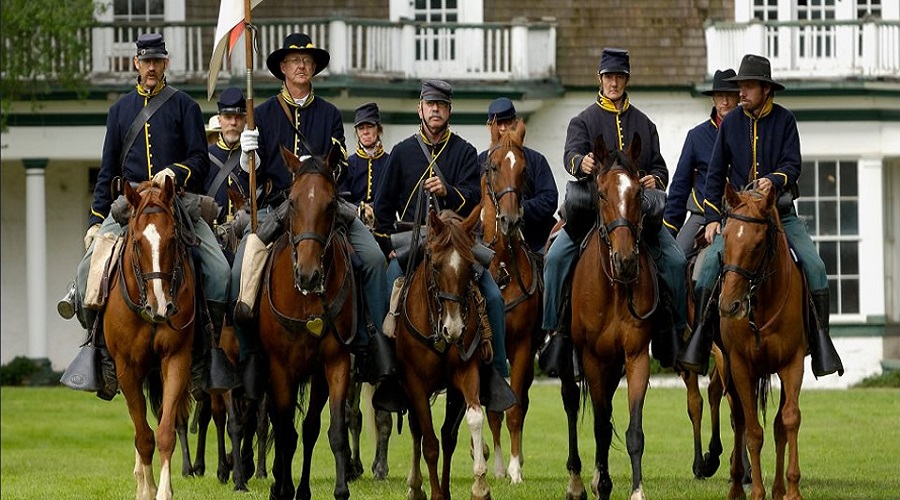
History refuses to remain behind museum glass in limestone barracks that have stood for more than 170 years. Instead, it marches across the parade grounds to the cadence of Civil War infantry drills, echoing the thunder of artillery demonstrations and dances in the footsteps of Mescalero Apache performers. And it comes alive in the stories told by historians, artisans, and descendants whose lives remain intertwined with Fort Stanton, one of the American Southwest’s most storied historic sites.
On July 11, the annual Fort Stanton Live celebration will once again turn the historic military post into an immersive portrait of New Mexico’s diverse past. The celebration invites visitors to experience history not as a series of dates but as a continuing conversation among cultures, traditions and generations.
The Fort Stanton Historic Site, established in 1855, occupies a unique place in New Mexico’s story. It ranks among the most intact 19th‑century military forts in the United States and stands as the best‑preserved fort in New Mexico. The historic 240-acre site is a witness to nearly every defining chapter of the territory’s modern history—from the Indian Wars and the Civil War to the Billy the Kid era and the Lincoln County War, the tuberculosis epidemic of the early 20th century, the Civilian Conservation Corps, and even the internment of German merchant sailors during World War II.
But the annual celebration is less about the buildings; it is more about illuminating the people who passed through them.
Throughout the day, visitors can meet costumed interpreters portraying soldiers, settlers, and frontier families. Writers and historians will retell untold episodes in New Mexico’s past, while traditional artisans—including quilters, weavers and potters—demonstrate skills that have lived across centuries. Period musicians will provide a soundtrack that recalls the rhythms of frontier life. At the same time, families can join old-fashioned games and educational activities to make history accessible to the new generations.
Members of the Mescalero Apache Tribe, perhaps, have the most significant presence, and their dancers will perform on the parade grounds. In contrast, other tribal members share traditional arts, crafts, and Indian tacos. Their participation reminds us that Fort Stanton’s story extends beyond military history. The fort was established during conflict with the Mescalero Apache, transforming the cultural presentations not only into entertainment but also into an acknowledgment that New Mexico’s history is both contested and shared.
The event also showcases a shift in how historic sites engage the public. Rather than presenting history as a cold and static collection of artifacts, Fort Stanton Live embarks on immersive storytelling. Visitors can watch blacksmiths at work, listen to authors discussing frontier life, speak directly with actors, and explore buildings whose original purposes remain largely intact. The celebration makes history tactile, audible, and deeply human.
That method of retelling the past resonates particularly in New Mexico, where Indigenous, Hispanic and Anglo traditions have intertwined for centuries, weaving a cultural tapestry unlike anywhere else in the United States. Fort Stanton embodies those intersections. Its buildings were once traversed by Native peoples, guarded by soldiers, visited by ranchers and lawmen, occupied by tuberculosis patients seeking healing mountain air, and eventually transformed to fulfill different roles as the country developed.
Communities across the country may continue to debate how history should be remembered or celebrated. But Fort Stanton provides a different model—one that invites multiple voices into the narrative rather than highlighting a single version of the past.
The grounds become more than a historic landmark on July 11. They become a community where military heritage, Indigenous culture, traditional craftsmanship and community memory coexist.
Visitors may arrive expecting entertainment. They will leave with a deeper understanding of New Mexico’s history. And that it is not confined to textbooks or preserved behind glass—it is still being told, one story at a time.

