

The crisis linked to fentanyl came silently in Mountainair town, where the wind carries dust across empty lots and neighbors still notice when someone misses work.
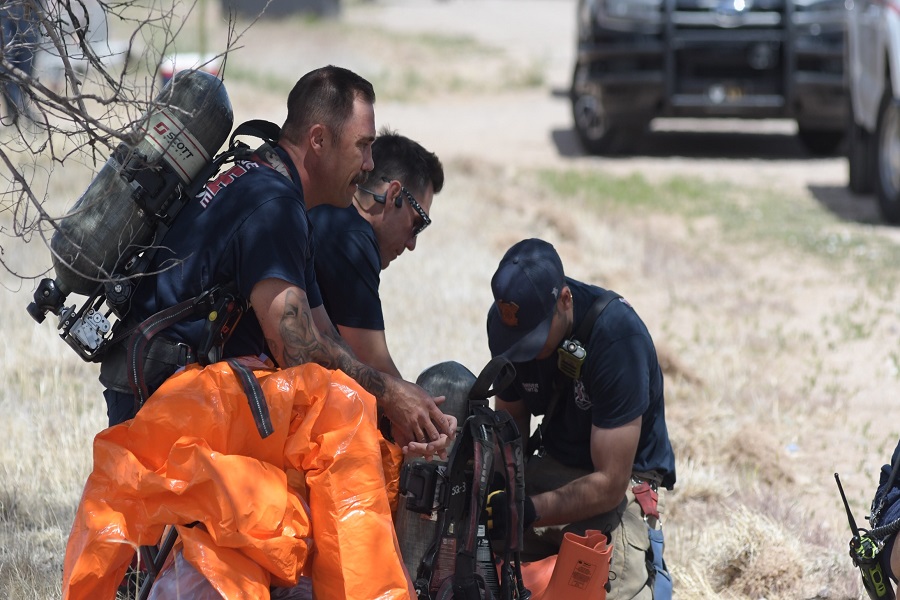
It started with a welfare check. Worried after someone failed to show up for work, a co-worker drove to an unelegant home tucked along a rural road about 90 miles east of Albuquerque. Inside, four people lay unresponsive. Two were already dead, and a third died later at a hospital. Then, 18 of the emergency responders would find themselves hospitalized after experiencing dizziness, nausea, and symptoms of exposure.
This week in Mountainair, the scene was shocking even in a state long familiar with addiction and overdose. But it also revealed something bigger: how fentanyl has changed New Mexico into one of the most fatal battlegrounds of America’s opioid epidemic.
Fentanyl, meth, and more
Initial findings from the New Mexico State Police revealed that multiple powdered narcotics were present in the home. Investigators found fentanyl, para-fluorofentanyl — a synthetic analog sometimes called P4 fentanyl — and methamphetamine.
Police identified two of the dead as 51-year-old Mika Rascon and 49-year-old Georgia Rascon. A third victim has yet to be publicly identified. Officials say there is no proof that drugs were being manufactured inside the home. Law enforcement has not filed any charges.
But the Mountainair deaths have become less of a local tragedy. They are becoming more of a symbol of a state grappling with an era where fentanyl has saturated the illicit drug supply.
New Mexico has been battling addiction. Northern communities like Española became synonymous many years ago with heroin dependency, deep-seated poverty, and a legacy of overdose trauma. But fentanyl has changed the magnitude of the crisis entirely.
The synthetic opioid is up to 50 times more potent than heroin, alongside low-cost production, transport, and blending capabilities. It appears increasingly not only in heroin but in fraudulent prescription pills, cocaine, and methamphetamine — sometimes without users knowing.
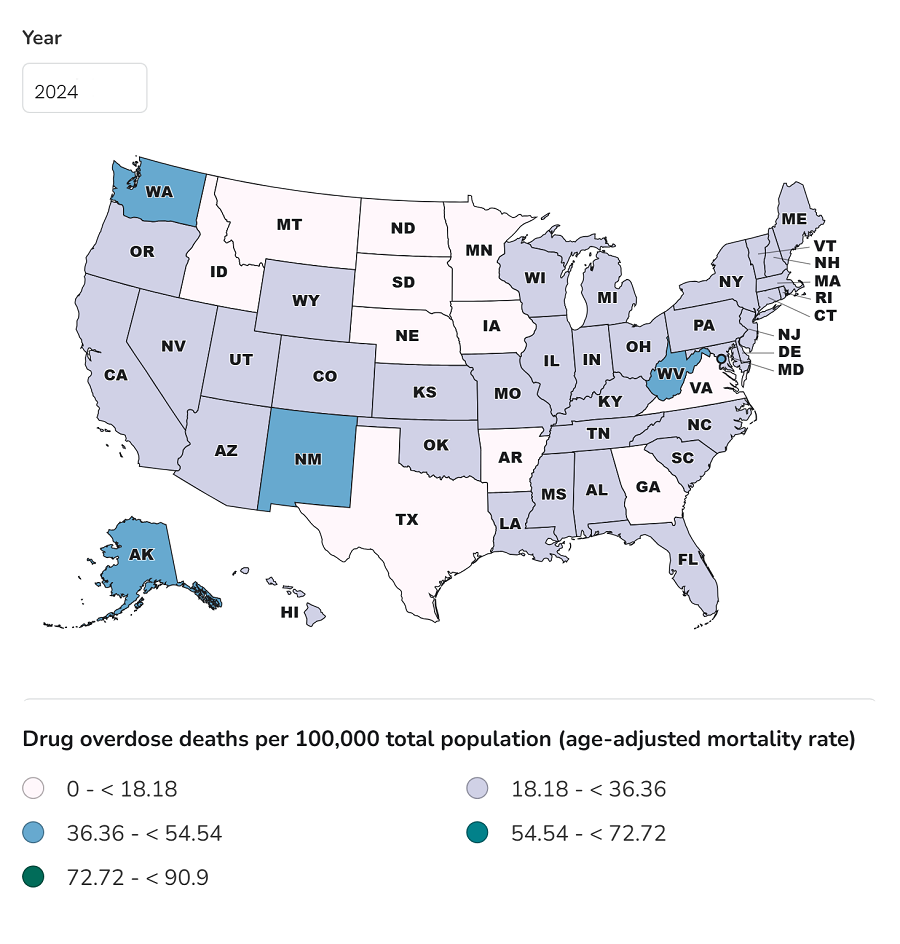
By 2023, fentanyl was tied to about 6 in 10 of overdose deaths in the state, according to the New Mexico Department of Health. The state documented 948 overdose deaths that year, one of the highest per-capita rates nationwide.
Geography of the epidemic changing
The geography of the epidemic has also changed. What was previously confined to metropolitan centers and legacy opioid hotspots has spread into rural towns like Mountainair, a town with a population of barely 800, and emergency infrastructure is strained, and treatment facilities are limited.
“This tragedy also highlights the dangers associated with illicit narcotics, especially fentanyl, and the horrible impact it has caused in communities across our state,” the New Mexico State Police chief, Matt Broom, said during a news conference.
The Mountainair deaths fueled public fear. But the incident exposed a more complex reality surrounding fentanyl: the deepening anxiety among frontline personnel over accidental exposure. Authorities said EMS personnel wore protective gear as they entered the house. They initially suspected a gas leak. Soon afterward, more responders began experiencing symptoms, leading to mass hospitalization and decontamination protocols. Most of them were later released from the hospital.
Videos showing EMS personnel collapsing after encountering suspected fentanyl have gone viral online, stoking fears that merely touching or inhaling trace amounts can cause an overdose. But toxicologists and addiction researchers have repeatedly disputed those claims.
Airborne exposure to fentanyl can trigger an overdose?
Medical studies and guidance from organizations including the American College of Medical Toxicology and the American Academy of Clinical Toxicology said there is little evidence that casual skin contact or brief airborne exposure to fentanyl can trigger overdose in first responders. Experts contend that many reported incidents are likely due to panic reactions, anxiety responses, or exposure to other factors present in the environment.
However, the danger of fentanyl itself is real, particularly when ingested or inhaled in large quantities.
At the University of New Mexico Hospital, Dr. Steve McLaughlin said fentanyl is likely to be mainly responsible for the Mountainair deaths. “Fentanyl is particularly dangerous because it requires only a tiny amount to cause an overdose,” he told the Albuquerque Journal.
Questions linger in the desert air
What transpired inside the Mountainair home may prove less important than what it symbolizes. A rural state already burdened by poverty, trauma, and strained behavioral health infrastructure is grappling with a synthetic narcotic of such devastating potency that it holds the entire community under its shadow. The scene of a single overdose in a place like Mountainair can overwhelm an entire emergency system in just a matter of minutes.
And despite signs that overdose deaths may be decreasing across the nation, New Mexico’s crisis remains deeply embedded. Public health officials increasingly view the epidemic as not only an issue of criminal justice. It is also a nexus of systemic poverty, mental health issues, homelessness, and the collapse of long-term addiction care.
The street outside the house in Mountainair is quiet again. The emergency lights are gone. And the yellow tape indicating an ongoing police investigation has come down. But the questions about fentanyl, and about whether rural America is prepared to weather this era of synthetic narcotics, are lingering in the desert air.

