

What New Mexico Farmers and Ranchers Need to Know About Federal Drought Relief

The USDA has declared all 33 New Mexico counties drought disaster areas, giving farmers and ranchers access to emergency loans as severe drought tightens its grip across the state.

The U.S. Department of Agriculture declared all 33 counties in New Mexico as drought disaster areas. It confirmed what many across the state had suspected: drought is no longer a seasonal burden — it is now an official disaster.

In designating these areas as drought disasters on Tuesday, the USDA has opened the door for struggling agricultural producers to avail emergency low-interest loans as they face one of the state’s driest and most dangerous years in recent memory.

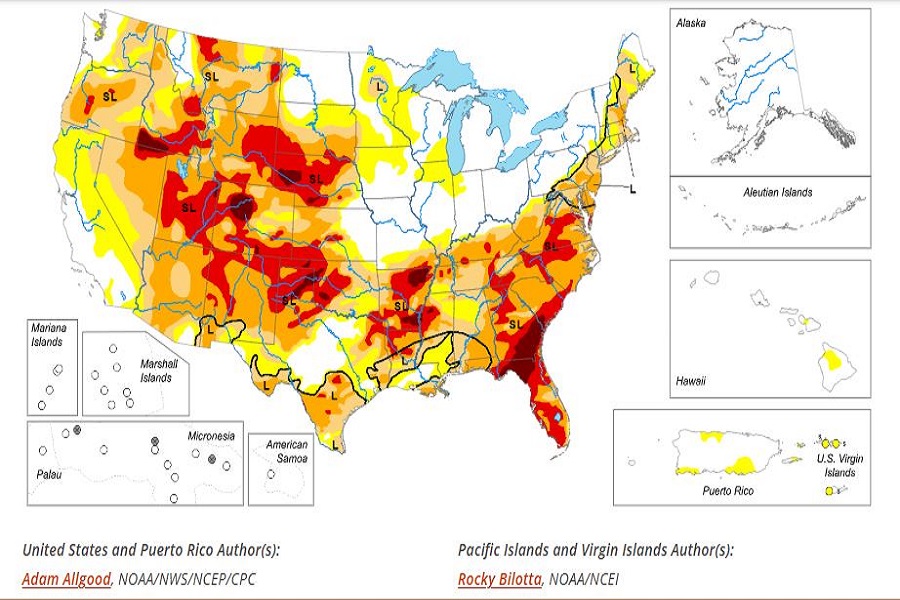
The designation comes as almost the entire state is suffering some stage of drought, according to the U.S. Drought Monitor. New Mexico has placed vast stretches under “severe” or “extreme” drought conditions. Low winter snowpack, rising temperatures, and growing wildfire threats have intensified pressure on an industry already reeling from thin margins.

Federal drought relief

Eligible farmers and ranchers, according to the USDA, may apply for emergency loans of up to $500,000 through the federal Farm Service Agency. According to USDA fact sheet, the loans have lower-than-market interest rates — including operating loans currently set at 4.75 percent. These loans can be used to cover production losses, livestock-related expenses, essential living costs, farm reorganization, and to refinance certain debts. The deadline to apply is Dec. 24, 2026.

The aid comes at a critical moment for New Mexico’s agricultural economy. An industry report said that the state’s food and agriculture sectors generated over $50 billion in economic activity in 2025, creating about 146,000 jobs and producing $5.9 billion in wages.

Across rural New Mexico, however, the impact of drought is already visible. Reservoirs are drying up. Grazing conditions have deteriorated. And ranchers in some counties have been forced to reduce herds early as forage shrank amid escalating feed costs.

A lifeline and a warning

Gov. Michelle Lujan Grisham declared a state drought and wildfire emergency on May 20. She directed agencies to coordinate assistance for local governments confronting worsening fire risks and water shortages. State officials also launched a new Drought Information Portal that compiled drought forecasts, wildfire conditions, and state and federal aid resources.

Agricultural experts advised producers to act quickly in documenting losses and contact local Farm Service Agency offices immediately. The federal designation is not only a financial lifeline for rural New Mexico. It is also a warning about the realities of drought in the American West due to the worsening climate crisis.

For corrections, news tips, and any other content requests, please send us an email at [email protected].

Hot this week

Albuquerque Police Release Video of Deadly Shooting Involving a 23-Year-Old Man

APD released a bodycam video regarding the deadly shooting that happened at the victim's home.

Questions Still Remain Over What Really Happened in a Deadly Police Shooting

After a deadly shooting, the family of the victim was frustrated over how the officers handled the case.

Shooting in NW Albuquerque Leaves to 2 Officers, Suspect Dead

A shootout in Northwest Albuquerque has led to the deaths of the 2 officers and the suspect himself.

After 13 Years of Water War, New Mexico Secures a Rare Victory on the Rio Grande

The U.S. Supreme Court’s approval of a landmark Rio Grande settlement ends a 13-year water war between Texas, New Mexico and the federal government, giving New Mexico farmers certainty while helping the state avoid potentially devastating financial penalties. The agreement reshapes water management in the drought-stricken Southwest and signals a rare legal and political victory for New Mexico in an era of escalating climate pressures.

The Disappearance of Insects is no Longer Subtle — and Scientists Warn the Collapse Could Unravel Ecosystems Humans Depend On

New Mexico’s vanishing insects are more than an environmental concern. Scientists say collapsing butterfly, cricket and grasshopper populations signal a growing ecological crisis fueled by climate change, pesticide use and habitat loss — one that could reshape food systems, bird populations and the stability of ecosystems humans depend on.

Topics

Albuquerque Police Release Video of Deadly Shooting Involving a 23-Year-Old Man

APD released a bodycam video regarding the deadly shooting that happened at the victim's home.

Questions Still Remain Over What Really Happened in a Deadly Police Shooting

After a deadly shooting, the family of the victim was frustrated over how the officers handled the case.

Shooting in NW Albuquerque Leaves to 2 Officers, Suspect Dead

A shootout in Northwest Albuquerque has led to the deaths of the 2 officers and the suspect himself.

After 13 Years of Water War, New Mexico Secures a Rare Victory on the Rio Grande

The U.S. Supreme Court’s approval of a landmark Rio Grande settlement ends a 13-year water war between Texas, New Mexico and the federal government, giving New Mexico farmers certainty while helping the state avoid potentially devastating financial penalties. The agreement reshapes water management in the drought-stricken Southwest and signals a rare legal and political victory for New Mexico in an era of escalating climate pressures.

The Disappearance of Insects is no Longer Subtle — and Scientists Warn the Collapse Could Unravel Ecosystems Humans Depend On

New Mexico’s vanishing insects are more than an environmental concern. Scientists say collapsing butterfly, cricket and grasshopper populations signal a growing ecological crisis fueled by climate change, pesticide use and habitat loss — one that could reshape food systems, bird populations and the stability of ecosystems humans depend on.

Cellicion Traditional Dance Group Brings Pueblo of Zuni Heritage to Indian Pueblo Cultural Center’s 50 for 50 Celebration

The highlighted performance is important to the Center because it exemplifies a current living tradition of the Zuni Pueblo and further fulfills its mission of preserving and sharing Indigenous culture as it celebrates its 50th anniversary. The exhibition 50 for 50: 1976–2026 at the Indian Pueblo Cultural Center provides a venue for the Cellicion Traditional Dance Group.

Indian Pueblo Cultural Center Marks 50 Years with “50 for 50” Exhibition Showcasing Pueblo Heritage

The highlighted article is important because it highlights that since the year 1976, the Center has definitely been an integral part of the Pueblo’s preservation of their culture and an educational source. Additionally, this exhibit also shows the Center to be a place where community members can connect to one another and where tourists can come and learn about the Pueblo culture.

He Built CNN. But Ted Turner Wanted to Be Remembered for Saving the Wild.

The world remembers Ted Turner as the brash founder of CNN and owner of the Atlanta Braves. But across millions of acres in the American West, Turner quietly built another legacy: restoring wildlife, protecting wolves and proving conservation and profit could coexist. In his final years, those closest to him say the media mogul was searching for something deeper than success — redemption.

Related Articles