

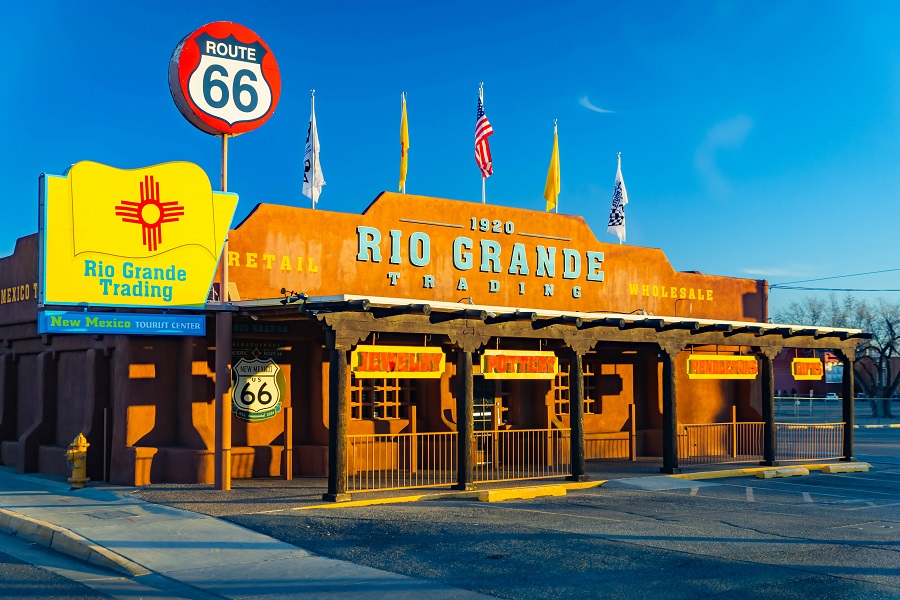
The National Route 66 Centennial Caravan rumbled into New Mexico under a wide desert sky. Vintage cars and commemorative vehicles rolled from Gallup to Grants, through Albuquerque’s Central Avenue, and onward to Santa Rosa. Their polished chrome shimmered under the sun, horns echoed, and townsfolk waved along the sidewalks full of spectators.
For a few sun‑washed days, until the middle of June, the Mother Road—hyped up in song, film, and memory—felt alive again, not a relic of the past but a living vein passing through the high desert, volcanic fields, and Pueblo lands.
New Mexico claims one of the longest and best-preserved stretches of the original 2,448-mile highway. The highway stretches for more than 600 miles along its historic alignment, winding from the Arizona border through Gallup, Grants, Albuquerque, Santa Fe-adjacent communities, and Tucumcari before entering Texas.
Much of the country marks the centennial on November 11 with an old-time vibe. Communities in the state are seizing the moment for tangible revival. Over the past two years, the New Mexico Tourism Department has released roughly $4 million in Route 66 Centennial grants for infrastructure, neon restorations, public art, marketing, and events. These investments are intended to channel through‑traffic into lodging demand and long‑term commercial activity.
The city’s Department of Arts and Culture in Albuquerque is home to the longest urban segment. It is roughly 18 miles along Central Avenue —has launched Route 66 Remixed. It is a signature project featuring 19 artists and about 20 public installations. These include large-scale murals, sculptures, augmented-reality experiences, and creative collaborations with groups like Meow Wolf.
The initiative turns the corridor into an evolving tapestry of culture where drivers and walkers can engage with history through present-day lenses, combining art, audio poetry, and cultural touchpoints that integrate Indigenous, Hispanic, and modern New Mexican voices with the corridor’s historic storyline. Complementary initiatives include Route 66 Summerfest and special markets. Limited-edition “Route 66 Kicks” sneakers blend regional character with the highway’s signature numbering.
Smaller towns are mounting their own ambitious bets. A striking new Route 66 Arch in Grants is now a “glowing landmark lights up the sky with bold colors, fiery designs, and pure Mother Road energy”. And the Spokes on 66 Car Show and upcoming Powwow celebrations draw crowds with vintage vehicles, live music, and cultural performances.
Tucumcari and Moriarty have restored classic motels and diners. Santa Rosa has explored novel ideas such as a “musical road.” Passport programs encourage travelers to gather stamps at museums, trading posts, and revitalized enterprises. The corridor becomes a scavenger hunt of local heritage.
The deeper resonance lies in how Route 66 has always reflected New Mexico’s multifaceted identity. Established in 1926, the highway emerged as a corridor of opportunity for Dust Bowl migrants, returning World War II veterans, Native traders, and Hispanic entrepreneurs. It served as a conduit for mining booms and downturns, fostering connections among isolated towns and shaping the character of roadside life— neon signs, motor courts, and green-chile diners that still define the highway today. Centennial projects intentionally integrate Indigenous Pueblo viewpoints and Hispanic contributions.
“These trails and roads are very important in not just promoting New Mexico, but establishing our culture and changing it, bringing new peoples and new technologies and new ideas on the asphalt,” said New Mexico State Historian Rob Martinez.
But challenges remain. Many historic structures face deteriorating infrastructure. Interstate bypasses long ago drew traffic, and sustaining visitor interest after the centennial event will require more than one-year events. Main Street directors emphasize the importance of sustained conservation funding paired with innovative programs that engage today’s travelers. Those visitors who value authenticity, outdoor adventure, and cultural depth enhanced by vintage‑car aesthetics.
Still, the momentum feels genuine and forward-looking. Economic studies of Route 66 corridors nationwide show that heritage tourism generates substantial multiplier effects. Visitor spending supports local businesses, creates jobs, and funds more reinvestment. Statewide, renewed pride is already visible in fresh paint on storefronts, crowded parking lots at revived diners and conversations among business owners about what the future holds. Next big things include Santa Fe’s Railyard Route 66 Centennial Festival in October, Albuquerque’s summer series, and speaker programs exploring the corridor’s past, present, and future.
The rewards are visceral for those who set out behind the wheel. Journey through Tijeras Canyon at golden hour as shadows lengthen across sandstone. Enjoy the moment beneath flickering neon in Grants or Albuquerque’s Nob Hill. Savor breakfast burritos at a family-run spot where the coffee is strong, and the stories seem endless. Then park where the horizon stretches unbroken. The road disappearing into piñon and sky. And feel the unique American dynamic that reshapes roads into pathways of possibility.
One hundred years after its classification, New Mexico’s stretch of Route 66 adapts. The centennial is not only a commemoration but a reminder that Route 66 still carries travelers toward fresh adventures and untold stories — and that communities along the corridor are ready to lead the way.
Route 66 beckons this year—its lights glowing, stories renewed, and its road wide open.

