

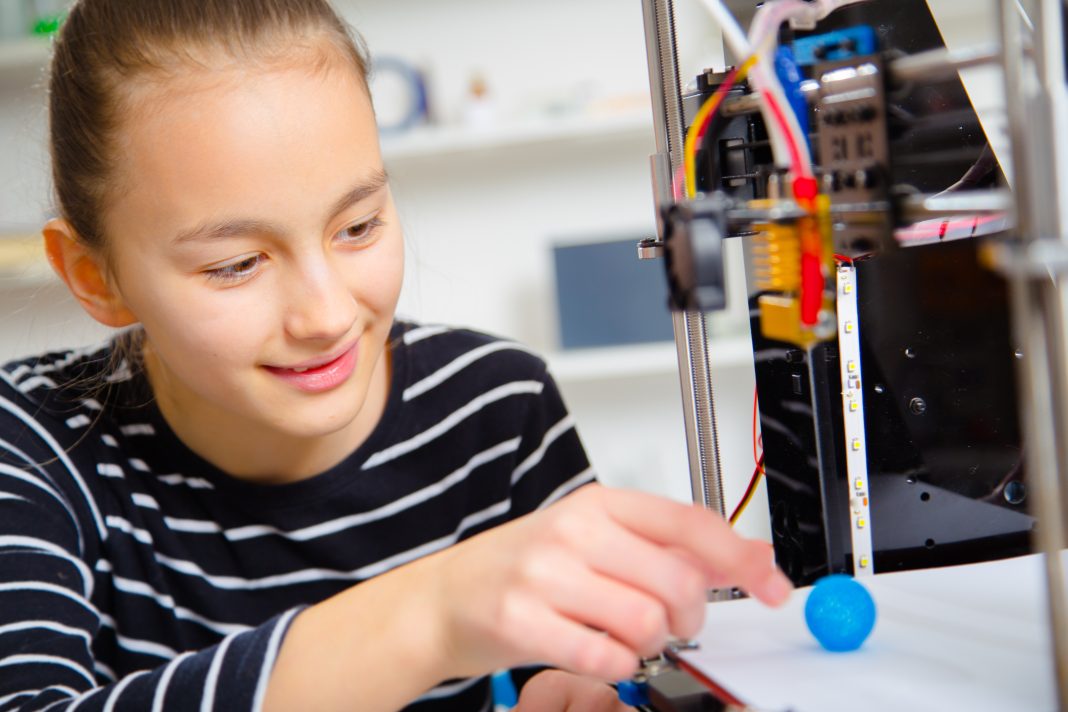
Albuquerque Public Schools students sharpened their skills this summer through the Office of Innovation’s first-ever Eco-Makers Summer Camp. The two-week program combines technology with environmental stewardship, engaging students in hands-on learning.
“The Office of Innovation is excited to do our first-ever Eco-Makers Summer Camp. This was a two-week camp that aligns with our sustaining the future pathways,” said Annittra Atler, Sr. Director, APS Office of Innovation.
As part of the district’s Sustaining the Future pathway, the immersive camp united passionate youth to tackle real-world environmental design challenges. The program encouraged students to become active creators, applying their unique talents to build solutions for a greener tomorrow.
Participants immersed themselves in a unique blend of natural exploration and advanced fabrication. They balanced outdoor field studies, including bird watching and harvesting fresh vegetables, with high-tech maker skills. Students transitioned from picking garden herbs for tea to learning robotics and operating drones to complete tasks.
Daniel Taylor, a teacher at Montezuma Elementary School, said the camp introduced students to “so many cool things.”
“We were doing things like walking in the garden, learning about farming, talking about invasive pests. We did some bird watching… picked herbs and made tea. Like just so many cool things,” said Taylor.
How the Camp Fostered a Growth Mindset
Students also eagerly described how they explored technology and nature through the camp’s hands-on activities.
Konrad Bailey, a third grader at A Montoya Elementary School, said he had first-hand experience using 3D printing.
“I have done some 3D printing work and I have actually been able to 3D print some stuff,” he said.
Jane Porter, a fifth grader at Inez Elementary School, highlighted three skills.
“I learned how to 3D print things, how to pick carrots, and also how to needle felt,” said Porter.
Beyond teaching practical agricultural and technical skills, the program cultivated a growth mindset among students. Hands-on experimentation taught students that failure is a natural part of the creative process.
“I’ve done 3D printing. I did felts… picked carrots. I learned that… sometimes things don’t happen and you have to do it a second time,” said Penelope Spence, a fourth grader at Janet Kahn School of Integrated Arts.
Bailey stressed the essence of trial and error.
“I learned some technology skills. I also learned that to get your design perfect, there must be trial and error,” he said.
Through trial and error, students persevered, refined their designs, and brought their environmental solutions to life.
“These are tools that students are using on their campus. And so this really gave them an opportunity to dig deeper into how to use the tools and how to solve problems. It’s something that you’re going to see at all four of our schools for the environmental STEM pathway,” said Atler.

