
A group of students from Albuquerque Public Schools traded screen time for hands-on summer learning. The program immersed them in activities that deepened their appreciation for soil, sunshine, and professional growth.
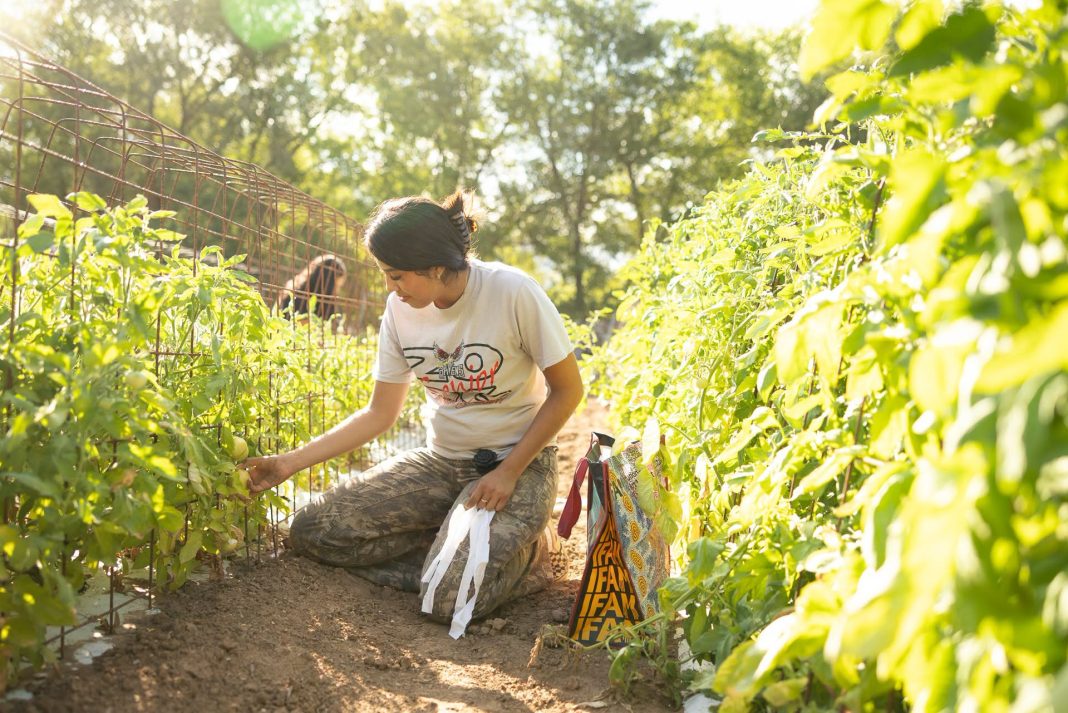
On a recent Tuesday, students harvested crates of tomatoes and carefully trellised the remaining plants. They picked tomatoes for food pantries that morning. Other produce they harvested will be served in cafeterias across APS schools.
According to APS, the agriculture-nutrition internship program is in its fifth year. It continues to transform the summer experience for students from Rio Grande, Sandia, and Valley high schools. Rio Grande High School teacher Janet Delgado leads the program. The initiative gives participants hands-on agricultural work, career-readiness training, and a paycheck.
“It’s an internship program that basically works throughout the community and gives kids work-based learning experience,” Delgado said. “We teach work-based learning skills, and they also get experience in agriculture, culinary nutrition and the behind-the-scenes of businesses, like farmers’ markets.”
This year, 33 students participated: 20 from Rio Grande, eight from Sandia, and five from Valley. The students earned $15 an hour while working 20 hours a week. A collaboration between the New Mexico Public Education Department, state Legislature, the governor, and Bernalillo County made their wages possible.
Delgado describes the program as a community effort that relies on a patchwork of funding. State and county funds cover student wages, while school principals and community partners fund the initiative’s adult supervisors.
Students Reflect on Experience
For recent graduate Camila Salinas, the program has opened the door to future opportunities.
“It’s really nice being outdoors,” said Salinas, who is heading to Central New Mexico Community College to study cosmetology. “It’s given me social skills, and it’s taught me how to talk to people more.”
The curriculum extends far beyond gardening, according to APS. Students participate in career-readiness labs. They learn practical workplace skills, including writing resumes, completing W-2 and I-9 tax forms, and advocating for themselves in professional settings.
The program also introduces students to a variety of career pathways. They explore opportunities ranging from food service management at Isotope Stadium to specialized agricultural business models.
“I like to get my hands dirty,” said Nadia Rodriguez, a senior at Rio Grande High School. “It’s just good to learn things that you need to know. It teaches you about real-world stuff.”
APS cafeterias will serve some of the produce students harvest at local farms. They will see their labor directly impact their peers’ lunch plates. Other produce students grow with Seed to Need will go to food pantries to support families in need.
“The community loves working with the students,” Delgado noted. “These students will, in turn, have a full-circle moment. Cafeterias will be serving what these students have harvested this summer.”
Community Support Fuels Program Growth
Educators like Dominic Taylor, an educational assistant who worked alongside Delgado for five years, hope the program continues to grow.
“It brings the kids out of their shells,” Taylor said. “They learn what’s right here in their own community.”
For sophomore Elijah Armijo, the program provides more than just a paycheck for meals and clothes, it provides direction. Armijo hopes to pursue a career in construction. He sees the program as a vital step in learning to balance hard work with life skills.
“I appreciate this job,” said Fabian Ramirez, a 10th-grade student who plans to enter a trade school for plumbing or electrical work. “We work as a team.”
Delgado credited the community’s support with making the program possible.
“We are deeply grateful for the year-round support of NM 2050, the program management provided by Education at Work under the NMPED, and the steadfast advocacy of Commissioner Frank Baca and Ciudad SWCD for agricultural education,” she said. “It truly takes a community to make this program thrive.”

