

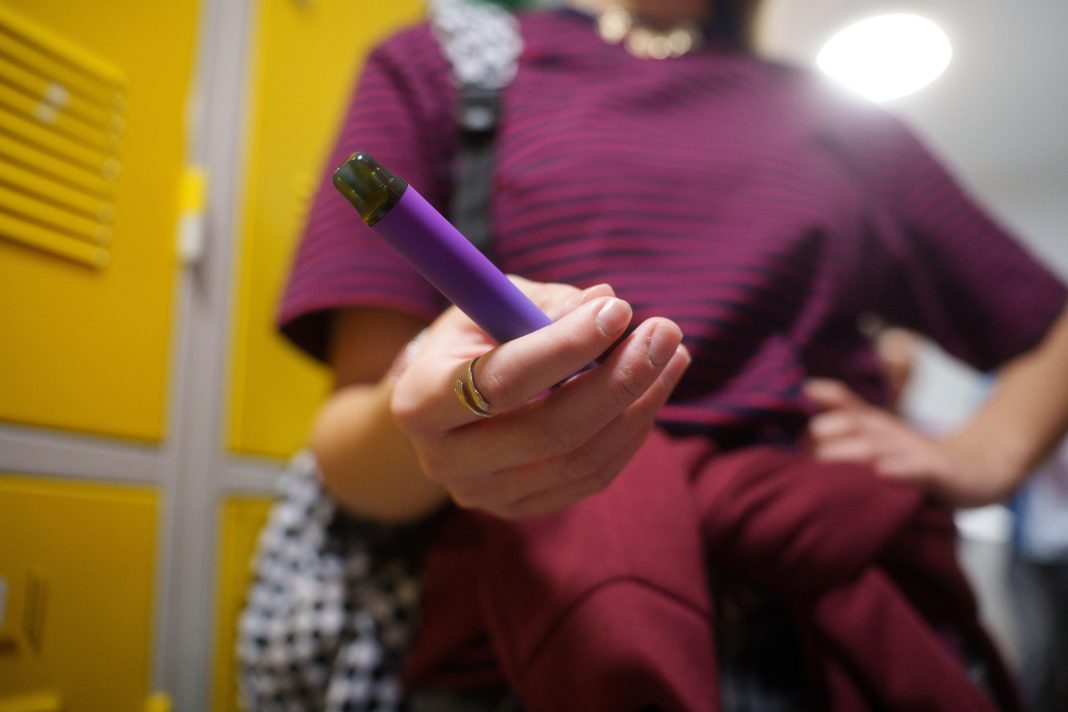
Vaping among students remains a longstanding concern that demands proper attention. According to research, several factors drive vape (e-cigarette) use, including peer pressure, stress management, and the belief that vaping is cool. Other factors include vaping’s lower detectability than cigarette smoke, the false belief that vapes are safer than cigarettes, and exposure to a parent or sibling who vapes.
For young, impressionable students, the enticing packaging, designs, colors and flavors of vapes can make these products especially appealing. But what makes vaping risky for young people?
Vaping can cause nicotine addiction, anxiety, depression, impotence, and sleep problems. It can also expose users to cancer-causing chemicals, chronic bronchitis, and potentially life-threatening lung damage.
As the new school year began, Albuquerque Public Schools launched an initiative to help curb vaping among teenagers. The district installed 93 new vape detectors across 13 high schools, excluding charter schools.
How APS’s Vape Detectors Work
APS Deputy Superintendent of Operations Dr. Antonio Gonzales said student feedback helped guide the district’s response to vaping. The students’ input also helped APS identify areas on campuses where the activity posed a concern.
“In some schools, it may be the bathroom. In other schools, it may be outside, around the corner, down the street. Every school had a specific fact pattern and a specific set of information that we took into consideration,” Gonzales said via KOB 4. “It was invaluable.”
The district allocated $500,000 in opioid settlement funds to purchase and install the detectors.
APS said the technology sends a signal to a central location at each school when it detects vapor. The alert prompts school administrators to respond.
Creating Healthier School Environments
“The reality is, we want our schools to be healthy places for our students to learn and thrive, and this is just a step in being able to do that,” Gonzales said.
He said APS has a zero-tolerance policy for banned substances on campus. However, he emphasized that punishment will only be one part of the schools’ response.
Gonzales said APS also allocated millions of dollars in opioid settlement funds to expand mental health counseling. The funds also support drug prevention programming this school year.
APS discussed its prevention efforts during a school safety listening session on April 27. Officials said an opiate settlement is funding more than $500,000 worth of vape detectors for middle and high schools this school year.
This funding also expanded the Crossroads program. The initiative provides master-level counseling to students and their families to prevent drug and alcohol use. The district is among the few in the United States to offer this type of counseling program. The program has served over 1,600 high school and 830 middle school students.
What the CDC Data Shows
According to the Centers for Disease Control and Prevention, e-cigarettes ranked as the most commonly used tobacco product among U.S. middle and high school students in 2024. At least 1.63 million (5.9%) students used e-cigarettes. This includes 410,000 (3.5%) middle school students and 1.21 million (7.8%) high school students.
Among students who currently used e-cigarettes, 87.6% used flavored e-cigarettes. Meanwhile, 38.4% used e-cigarettes on at least 20 of the previous 30 days, while 26.3% reported daily use.
Some groups of middle and high school students report higher rates of e-cigarette use than others. For example, in 2024, more females than males reported current e-cigarette use.
Additionally, CDC said current use of e-cigarettes varied by race and ethnicity. Non-Hispanic American Indian and Alaska Native students reported the highest rate at 11.5%. They were followed by non-Hispanic Black or African American students at 7.0% and non-Hispanic multiracial students at 6.6%. Hispanic or Latino students reported a 6.1% rate, non-Hispanic White students at 5.9%, and non-Hispanic Asian students at 2.3%.
E-cigarettes can also deliver other substances, including cannabis. In 2016, nearly one in three (30.6%) U.S. middle and high school students who had ever used an e-cigarette reported using the device to consume marijuana.
Meanwhile, most middle and high school students who vape want to quit and have tried to quit. In 2020, 63.9% of students who currently used e-cigarettes said they wanted to quit. An estimated 67.4% of students who currently used e-cigarettes said they had tried to quit in the last year.
Why Teens Should Quit Vaping
If you are a teen who vapes, quitting can help you become the healthiest version of yourself. It can also help you avoid nicotine addiction, protect your brain, reduce your risk of using other tobacco products, and limit your exposure to harmful toxins. Plus, quitting can save you money.
When you decide to quit vaping, understanding withdrawal can help you prepare for the process. Nemours TeensHealth said nicotine addiction leads to very strong cravings for nicotine. Withdrawal symptoms typically peak during the first few days after stopping and gradually improve over the following days and weeks.
At first, you might:
- have headaches
- feel tired, cranky, angry, or depressed
- have trouble concentrating
- have trouble sleeping
- feel hungry
- feel restless
Prepare for situations, people, and places that may trigger the urge to vape. When possible, avoid places and people that make you want to vape.
If you feel the urge to vape, try one of these activities instead.
- Chew sugar-free gum or drink water.
- Text, call, or spend time with a friend who supports your decision to quit.
- Listen to your favorite playlist.
- Go for a walk or jog.
- Try yoga or meditation.
- Take 10 deep breaths.
- Keep your hands busy with a hobby, such as drawing or making jewelry.
- Go somewhere that prohibits smoking or vaping.

