Home Blog Page 19

‘Two-faced’ Nanoparticles Could Revive Antibiotics Against Superbugs

0

Scientists have unveiled a high-tech solution: “two-faced” Janus nanoparticles that help antibiotics penetrate some of the toughest microbes.

Gram-negative bacteria, including E. coli and Acinetobacter baumannii, are notoriously difficult to treat because of a protective outer membrane that blocks most antibiotics. But researchers at Osaka University and collaborators in the US have engineered tiny nanoparticles that breach this bacterial shield, allowing existing antibiotics to work again.

Named after the Roman god with two faces, Janus nanoparticles have a dual personality: one side attracts water, the other repels it. This structure lets them attach to bacterial membranes and destabilize them. While the nanoparticles don’t kill the bacteria directly, they open the door for antibiotics that were previously ineffective, restoring their ability to fight infections.

“This synergy overcame resistance in some of the most stubborn bacteria,” said lead researcher Dr. Martijn Zwama.

“These nanoparticles act as perfect partners for antibiotics, reviving their effectiveness and providing a sustainable path forward in tackling antimicrobial resistance.”

The breakthrough highlights a materials-based approach to combating AMR, offering new possibilities not only for treatments but also for antibacterial coatings and preventive solutions. As superbugs continue to rise worldwide, innovations like these could give existing antibiotics a crucial second life.

Amazon’s Internet Satellites Too Bright, Pose Risk to Astronomy – Study

0

Satellites from Amazon’s planned internet megaconstellation are bright enough to interfere with astronomical observations, according to a new study, adding to growing concerns over the impact of satellite swarms on humanity’s view of the universe.

The study, posted on the preprint platform arXiv on January 12 and yet to undergo peer review, analyzed nearly 2,000 observations of Amazon’s low Earth orbit (LEO) satellites, previously known as Project Kuiper. Researchers found that the satellites exceed brightness limits recommended by the International Astronomical Union (IAU), which are meant to allow satellite networks and astronomical research to coexist.

Amazon’s internet satellites are “troublesome’

Amazon’s satellites orbit at around 391 miles (630 kilometers) above Earth and have an average apparent magnitude of 6.28. While generally too faint for casual stargazers, the satellites are still bright enough to disrupt sensitive telescopic observations. In about 25% of recorded observations, the satellites were visible without the aid of telescopes.

“Bright satellites are particularly troublesome for large-scale astronomical surveys conducted at ground-based observatories like the Vera C. Rubin Observatory,” said study lead author Anthony Mallama of the IAU Center for Protection of the Dark and Quiet Sky. He added that satellite glare can also affect space-based instruments such as the Hubble Space Telescope.

Mallama and his colleagues have previously studied other satellite networks, including SpaceX’s Starlink constellation, which currently dominates low Earth orbit with around 9,500 satellites. They have also examined AST SpaceMobile’s massive BlueBird satellites, whose large antennas make them the brightest artificial objects in the night sky.

Compared with these systems, Amazon’s satellites are dimmer than the BlueBird satellites and slightly fainter than most Starlink spacecraft. However, Mallama noted that Starlink satellites spend much of their orbits in Earth’s shadow, reducing their visibility. Amazon’s future satellites are expected to orbit at lower altitudes of about 366 miles (590 kilometers), a change that could make them brighter.

Working with astronomers

Satellite operators, including Amazon and SpaceX, say they are working with astronomers to reduce satellite brightness. Proposed measures include modifying spacecraft surfaces to reflect sunlight away from Earth and adjusting satellite orientation to limit visibility from the ground.

John Barentine, an astronomer who studies satellite impacts on astronomy, said Amazon has shown progress since launching its first test satellites in 2023. “Amazon Leo is an instance where the operator engaged with astronomers early in the design phase,” he said, calling the results “encouraging.”

Alarm over satellite megaconstellations began in 2019, shortly after SpaceX launched its first Starlink satellites, when astronomers reported telescope images streaked by passing spacecraft. While mitigation efforts have improved satellite designs, a November 2025 study by Mallama and colleagues found that nearly all active internet satellite constellations still exceed IAU brightness limits. The exception was OneWeb, which operates at much higher altitudes.

Astronomers warn that without stronger safeguards, the rapid growth of satellite constellations could permanently alter ground- and space-based observations of the cosmos.

Lock Your Windows PC with a USB Flash Drive: Here’s How

0

Your laptop or Windows PC has extra Universal Serial Bus (USB) ports. Don’t let them sit idle and collect dust. Use them as a powerful gateway to upgrades by plugging devices that can make work faster, sharper gaming graphics, and even turn your workspace a little more enjoyable.

The idle port on your computer could be the simplest tech upgrade you can make. Those extra ports can be opportunities to boost storage, improve connectivity, charge devices faster, and enable USB-enabled gadgets to level up your setup.

For example, adding a simple layer of security to your Windows PC is made easy with a USB flash drive as a physical key. Use a free tool called USB Raptor, and your computer will lock automatically when the USB drive is removed and unlock when it’s plugged back in.

How it works

USB Raptor stores a tiny encrypted file on a flash drive and checks for it in the background. The system locks instantly when the drive is unplugged. Plug it back in, and access is restored.

The app works with most USB drives, even those that already contain files. The good news is that it’s free, open source, and runs on Windows, including older versions like Windows 7.

Quick setup

Do the following steps to set it up:

  1. Insert a USB flash drive.
  2. Download and install USB Raptor.
  3. Open the app and agree to the terms.
  4. Create a backup password.
  5. Select your USB drive and click Create k3y file.
  6. Enable USB Raptor.

Once activated, removing the USB will lock your PC. If you lost the drive, the backup password can unlock the system.

Extra options

The USB Raptor also allows you to set a delay before locking; customize the lock screen and sounds; turn off the screen, or mute audio when locked; and add a PIN or password for added security.

USB Raptor turns a spare flash drive into a simple, physical lock for your Windows PC—no extra hardware needed.

ISS Astronauts Study Heart Health, Test AI Tools as SpaceX Dragon Boosts Orbit

0

Science was in full swing aboard the International Space Station on Friday, with astronauts focusing on heart health and testing how artificial intelligence could make life in orbit more efficient. To cap off the week, a SpaceX Dragon spacecraft also gave the station a small but important orbital boost.

NASA astronaut Chris Williams spent much of his day studying how the human heart and blood vessels respond to life in space. Working inside the Columbus laboratory, he used an ultrasound device and wore electrodes to monitor his heart’s electrical activity while scanning blood vessels in his neck, chest, and legs. With doctors guiding him from the ground, Williams then hit the COLBERT treadmill and later exercised on the station’s weight-lifting-style machine, all while sensors tracked how his body responded.

The data will help researchers understand how months in microgravity affect astronauts’ cardiovascular health.

Over in the Russian segment of the station, cosmonauts Sergey Kud-Sverchkov and Sergei Mikaev explored how artificial intelligence could speed up and simplify everyday crew tasks. They tested AI-powered tools that turn spoken words into text and improve the handling and sharing of data with mission control. Scientists hope these tools will reduce paperwork and errors during space missions.

The cosmonauts also tackled routine maintenance. Kud-Sverchkov serviced the station’s oxygen-generating system, collected air samples for analysis, and cleaned ventilation fans inside the Soyuz MS-28 spacecraft. Mikaev wrapped up his day by shutting down physics experiments that study crystal growth, plasma, and radiation, and by organizing computer and electronics equipment.

Meanwhile, on Friday, Jan. 23, the SpaceX Dragon spacecraft fired its engines for just over 26 minutes, gently raising the station’s orbit. The maneuver boosted the ISS by a few miles, placing it on a slightly higher, more stable orbit around Earth.

The Dragon spacecraft arrived at the station in August as part of SpaceX’s 33rd cargo delivery mission for NASA. After completing several orbital boosts over the past few months, this latest burn was its final one. The spacecraft is now set to return to Earth with important research samples and cargo, splashing down off the coast of California.

Mexico is Becoming Latin America’s Top Hub for AgriFood Tech Investment

0

Mexico is emerging as the leading destination for AgriFood Tech investment in Latin America, as global investors recalibrate their strategies toward upstream technologies and sustainability-driven solutions amid tighter funding conditions.

Industry data show that global AgriFood Tech funding reached about US$16 billion in 2024, signaling a period of stabilization after years of rapid expansion. While venture capital flows remain constrained worldwide, investor priorities have shifted. Capital is increasingly moving toward technologies closer to primary production—such as biotechnology, precision fermentation, and climate-resilient farming—rather than consumer-facing food delivery and marketplace platforms.

Why Mexico?

Mexico’s rise as a regional AgriFood Tech hub is rooted in a combination of geography, scale, and policy-driven opportunity. Its proximity to the United States and Canada, combined with diverse agroclimatic conditions, allows companies to pilot and scale solutions across multiple crops and environments while staying closely linked to major export markets.

AgriFood Tech sits at the intersection of agriculture, food systems, and disruptive innovation, responding to the challenge of feeding a global population approaching 10 billion amid intensifying climate risks and resource constraints. Mexico’s agricultural sector provides a natural testing ground for technologies designed to deliver both environmental impact and commercial returns.

From niche startups to full ecosystems

What began as a small startup scene has evolved into a broader ecosystem encompassing agricultural software, plant biotechnology, food traceability platforms, automation, and robotics. This expansion closely aligns with the priorities of environmental, social, and governance (ESG) investors, who are backing solutions that reduce water consumption, strengthen transparency across supply chains, and support the shift toward regenerative agriculture.

Nearshoring in the agro-industrial sector has further accelerated this trend. As companies relocate or expand operations closer to North American markets, the digitalization of agricultural supply chains has become essential for maintaining competitiveness. Firms focused on logistics optimization, predictive analytics, and intelligent certification systems are increasingly central to the regional ecosystem.

Investment remains active despite the global slowdown

Despite a global pullback in venture capital, Mexico’s AgriFood Tech market has remained resilient. Between August and December 2025, companies such as S4, Kilimo, and Agtools reported fresh capital raises aimed at improving operational efficiency and managing climate-related risks.

Investors continue to closely watch emerging areas. Alternative proteins—including plant-based and cultivated options—remain attractive, although funding is now more selective, with greater scrutiny on commercial viability and scalability. Vertical and indoor farming also continue to draw interest, even as these models face challenges related to high operating costs and energy use.

What comes next?

Market projections suggest the global AgriFood Tech sector could grow to US$48.98 billion by 2030, nearly doubling from its current estimated value of US$24.42 billion. Analysts point to advances in automation, sensor technologies, and the Internet of Things (IoT) as key drivers of future growth.

At the same time, the sector is entering a more mature phase marked by consolidation. This includes mergers, the exit of weaker startups, and growing participation from specialized investment funds. The emphasis is shifting away from the volume of capital raised toward the quality, resilience, and measurable impact of technological solutions.

In this evolving landscape, Mexico’s combination of scale, climate relevance, and proximity to major markets is increasingly positioning it at the center of Latin America’s AgriFood Tech investment story.


Universities Weigh Financial Impact After One Year of Trump’s Higher Education Policies

Universities across the country are counting the costs of sweeping federal actions that began soon after the Trump administration’s inauguration in January 2025. While the most aggressive proposed cuts to research funding and grant programmes have faced legal challenges or suspension, institutional leaders say the lingering uncertainty around federal policy and fiscal support is dampening planning and budgets.

Federal funding for research and development, historically a major source of revenue for many research universities, has been targeted by budget proposals and administrative actions over the past year. Although courts and lawmakers have forced pauses or reversals on some cuts, the prospect of tighter fiscal conditions has led universities to reevaluate long-term research commitments and financial forecasts.

How policy changes are affecting universities

Institutional officials and analysts point to several factors that are beginning to show up in financial statements or strategic planning:

  • Federal research funding uncertainty: Proposed cutbacks to grants and indirect cost reimbursements have created planning challenges for research-intensive universities, even when some measures have been paused by courts.
  • Regulatory and policy shifts: Broad changes in federal education policy, including stricter oversight and new compliance expectations, have required increased administrative attention and spending.
  • Impact on enrolment and revenue: Other administration actions, such as tighter visa regulations that have coincided with dropoffs in international student enrolment, are contributing to budget stress at institutions that rely on out-of-state and international tuition.
  • Operational uncertainty: Even when cuts are blocked or scaled back, the possibility of future reductions has led universities to delay hiring, reshuffle priorities, and tighten budgets in anticipation of sustained federal policy pressure.

University leaders say the cumulative effect of policy uncertainty and shifting federal priorities is showing up in both short-term budgets and long-range strategic plans. Financial officers at some institutions have publicly warned that without stable support for research and federal aid programmes, their ability to sustain certain academic offerings, infrastructure investments, and student services could be compromised.

Analysts note that higher education has long depended on a mix of federal, state, and tuition revenue. Federal funding for research and student financial aid has historically underpinned billions of dollars in annual university expenditures. When that support is in flux, the predictability of university revenue streams weakens, forcing costly adjustments.

The situation also intersects with broader trends in higher education finance. Some state budgets have tightened after economic downturns, further pressuring institutions to look for efficiencies or alternative revenue sources. As federal support shifts, universities may face heightened competition for private grants, philanthropic support, and partnerships to help offset funding gaps.

For faculty and administrators, the past year has been defined less by singular budget cuts than by persistent uncertainty. This ongoing ambiguity, observers say, may have a more enduring impact than any individual policy change, as institutions adapt to a federal posture that prioritizes fiscal restraint and regulatory overhaul.

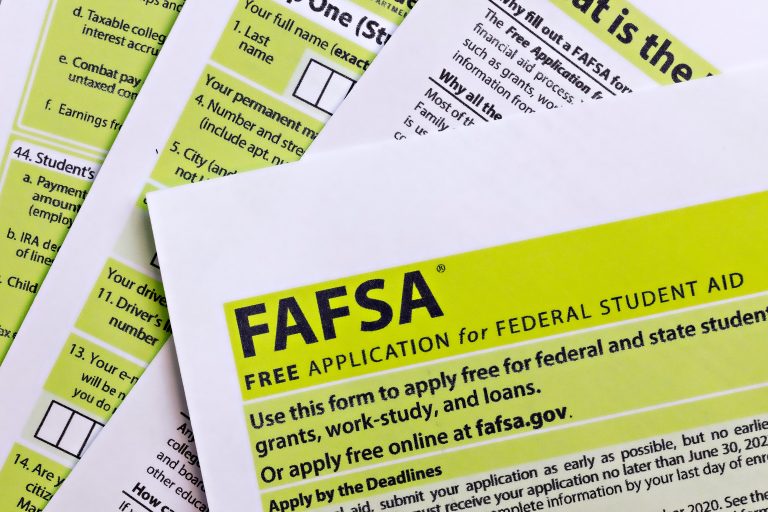
State Expands FAFSA Assistance to Help Students Access Financial Aid

State education officials are promoting expanded support for students and families completing the Free Application for Federal Student Aid (FAFSA), aiming to increase college affordability and access to grants, loans, and work-study funds. Free assistance events, online resources, and state tools are part of a broader effort to guide applicants through the federal form that determines eligibility for financial aid.

The FAFSA is the standard application used nationwide to assess financial need and unlock federal aid such as Pell Grants, work-study, and subsidized loans. In Massachusetts, the state also offers targeted support and alternative applications for students who may not qualify for federal aid but still seek state financial assistance.

Officials say timely completion of the FAFSA is critical to ensure students receive the maximum aid possible and to help families plan for college costs. Low completion rates can leave money on the table and make it harder for students to afford tuition, fees, books, and other education expenses.

Why FAFSA Support Matters

Efforts to assist with FAFSA completion reflect ongoing concerns about college affordability and access to higher education:

  • FAFSA is key to federal and state aid eligibility: Completing the form determines access to grants, loans, and work-study programs that reduce college costs.
  • State alternatives and resources: Massachusetts offers the Massachusetts Application for State Financial Aid (MASFA) for students who cannot file a federal FAFSA, broadening access to need-based support.
  • Outreach and events: Volunteer-driven initiatives like FAFSA Day and state outreach aim to guide students through the application process, documentation, and deadlines.
  • Timing and planning: Applying early and accurately improves chances of securing full aid packages before enrollment decisions.

Completing the FAFSA not only unlocks federal programs like Pell Grants — which are awarded based on demonstrated need — but also triggers eligibility for many state and institutional financial aid programs. In states like Massachusetts, FAFSA data may be used to qualify for state grants, scholarships, and tuition equity programs, reinforcing the value of support for first-time filers or families unfamiliar with the process.

State officials and non-profit partners emphasize clear communication about deadlines, document requirements, and the potential financial impact of completing the FAFSA. With priority deadlines approaching for many state programs, earlier submissions improve students’ chances of receiving the aid they need before choosing a college or finalizing enrollment.

In short, expanded FAFSA help aims to bridge information gaps that can deter students from applying for aid. By offering hands-on support, educational resources, and alternative state applications, officials hope more students and families will secure financial support and make college more affordable.

Most Businesses Don’t Build Compounding Value, Study Suggests

Many small and medium-sized businesses fail to grow in value over time because they focus on short-term profits rather than long-term growth. This is one of the key findings from the 2026 Top Ten Micro, Small, and Medium Enterprise Trends report by the International Council for Small Business, which points out ongoing challenges in today’s MSME landscape.

This helps explain why companies that depend on the founder’s work often struggle to create lasting value that can survive the founder’s departure.

In fields like real estate, strong revenue or high profit margins can mask a key weakness: the business may lack assets that continue to generate value after the founder leaves. Analysts say this trend shows a bigger challenge in how businesses are built, affecting sustainability, investment, and valuation.

The gap between making money now and building lasting value matters. Income-based businesses focus on short-term sales or services, while asset-based businesses aim to create lasting value by owning assets, building systems that can grow, or setting up ways of working that do not rely on one person. Many companies, especially those owned by a single person, fall into the first group.

Analysts emphasize the importance of owners and investors understanding these dynamics. In industries dominated by individual producers, such as real estate brokerage, high commissions and revenue do not necessarily indicate long-term value growth if business systems and processes remain dependent on a single individual. Businesses transitioning to asset-driven models typically prioritize governance, scalable operations, and independent revenue streams, which can facilitate sustained value growth.

For professionals in finance and business, distinguishing between immediate profit generation and the development of lasting value is essential for accurately assessing a business’s worth and planning strategically. Companies that concentrate solely on short-term profits may experience temporary success, but without assets capable of growth or transfer, their expansion is likely to stagnate. Developing enduring assets involves creating mechanisms that continue to generate income after initial efforts have concluded, thereby enhancing the business’s value and attractiveness to investors.As economic conditions become more challenging and competition intensifies, businesses structured for long-term value growth may be better positioned for success. (How executives can help sustain value creation for the long term, 2021) Understanding the impact of organizational structure and compensation systems on business growth can enable owners to make more informed decisions regarding expansion, investment, and future planning.

Toyota GR GT Debuts in Forza Horizon 6

0

Gamers are in for a treat. The newest speed machine of Toyota is hitting the digital streets in Forza Horizon 6 before the real ones.

The GR GT, TOYOTA GAZOO Racing’s (TGR) flagship, is making its first appearance in Forza Horizon 6, featured prominently on the game’s newly released cover art ahead of the 2026 release.

The artwork sets the stage perfectly: a red GR GT roaring through a stunning Japanese landscape, Mount Fuji towering in the background, and cherry blossoms drifting past as if cheering on your next high-speed run.

And in the game?

Expect players to push this road-legal race car to its limits — from insane drifts around tight corners to jaw-dropping top speeds on open highways. Gamers can even tweak performance settings and customize the look, making it as personal as it is fast.

Toyota first revealed the GR GT in Tokyo last December, alongside its track-ready sibling, the GR GT3. Designed with motorsport DNA, the GR GT is a true “race car for the road.”

Now, for the first time, gamers everywhere can experience the thrill of TGR engineering long before it hits real asphalt. Whether you’re all about drifting, street racing, or just flexing epic cars in-game, the GR GT in Forza Horizon 6 is shaping up to be the ride everyone will want in their virtual garage.

Forza Horizon 6 is set to launch later this year, and Playground Games offered fans an exclusive look at the game during today’s Developer Direct. The studio revealed how the latest installment brings its vision to life, from the detailed recreation of Japan to the new features designed for the mainline series.

Design Director Torben Ellert shared insights on the game’s development, highlighting how Forza Horizon 6 aims to give players unprecedented freedom to explore its open world while introducing brand-new gameplay additions.

ESA Uses AI to Sharpen Rocket Manufacturing

0

Artificial intelligence is no longer just powering chatbots. The European Space Agency (ESA) said it is now using AI and machine learning to improve rocket manufacturing.

The European Space Agency (ESA) said it is using artificial intelligence and machine learning to develop launch vehicles that are faster, more precise, and more cost-efficient in the future. ESA’s Future Launchers Preparatory Programme (FLPP) carries out the initiative in partnership with German aerospace company MT Aerospace.

“Artificial Intelligence, or AI, promises many benefits in all domains, and rocketry is no different,” ESA said in a statement, noting that the technology could lead to better manufacturing processes and even entirely new material shapes for future rockets and spacecraft.

One of the key techniques being improved by AI is shot peen forming, a process that shapes metal through repeated impacts from fast-firing metal balls rather than heat. The method is used to create dome-shaped fuel tank heads for the Ariane 6 rocket.

Predicting how the metal will bend during the process has been traditionally difficult. But machine learning models are now being used to forecast metal deformation more accurately, improving precision and reducing waste.

ESA is also applying AI to friction welding, a technique that joins metals using a rapidly spinning pin rather than conventional arc welding. Machine learning helps speed up machine setup and analyze weld quality, allowing manufacturers to detect defects earlier in the production process.

Meanwhile, under the Phoebus Project, ESA used AI to support the development of carbon-fiber fuel tanks for Ariane 6. It combines machine learning with laser sensor technology to enable engineers detect defects in carbon-fiber layering in real time. This allows production to be halted immediately when problems arise, reducing errors and shortening manufacturing timelines.

“Artificial intelligence, such as machine learning, in combination with new digital technologies, is transforming launcher manufacturing,” said Daniel Chipping, ESA project manager for software-centred activities under the FLPP. “From automating complex analysis tasks to reducing tedious machine stop-starts, we are starting to see the benefits across all materials and shaping processes.”

ESA said these advances could help make Europe’s future launch systems more efficient, reliable, and cost-effective as global competition in space transportation intensifies.