

More than 20 years after she says she was sexually abused at Zorro Ranch, a survivor is pressing for answers—and accountability. It is “not too late” for the truth to surface about those who enabled the abuse, she said.
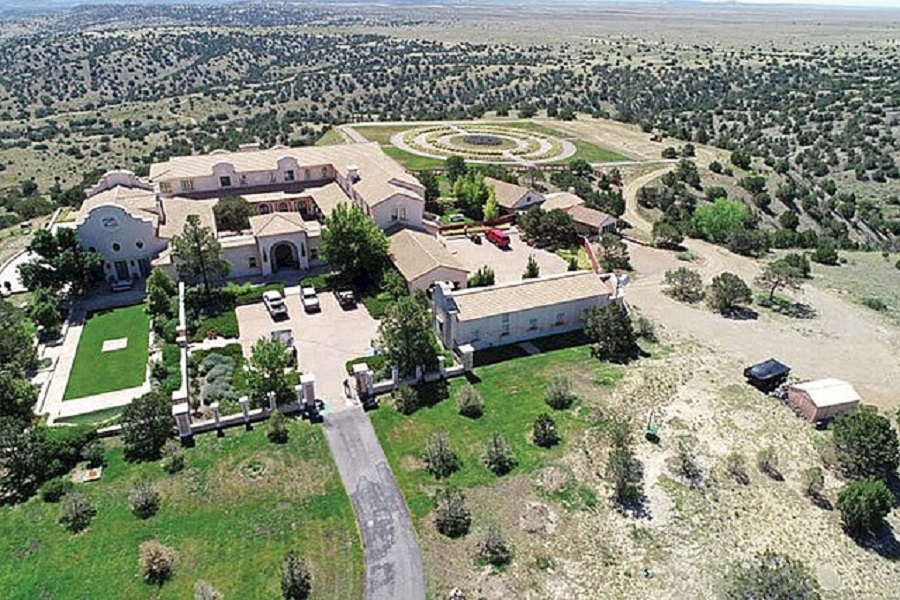
Rachel Benavidez is among at least 10 girls and young women who have alleged they were abused at the financier Jeffrey Epstein’s isolated compound starting in the late 1990s. Survivors said Epstein lured them with promises of money or career opportunities. They found themselves instead isolated and vulnerable in the sprawling ranch surrounded by miles of open land.
They described a pattern of abuse that included groping, coerced nude massages, sexual assault, and rape. Despite repeated testimonies, authorities have yet to complete a full investigation into what happened at the property.
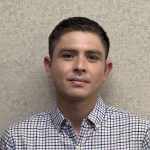
“Until survivors are heard and believed, I don’t think there’s ever going to be any justice,” Benavidez, 52, said in a recent interview with NBC News. The interview was her first since the United States Department of Justice released millions of documents in January that reopened the investigation of Epstein’s activities in New Mexico.
The document included an unverified claim that two “foreign girls” died and were buried at Zorro Ranch, which has prompted new action. State authorities have launched investigations this year: a criminal probe led by the New Mexico Department of Justice and a separate “truth commission” formed by the state legislature.
Benavidez expressed willingness to cooperate with investigators. She believes accountability should extend beyond Epstein, who died in 2019. Epstein’s longtime associate Ghislaine Maxwell is serving a prison sentence.
“I don’t think it’s too late for the truth to come out about people who were involved, who helped him, and who turned a blind eye,” she said. She claimed that she has not publicly named other individuals.
New Mexico Attorney General Raúl Torrez said his office will pursue leads that were left unexplored. Authorities searched the ranch in March—the first time law enforcement searched the property.
“We are going to do everything we can to get to the bottom of what happened there… and most importantly, center the voices of victims,” Torrez said.
Missed opportunities
Allegations of abuse linked to New Mexico date back nearly as far as those in Florida and New York. But the state has been treated as an undercard in the broader Epstein case.
Epstein acquired Zorro Ranch in 1993 and visited frequently. During those visits, he was often accompanied by young women. In 2008, he pleaded guilty in Florida to charges related to paying minors for sex. Epstein secured a controversial plea deal that limited his jail time and stopped a broader federal investigation, including potential leads in New Mexico.
Federal prosecutors in New York arrested Epstein again in 2019. But the charges did not include allegations tied to Zorro Ranch. That same year, the New Mexico Attorney General’s Office started its own probe. Later, the inquiry was paused at the request of federal prosecutors. Eventually, the AG handed over its case files to the federal prosecutors.
Advertisement
Former Attorney General Hector Balderas said he expected federal authorities to share evidence that could support state-level charges. That cooperation, he said, never came—even after Epstein died in custody and Maxwell’s conviction in 2021.
The lack of coordination, Balderas said, reflects systemic failures. “Not everybody’s case gets reviewed the same,” he said. Balderas described the episode as “a black eye in the justice system.”
Torrez has since asked federal authorities for unredacted documents related to Zorro Ranch. The Justice Department said it is willing to assist the renewed investigation.
‘I thought I was the only one.’
Benavidez, a 25-year-old massage therapist at the time, said she first went to the ranch in 1999. She was initially hired to work for Maxwell. Later, she was asked to provide massages to Epstein.
She recalled the Zorro Ranch as isolated and tightly secured, describing a winding dirt road leading to a mansion where she was told to proceed to a basement massage room decorated with images of topless women. For her, Epstein and Maxwell appeared to be wealthy clients with powerful connections. But the massage sessions turned sexual. Benavidez claimed Epstein sexually abused her.
She kept silent about her ordeal due to fear and shame. Even when she refused to return to the mansion, she said staff pressured her until she complied.
Her ordeal went on for about two years. She stopped going to the ranch after Epstein asked to sign a nondisclosure agreement. But the trauma lingered. “For a long time, I thought I was the only one,” she said.
She did not come out publicly until Epstein’s 2019 arrest. The arrest opened an opportunity for more survivors to come forward. Since then, she started connecting with other victims—whom she calls “survivor sisters.” And she shared her account with investigators, including the Federal Bureau of Investigation.
Benavidez is now working as a hospice nurse. She said she continues to speak out, hoping that individuals who enabled Epstein’s actions will be identified and held accountable. “I know there were people who knew what was going on,” she said. “I just hope the truth comes out so they can be held accountable.”

