

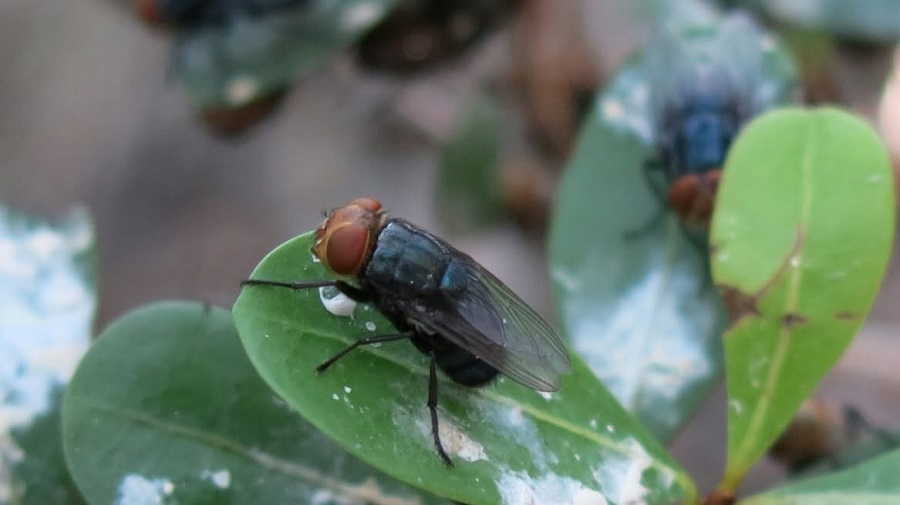
The Flesh-Eating Fly at America’s Doorstep — and Why New Mexico’s New World Screwworm Website Could Be a Game-Changer

New Mexico has launched a centralized website to help residents identify, report and respond to the threat of New World screwworm, a parasitic fly whose larvae feed on living tissue and can devastate livestock, wildlife and pets. Officials say the platform could become a critical early-warning system against outbreaks.

Centralizing warnings, documentation tools, and emergency advisories in one website may help stop a New World screwworm (NWS) before it spreads north, New Mexico officials hope.

Ranchers in the American Southwest view the threat of this deadly livestock parasite as almost medieval: a parasitic fly that lays eggs in open wounds, its larvae then burrow into living flesh and invade tissue from within.

The parasite has long plagued livestock industries across the Americas, causing immense losses before eradication campaigns in the late 20th century. Now, as concerns spread further amid concerns of transmission into the United States, state officials are betting that information, delivered quickly and clearly, may be one of New Mexico’s most important lines of defense.

One-stop shop platform

This week, the state launched ScrewwormNM.org. It is a one-stop shop website that provides residents across the state with real-time information about New World screwworm infestations, including how to spot cases, protect animals and people, and document suspected outbreaks.

The site consolidates advisories from multiple agencies, including the New Mexico Department of Agriculture, the New Mexico Livestock Board, health officials, and wildlife authorities. It creates what state officials describe as a “single source of truth” if the parasite emerges in the state.

The move reflects increasing recognition among agricultural and public health officials: rapid communication can be as critical as medical intervention in mitigating outbreaks. Unlike ordinary pests, New World screwworm larvae infest open wounds and feed on living tissue, often causing catastrophic injuries in livestock and wildlife if left untreated. Pets are also vulnerable. And in rare instances, humans may become hosts.

Infestations can spread quickly. “Cases in animals can deteriorate rapidly if not addressed early,” said Dr. Samantha Holeck, the state veterinarian with the New Mexico Livestock Board. “Having guidance in one place supports faster diagnosis, appropriate treatment, and timely reporting, all key to limiting spread.”

Help prevent New World screwworm outbreak

Officials say the website is not only for ranchers and veterinarians. It is also for hunters, pet owners, and rural residents who may detect abnormal wounds in animals.

New Mexico Department of Agriculture Secretary Jeff Witte said the initiative seeks to prevent panic while encouraging vigilance. “This website provides clear, accurate information in one place from the agencies leading the response,” Witte said. “Be alert, not alarmed — early detection and strong communication are vital to protecting animals and public health.”

The NWS website includes photographs and identification tools to help users identify infestations, reporting instructions, and emergency contact information for experts and state agencies. If New World screwworm is detected in New Mexico, officials said, the site will become the state’s primary platform for outbreak updates and response actions.

The site also complements the federal government’s national information portal, Screwworm.gov, which oversees countrywide messaging and response efforts.

The stakes are enormous, particularly for a state where ranching remains both an economic engine and a cultural identity. A screwworm outbreak could devastate livestock operations, disrupt trade, and cause significant environmental harm to wildlife populations.

But officials say preparedness starts with something simple. That is to make sure people know what they are looking at before it is too late.

With that in mind, the state’s New World screwworm website is not only a public information portal. It is also an attempt to establish an early-warning system driven not only by veterinarians and government agencies, but by ordinary people armed with timely information.

For corrections, news tips, and any other content requests, please send us an email at [email protected].

Hot this week

Have Something to Share? State to Hear From Black Students, Families on Education Needs

The listening session aims to strengthen inclusion and identify the needs of Black students in their academic journey.

Why the Monsoon is New Mexico’s Deadliest Weather Season

New Mexico harbors a quieter, more localized killer. The North American Monsoon brings a volatile combination of high-desert geography, violent atmospheric shifts, and catastrophic flash floods—making it statistically the state's deadliest weather phenomenon.

New Mexico Redirects Seedling Program to Burned Forests, Betting on Recovery in a Warming Climate

New Mexico is redirecting scarce tree seedlings to burned forests in a bid to restore ecosystems, protect water supplies and prevent permanent landscape change.

Advocating for Equity in Education: Principal Dooley Named Educator of the Year

Barcelona Elementary School Principal Rae Lynn Dooley was recognized by the Albuquerque Hispano Chamber of Commerce for her contributions to student success.

Governor Lujan Grisham is Calling on New Mexicans to Ditch the Grind and Transition Into a Career That Actually Matters. Here is How to...

Governor Michelle Lujan Grisham urged New Mexicans to explore state government careers, emphasizing the opportunity to make a meaningful difference in their communities. With hundreds of positions currently open across New Mexico, the governor highlighted public service as a path to a rewarding career that directly impacts the lives of residents.

Topics

Have Something to Share? State to Hear From Black Students, Families on Education Needs

The listening session aims to strengthen inclusion and identify the needs of Black students in their academic journey.

Why the Monsoon is New Mexico’s Deadliest Weather Season

New Mexico harbors a quieter, more localized killer. The North American Monsoon brings a volatile combination of high-desert geography, violent atmospheric shifts, and catastrophic flash floods—making it statistically the state's deadliest weather phenomenon.

New Mexico Redirects Seedling Program to Burned Forests, Betting on Recovery in a Warming Climate

New Mexico is redirecting scarce tree seedlings to burned forests in a bid to restore ecosystems, protect water supplies and prevent permanent landscape change.

Advocating for Equity in Education: Principal Dooley Named Educator of the Year

Barcelona Elementary School Principal Rae Lynn Dooley was recognized by the Albuquerque Hispano Chamber of Commerce for her contributions to student success.

Governor Lujan Grisham is Calling on New Mexicans to Ditch the Grind and Transition Into a Career That Actually Matters. Here is How to...

Governor Michelle Lujan Grisham urged New Mexicans to explore state government careers, emphasizing the opportunity to make a meaningful difference in their communities. With hundreds of positions currently open across New Mexico, the governor highlighted public service as a path to a rewarding career that directly impacts the lives of residents.

Three Injured in Southern New Mexico Due to Plane Crash

A small plane crash at the Doña Ana County International Jetport in southern New Mexico has left three people injured.

Moped Rider Dies In a Crash in Southeast Albuquerque

A crash involving a car and a moped rider led to the death of the moped rider.

$4 Billion Windfall From Oil and Gas Lease Sale — But They’re Refusing to Spend It. Here’s Why That’s Actually Smart.

New Mexico is choosing to stash its portion of a landmark $4 billion oil lease windfall in dedicated trust funds instead of spending it immediately — a prudent move that could help stabilize the state’s finances for the long term. The decision represents a departure from the state's volatile energy past.

Related Articles