


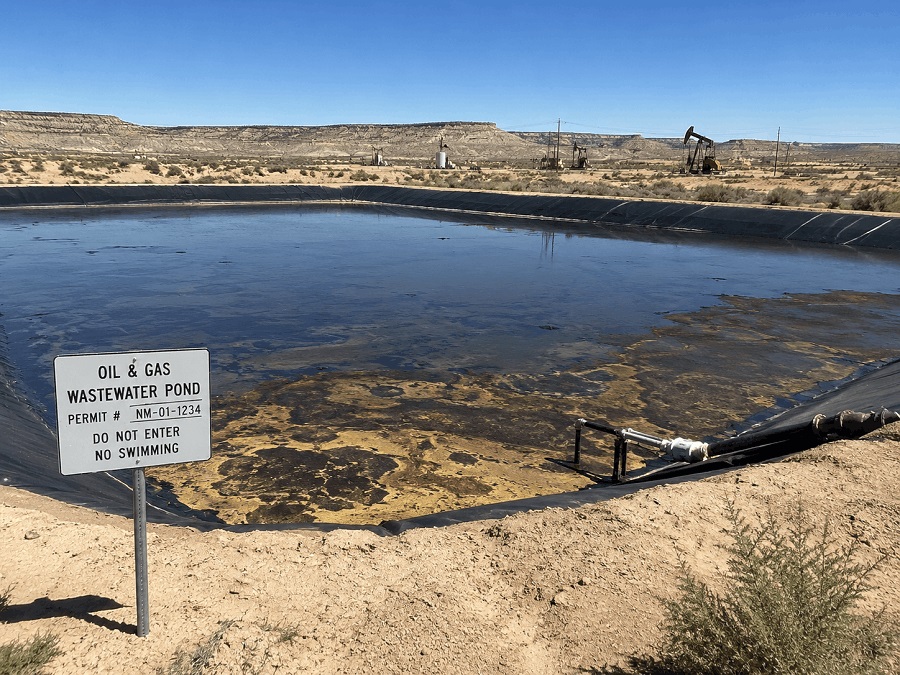
The fight over what to do with billions of gallons of toxic oil and gas wastewater in New Mexico took center stage again on Tuesday. This comes after state regulators approved the restarting of a controversial rulemaking process that could significantly expand where treated “produced water” may be used across the state.
Members of the New Mexico Water Quality Control Commission voted 7-4 with one abstention. The decision gave the green light to advance a petition backed by the Water, Access, Treatment and Reuse Alliance, or WATR. An industry group formed in 2024, WATR advocates for the broader reuse of wastewater generated by oil and gas drilling.
Relief to dwindling freshwater supplies
The decision paves the way for a lengthy public hearing process that could eventually overturn the less-than-a-year-old regulation. The current rule, finalized in May 2025, confined treated oilfield wastewater primarily to use within oil and gas operations and limited pilot projects.
If approved, the changes would allow companies and local governments to use treated wastewater more broadly in 13 counties for industrial activities, construction, and potentially agriculture. Supporters say the proposed changes could help relieve pressure on dwindling freshwater supplies in one of the driest states in the American West.
Environmental organizations, water advocates, and some commissioners, however, warned that the science surrounding wastewater treatment remains uncertain. They warned that the risks to public health and groundwater could be far-reaching.
Often referred to as produced water, oil and gas wastewater can contain salts, heavy metals, radioactive materials, and chemical compounds exempt from disclosure under trade-secret protections. Critics contend that no reliable system identifies or removes the contaminants before releasing the water into the environment.
‘Political decision’
“This was a political decision, pure and simple,” said Colin Cox, an attorney with the Center for Biological Diversity. “The same industry that gave us global warming, drought and more earthquakes while denying responsibility at every turn now wants New Mexicans to accept its treated waste in our rivers.”
The issue has become one of the most controversial debates under Gov. Michelle Lujan Grisham. who has championed reuse of wastewater as a possible answer to New Mexico’s worsening water crisis.
Supporters of the proposal are Democratic and Republican lawmakers, local officials in oil-producing counties such as Lea County and San Juan County, and major oil companies represented by WATR, including Chevron and ConocoPhillips. Industry advocates said advances in treatment technology and new research show cleaning wastewater to safe levels for limited uses is possible.
“We appreciate the commission’s leadership,” said Matthias Sayer, a co-founder of WATR. He said the new proceedings would allow experts to examine research from universities and scientists showing wastewater could become “non-toxic and protective of human health and the environment for defined applications.” Sayer accused opponents of the proposal of dismissing science for political reasons.
Split inside the commission
But the opponents countered. They claim politics is behind the push. “This is disappointing but unsurprising,” said Tannis Fox of the Western Environmental Law Center, representing several groups opposing the petition. “I think in a normal WQCC world, given all the problems this petition has, it wouldn’t go further. But since this is an administration priority, it’s moving forward.”
Advertisement
The commission itself split over the proposal’s legal and scientific underpinnings. Commission Chair Bill Brancard said he would not support the proposal in its current form. He cited major gaps in the proposed regulations, particularly the chemicals under the trade secret.
He also questioned why lawmakers confined the proposed measure to specific counties instead of making it statewide. “It would be unusual for us not to adopt a statewide rule,” Brancard said during the hearing.
Even commissioners who voted for the petition voiced their reservations. Liz Anderson said she also shared many of the concerns during public comment. “I have a lot of questions and concerns that would need to be addressed,” Anderson said.
Tuesday’s vote has also revived the controversy about the alleged political pressure from the governor’s office. Last year, the commission overturned the previous vote on a nearly similar proposal after environmental groups sought to disqualify seven commissioners for being impartial.
The accusations stemmed from reports by The Santa Fe New Mexican that disclosed emails from the governor’s office urging commissioners to attend the 2025 meeting and help push the WATR petition “over the finish line.”
The governor’s office dismissed claims of wrongdoing.
Back to wastewater controversy
In a statement on Tuesday, Leah March, deputy director of communications for Lujan Grisham’s office, said the vote was procedural and aimed to ensure a fuller scientific review. “The governor’s long-standing priority is to advance science-based solutions to New Mexico’s water crisis,” March said, adding that the process would ensure “all the evidence is on the table before a decision is made.”
Environmental groups, however, remained unconvinced. “I can’t believe we are back here,” said Rachel Conn of Amigos Bravos. “How many times do we as New Mexicans who care about clean water have to stand up to defeat this ill-advised effort to discharge toxic oil and gas wastewater into our rivers, streams, and groundwater?”
For many critics, the debate is no longer simply about water technology. It is about whether a state deeply dependent on oil revenue can objectively regulate an industry now proposing that its waste become part of New Mexico’s future water supply.
The hearings scheduled later this year could shape not only how the state confronts the intensifying drought. It will also determine how much risk the public is willing to accept in exchange for new water sources.

