

UNM Steps Up to Cut Food Waste, Boost Food Access

The University of New Mexico works to turn food waste into resources that help address food insecurity on campus.

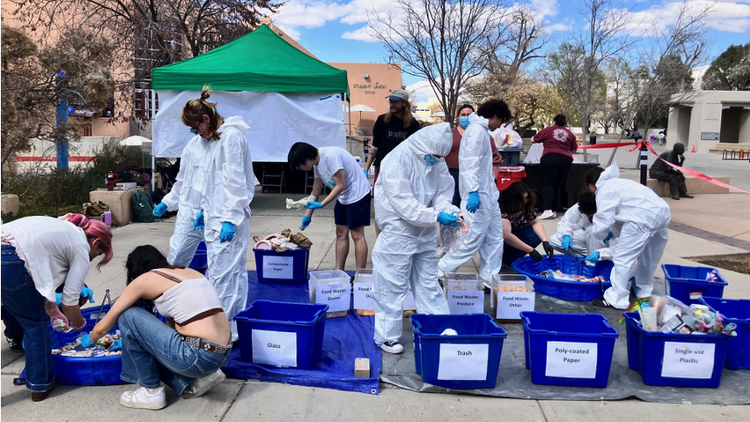
Food waste remains a long-standing concern in New Mexico. Farms and consumer-facing businesses continue to contribute to significant environmental, economic, and social challenges through food loss and waste. At the University of New Mexico (UNM), students spearheaded an initiative aimed at addressing the issue. 

UNM students are driving a growing effort to recover surplus food, support peers, and reduce waste. The U.S. Environmental Protection Agency identifies food waste as a major contributor to landfill emissions in the United States. 

The university’s students tackle that challenge by redirecting edible food away from the trash to people in need. Their efforts also support UNM’s sustainability goals by reducing waste and emissions. 

This spring, campus dining, student volunteers, and organizations expanded UNM’s food recovery through stronger partnerships. The program diverts waste and strengthens a culture of care and resource sharing. It aligns with UNM 2040 goals and the 2025 UNM Sustainability Strategic Plan.

What the Data Shows

Recent March and April data underscore the scale of the effort:

  • 698 pounds of food recovered
  • 2,450 food items redistributed
  • 105 food pickups completed
  • 581 meals provided

Students and faculty mentors coordinate pickups, manage logistics, and deliver recovered food to the Lobo Food Pantry in the Student Union Building. The UNM Food Recovery Network chapter plays a central role in the initiative, supported by a Sustainable Agriculture Research and Education grant. It transforms potential waste into a source of support for students.

“Through this effort, students are building systems that not only reduce waste but also ensure their peers have increased access to food. It’s sustainability in action, grounded in community care,” said Jessica Rowland, associate director of the Sustainability Studies Program and faculty adviser for the UNM Food Recovery Network.

Campus dining partners also played a role in the program’s growth. Mercado and Chick-fil-A helped build early momentum for the initiative. Einstein Bros. Bagels became a major contributor in April through regular bagel donations, now supplying a significant share of recovered food.

“We see food recovery as an important tool in addressing food insecurity on campus,” said Amanda Gerard, director of Dining and Hospitality. “Our goal is to make sure excess food doesn’t go to waste when it can instead support students who need it.”

How Technology Supports the Effort

Technology has also helped expand the initiative. App LoboEats connects departments and organizations with students, faculty, and staff by enabling real-time posting of leftover food from meetings and events. The platform reduces unnecessary and improves access to available food resources.

Students view its impact as both practical and personal. 

“It feels good knowing that something that might have been thrown away is actually helping someone get through their day,” said a student volunteer with the Food Recovery Network. “You’re not just talking about sustainability, you’re actually doing it, and you can see the difference.”

“Through the UNM Food Loss & Waste initiative, we’ve diverted close to 700 pounds of food from the trash, redirecting it to the campus food pantry to support students in need,” said sustainability student Kingsley Nelson. “This effort directly addresses student food insecurity while significantly reducing our community’s overall food waste, creating a more sustainable and supportive campus environment.”

As the initiative grows, organizers actively encourage more students and campus partners to join the cause. With increased participation, the program can evolve into a long-term system that supports student well-being while reducing environmental impact.

For corrections, news tips, and any other content requests, please send us an email at [email protected].

Hot this week

New Mexico’s Recipe for Hantavirus Risk—Climate, Deer Mice, and Country Living

More than 30 years after the Four Corners outbreak, New Mexico continues to report among the nation’s highest hantavirus pulmonary syndrome cases. Experts say the state’s ecology, climate cycles and rural living conditions have created an enduring hotspot for the rare but deadly disease carried by deer mice.

Community Solar Program Took Years to Arrive. Now the Solar Panels Are Finally Rising.

After years of delays, New Mexico’s community solar program is beginning to expand, with new projects coming online across the state. But developers and advocates say high interconnection costs and complicated billing rules still threaten the program’s long-term success.

Patient Voices Push New Mexico Lawmakers to Spotlight Healthcare Access and Affordability

New Mexico lawmakers spotlighted healthcare after hearing directly from patients, emphasizing urgent concerns about access, affordability, and workforce shortages.

Health Officials Clarify Hantavirus Risk: No Person‑to‑Person Spread

New Mexico's health officials have emphasized that the state's Hantavirus (Sin Nombre Virus) is not transmitted from person to person, which differs from the Andes virus that was responsible for an outbreak aboard a cruise ship. There have been many reports around the world about the Andes virus being transmitted by other people, and this caused people to worry about being able to contract the Andres virus from residents of New Mexico. The Andes virus is the only hantavirus known to be transmitted by another person in South America. The Sin Nombre Virus can only be contracted by contact with infected rodents, or their excrement. There are several ways to help to prevent hantavirus exposure, including disinfecting rodent nests and debris, ensuring that all points of entry into the home are sealed and practicing safe cleanup methods.

‘You Are Not Alone’: Grief Kits Help Students Cope with Loss 

Albuquerque Public Schools received grief kits after the Rotary Club of Albuquerque and the Grief Center worked together to provide resources that help students cope with loss.

Topics

New Mexico’s Recipe for Hantavirus Risk—Climate, Deer Mice, and Country Living

More than 30 years after the Four Corners outbreak, New Mexico continues to report among the nation’s highest hantavirus pulmonary syndrome cases. Experts say the state’s ecology, climate cycles and rural living conditions have created an enduring hotspot for the rare but deadly disease carried by deer mice.

Community Solar Program Took Years to Arrive. Now the Solar Panels Are Finally Rising.

After years of delays, New Mexico’s community solar program is beginning to expand, with new projects coming online across the state. But developers and advocates say high interconnection costs and complicated billing rules still threaten the program’s long-term success.

Patient Voices Push New Mexico Lawmakers to Spotlight Healthcare Access and Affordability

New Mexico lawmakers spotlighted healthcare after hearing directly from patients, emphasizing urgent concerns about access, affordability, and workforce shortages.

Health Officials Clarify Hantavirus Risk: No Person‑to‑Person Spread

New Mexico's health officials have emphasized that the state's Hantavirus (Sin Nombre Virus) is not transmitted from person to person, which differs from the Andes virus that was responsible for an outbreak aboard a cruise ship. There have been many reports around the world about the Andes virus being transmitted by other people, and this caused people to worry about being able to contract the Andres virus from residents of New Mexico. The Andes virus is the only hantavirus known to be transmitted by another person in South America. The Sin Nombre Virus can only be contracted by contact with infected rodents, or their excrement. There are several ways to help to prevent hantavirus exposure, including disinfecting rodent nests and debris, ensuring that all points of entry into the home are sealed and practicing safe cleanup methods.

‘You Are Not Alone’: Grief Kits Help Students Cope with Loss 

Albuquerque Public Schools received grief kits after the Rotary Club of Albuquerque and the Grief Center worked together to provide resources that help students cope with loss.

New Mexico Reopens Fight Over Toxic Oil and Gas Wastewater — Environmentalists Call It a Political Gamble

New Mexico regulators voted to revive a contentious rulemaking process that could expand the use of treated oil and gas wastewater beyond drilling sites, reigniting a fierce clash between industry advocates and environmental groups over public health, water scarcity and political influence.

Wastewater Sounded the Measles Alarm in New Mexico—Before Doctors Even Caught It

A new study shows New Mexico health officials detected measles in wastewater five days before hospitals confirmed cases, highlighting sewage surveillance as a powerful early-warning system during the nation’s largest measles outbreak in decades.

Newborn Dies After Mother’s Raw Milk Listeria Infection

A newborn in New Mexico died after contracting listeria from raw milk consumed by the mother during pregnancy, state health officials confirmed. This case highlights the severe risks of drinking unpasteurized dairy products, especially for pregnant women and infants.

Related Articles