


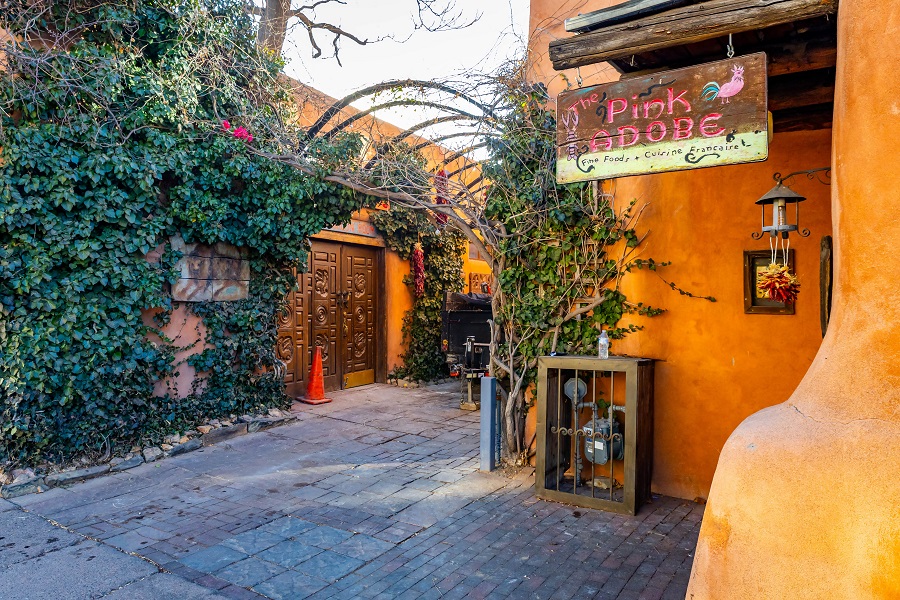
The first question in Santa Fe’s culinary journey is not where you came from. As the waiter gently leans, almost ceremonially, it is: red or green? Red chile — smoky, earthy, slow-burning — or green chile, bright with fire and tangy bite. Pick one, and you enter the grammar of New Mexican cuisine. Choose both, and you quickly learn the local word: Christmas.
Food is not a side attraction for travelers coming to Santa Fe. It is the emotional geography charted across the Adobe Dining Hall, wood smoke, blue corn tortillas, and recipes older than the United States itself.
The best way to understand Santa Fe is to eat through it. Slowly.
Start at The Shed, Where Santa Fe Still Tastes Like Itself
Behind the adobe walls near the Plaza, The Shed feels less like a restaurant. It is more of a living inheritance. The dining rooms are dim and warm, and time darkened their wooden beams. Servers navigate through narrow hallways balancing plates full of red chile. Tourists came curious while locals arrive loyal.
Trends have barely changed the menu. Deep crimson sauce wrapped the enchiladas. Blue corn tortillas, almost sweet, taste earthy. Green chile stew arrives with enough sting to make strangers grab for water at neighboring tables. This is not performative Southwestern cuisine. It is its original language.
And yes, the margaritas are deceptively dangerous.
At Cafe Pasqual’s, Breakfast Becomes a Contact Sport
Morning in Cafe Pasqual’s starts with a line. And none present seems angry about it.
Visitors patiently wait outside the small restaurant under the strings of chile ristras. Their conversations center on hiking plans, gallery visits, and whether anyone has physically acclimated to Santa Fe’s altitude.
Inside the restaurant, the walls bursting with color and folk artistry. Servers dish out plates looking almost celebratory: huevos motuleños topped with black beans and chile, blue corn pancakes, organic eggs, and strong coffee.
Cafe Pasqual’s had already built its identity around local sourcing and seasonal ingredients. It is ahead long before “farm-to-table” became a restaurant vocabulary. The result is deeply Santa Fe: artistic, communal, moderately chaotic, and memorable.
On Canyon Road, Geronimo Turns the Desert Into Fine Dining
At night, lanterns and gallery lights glow above Canyon Road. Behind the adobe doorway sits Geronimo, arguably Santa Fe’s most elegant dining room. Dinner here slowly unfolds: candlelight flickers against old plaster walls, wine glasses capture amber reflections, and conversations are lowered to intimate tones.
The cuisine is refined. The elk tenderloin came perfectly pink. Lamb is flavored, feels rooted in the Southwest, yet modern. Service moves with precision. This is where anniversaries happen. Proposals made. And the final nights before flights home.
Santa Fe can feel raw and magical by day. Geronimo reminds you that the desert also knows fine dining.
Sazón Is Where Mexican Cuisine Becomes Memory
Only a handful of restaurants in New Mexico inspire the devotion surrounding Sazón.
Chef Fernando Olea makes mole a tale of culture, not only award-winning cooking— layered, emotional, historical. Some contain dozens of ingredients and flavors that transform slowly with each bite: bitter chocolate, dried chile, smoke, spice, fruit, earthy.
Advertisement
Dinner at Sazón often feels more like storytelling. The restaurant is one of Santa Fe’s culinary landmarks because it connects Mexico and New Mexico without canceling either tradition. The dishes not only carry sophistication. It also carries intimacy — food everyone will remember later, long after the table is cleaned.
Then There’s Coyote Cafe, Where Santa Fe Finally Loosens Up
Not all meals in Santa Fe need reverence.
The mood shifts toward laughter, cocktails, and rooftop cantina overlooking downtown at Coyote Cafe & Rooftop Cantina. The food has the city’s signature flavors — carne adovada, roasted chile, and smoky meats. But the environment is livelier, louder, less contemplative.
Travelers drift upstairs with margaritas as the evening cools and desert light fades. After spending days wandering museums and adobe alleyways, the rooftop invites everyone to relax.
Santa Fe’s Real Ingredient Is History
To eat in Santa Fe is to taste centuries of history.
Pueblo traditions, Spanish colonial influences, Mexican cuisine, backcountry cooking, and modern fine dining all coexist in Santa Fe on the same plate. Blue corn predates European arrival. Chile shapes the state’s identity. Even the architecture defines the experience: thick adobe walls, fireplaces crackling through winter evenings.
Restaurants in many American cities chase novelty. Santa Fe chases continuity. And perhaps that is why travelers leave talking more of how the city made them feel — slower, warmer, more awake to flavor and place.
The desert they say has its own unique way of sharpening appetite. Santa Fe answers it with chile.

