

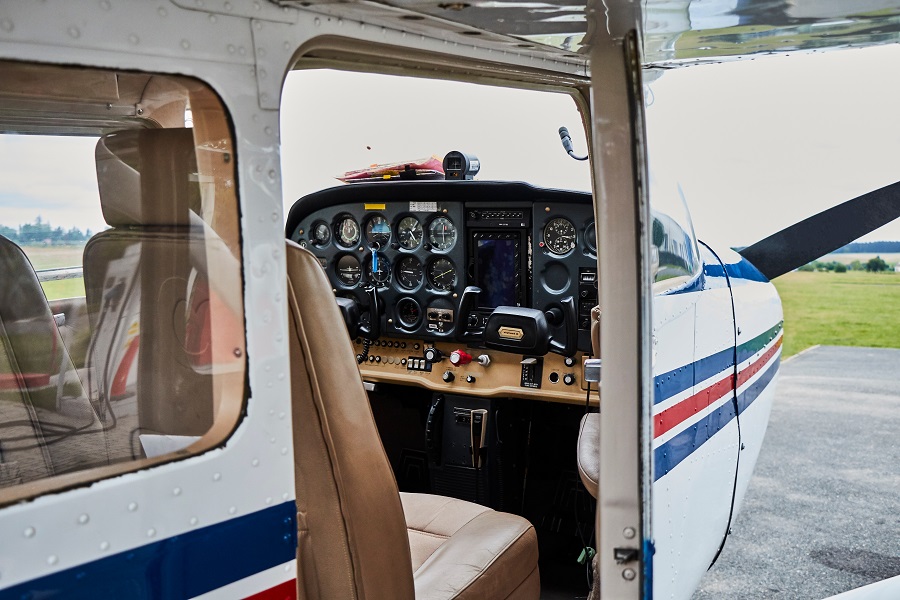
The U.S. Supreme Court will decide whether Alaska violated the Constitution by trying to seize a pilot’s $95,000 airplane after convicting him of transporting a six-pack of beer into a dry village, a case that could redefine the limits of government asset forfeiture.
The justices agreed to hear an appeal from Alaska pilot Kenneth Jouppi, who argues that confiscating his airplane amounts to an excessive fine prohibited by the Eighth Amendment.
A court convicted Jouppi of a misdemeanor for attempting to transport alcoholic beverages into Beaver, an Alaska village that bans alcohol under the state’s local option law. The court sentenced him to three days in jail and fined $1,500.
Alaska also sought to forfeit the Cessna used in the offense under state law, arguing the airplane was the instrumentality of the crime.
State officials use forfeiture to deter the illegal transport of alcohol into remote communities, where alcohol abuse has long been linked to violence, crime, and other social problems. Because many villages are accessible only by air or river, prosecutors argue that smugglers frequently use airplanes to transport alcohol into dry communities.
Jouppi claims that taking an aircraft worth about $95,000 for a misdemeanor involving a small quantity of alcohol is grossly disproportionate to the offense. His attorneys argue the forfeiture violates the Eighth Amendment’s Excessive Fines Clause, which prohibits excessive financial penalties imposed by the government.
The Supreme Court is not reviewing Jouppi’s conviction. Instead, the justices will determine whether the forfeiture is an unconstitutional excessive fine.
The case will clarify how courts evaluate whether asset forfeitures are proportional to the underlying offense. It could have broad implications for forfeiture cases involving vehicles, boats, aircraft, and other property used in criminal activity across the United States.
The court will hear arguments during its upcoming term and likely issue a decision by the end of next year’s term.

