

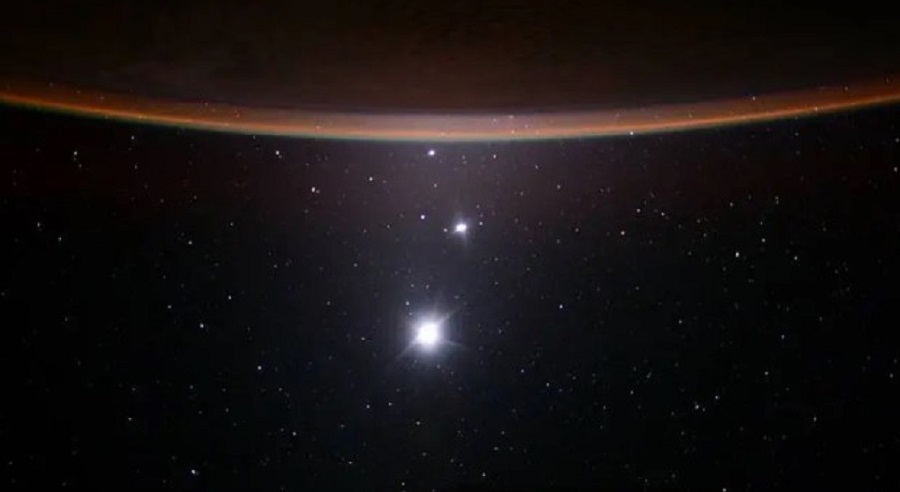
The night sky of June is preparing its own celestial show as the season’s heat blankets the high desert and mountain ranges, one that requires no more than a clear western horizon, a blanket and perhaps a pair of binoculars.
This month, the state’s popular dark skies — among the best in North America — will display a rare close encounter between Venus and Jupiter, along with beneficial moon timing, the summer solstice and chances for deep-sky stargazing.
What to expect
The highlight will be on June 8-9, when Venus and Jupiter will appear only a pinky finger apart in the western evening sky after sunset, separated by around 1.5 degrees. Mercury may join these two brightest planets in the twilight, creating a compelling planetary canvas in the constellation Gemini.
Venus passes Jupiter every 10 to 15 months. Other times, this occurs near the Sun, such as on August 25, 2027, and a conjunction on November 10, 2028, will follow before dawn in the east-southeast sky. These conjunctions are not unique, but infrequent enough to be remarkable. Venus and Jupiter shine the brightest in the sky next to the Moon and the Sun, making the sight dazzling to behold. The planets will remain very close to each other for several days, offering multiple chances to skywatchers to see as twilight deepens.
The middle of June brings even more drama. A “Super New Moon” coincides with Mercury’s greatest eastern elongation on June 15. Arguably, it will be its best evening appearance for the rest of the year. With no moonlight to wash the heavens, this is prime time for New Mexicans to search for the Milky Way’s luminous core, distant galaxies, and star clusters at International Dark Sky Parks such as Chaco Culture National Historical Park, Capulin Volcano National Monument, Clayton Lake State Park, and the Cosmic Campground.
A thin crescent Moon will later join the planetary tableu around June 16. It will add another photogenic alignment low in the west-northwest.
Summer Solstice: Shifting season
The month culminates with the summer solstice on June 21 — the Northern Hemisphere’s longest day of the year — and the Strawberry Moon on June 29, which is a micromoon. The Full Moon will appear slightly smaller and dimmer than average as it slides low in the sky, traditionally named by Algonquin peoples for the ripening of wild strawberries.
The June Bootids meteor shower peaks around June 27. Stargazers will have a chance to see a few shooting stars per hour, though the waxing moon may interfere.
New Mexico’s Celestial Advantage
Only a few places in the United States can rival New Mexico for naked-eye and telescopic astronomy. Its high mountains, dry climate, and vast stretches with minimal light pollution provide some of the darkest skies accessible to millions of Americans. Local astronomy enthusiasts, the Astronomical Society of Las Cruces and Albuquerque Astronomical Society, regularly host star parties. Other sites like Valles Caldera and Salinas Pueblo Missions usually roll out public programs.
A simple piece of advice for residents of Albuquerque, Santa Fe, Las Cruces, or rural areas. To enjoy the June evening sky, head west of city lights if possible, face a clear horizon in the hour after sunset to see the planets, and protect night vision with red lights. Apps like Stellarium can give precise local timings.
June’s skies offer that invitation: planets dancing close to each other, moonless nights for wonder, and the shifting seasons written in the stars. New Mexicans and visitors need only look up to enjoy the celestial show.

