

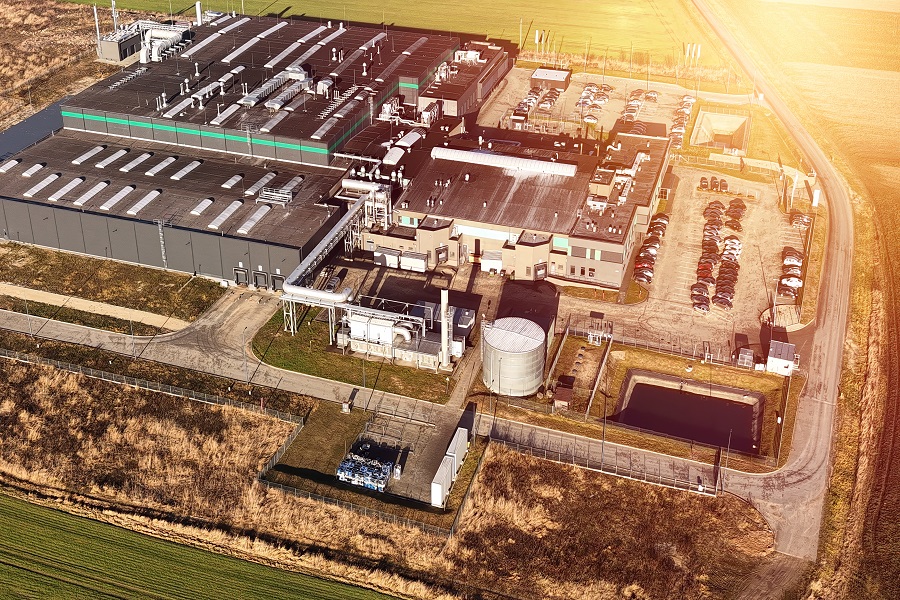
Hundreds of ranchers, retirees, and university staff crowded the auditorium at New Mexico Tech one warm evening in May, carrying signs that read “Big Data, Big Lie” and “NMT = No More Transparency.” Their grievance targeted a Canadian developer’s proposal for what could become one of the world’s largest ‘renewable‑led’ data centers—a sprawling complex covering up to 10,000 acres, with a massive solar array and atmospheric water generators designed to avoid draining local sources.
Barely a month later, on June 9, the Socorro County Board of Commissioners unanimously approved a one-year moratorium on new data centers and their supporting infrastructure. The decision came after New Mexico Tech withdrew from the partnership, citing insufficient contiguous land and growing community concerns.
The episode captures an increasing tension playing out across New Mexico. Recently, the state has pushed aggressively to diversify its economy beyond oil and gas. It courted the aerospace, film, tech, and renewable energy sectors. But the explosive growth of artificial intelligence is bringing a new kind of suitor: data centers hungry for land, power, and, critically, water in one of the driest states in the Southwest.
Lujan Grisham Champions Shift
Governor Michelle Lujan Grisham has championed the shift. She announced in early 2025 a $5 billion partnership with BorderPlex Digital for a “Digital Infrastructure Campus” in Santa Teresa, Doña Ana County, near the border with Mexico. Project Jupiter represents a transformative opportunity, offering thousands of temporary construction jobs, hundreds of long‑term positions paying $75,000–$100,000 annually, and significant economic output.
Project proponents highlight the potential. Oracle, a tenant for the Jupiter campus, projected significant boosts to the local economy, generating hundreds of millions in annual output while partnering with community colleges and universities for workforce development. Company officials argue the facilities represent the high-tech future of New Mexico, veering away from its dependence on volatile fossil fuel revenues.
The backlash, however, has been swift and loud. Socorro residents worry about big-sale industrial development blotting out the vast desert panorama, straining the electrical grid, and draining the aquifers. Similar concerns have led Santa Fe County to have its own moratorium. Data centers across the Western U.S. are confronting historic drought conditions.
“The Rio Grande is completely dried up in Albuquerque. We’re completely relying on groundwater. And you want to have this water-hungry data center in the middle of Socorro. It’s kind of offensive to even suggest that,” one resident said at a New Mexico Tech town hall.
Statewide Emergency
Lujan Grisham declared a statewide drought emergency on May 20 amid record-low snowpack and extreme fire danger. Much of the state remains in drought conditions, ranging from severe to extreme. Data centers, consuming millions of gallons of water annually for cooling, add new pressures to already strained systems
Western Resource Advocates and others have estimated that data centers in several Southwestern states could drain billions of gallons yearly by 2035 for their on-site needs alone. The estimate does not count the indirect thirst from power generation. Agriculture has historically been the largest consumer of water in New Mexico, yet it now confronts mounting pressures of its own. Officials and residents question whether the projected jobs justify the trade-offs.
“We really appreciate you guys. You listened to us,” Socorro resident Jon Hertz told commissioners after the moratorium vote. “I do believe and support the development of renewable resources, but not those that gobble up our local resources for the sheer benefit of billionaires and large cities outside of New Mexico.”
Developers like Green Data’s Jason Bak tried to allay fears. He proposed using solar energy alongside atmospheric water generation systems that extract moisture from the air. But skepticism runs deep. Bak admitted at public meetings that his company has yet to build a full-scale data center.
Debate Around Data Centers Echoes National Struggle
The debate echoes national struggles. With the surge in AI demand, data centers are multiplying, mostly in places with cheap land and power but with fragile environments. In New Mexico, the push comes as the state steers through an energy transition. On one hand, there is abundant sunshine and wind potential; on the other, an aging grid and drought.
County leaders in Socorro said the moratorium will give them time to study the project impacts and formulate regulatory measures in a locality lacking comprehensive zoning. They hope to balance openness to responsible business with safeguarding agriculture, ranching, and overall quality of life.
Some residents recognized the importance of economic development in a county with a declining population. That economic development, they insisted, must be calibrated.
The stakes are high for the state. Despite its natural resources and the presence of federal laboratories in Los Alamos and Sandia, New Mexico has long ranked near the bottom in economic indicators. Well-regulated data centers could mean diversification and high-wage jobs. But mishandling them risks repeating old patterns, with extractive industries delivering only short‑term gains and long-term costs to rural communities.
Bak told skeptical residents in Socorro: the concerns are real and shared nationwide. “We understand that some Socorro County residents are skeptical of our claims about the project,” Bak said. “That skepticism is being reflected by the opposition to other projects all across the country. But we’re not other projects all across the country.”
The question for New Mexico is whether it can write a different ending — a future that respects the desert’s boundaries while embracing the digital era. For now, in places like Socorro, the answer is a cautious moratorium.

