

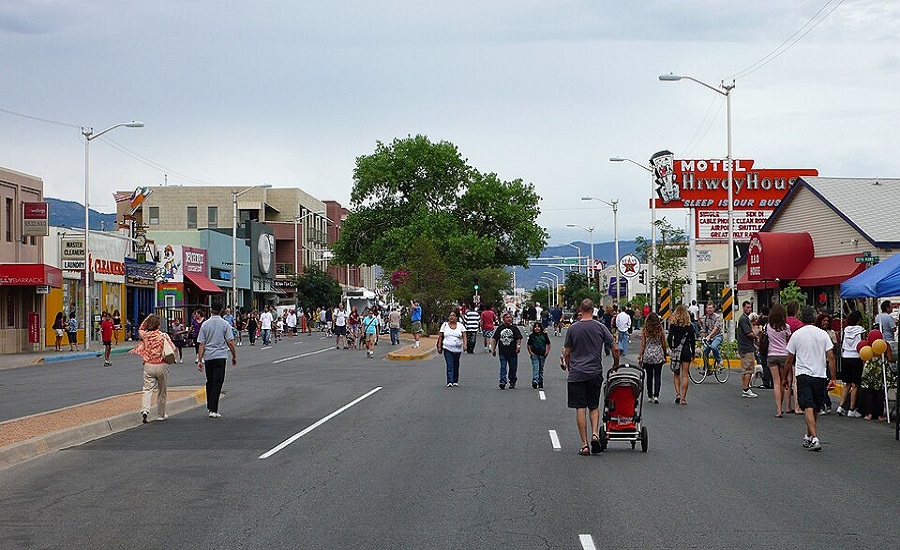
Iconic businesses like The Farmacy in Nob Hill and Bosque Brewing have been more than businesses. They were community anchors in a state shaped by the enduring strength of its small-scale economic base. Now, many are gone, victims of prolonged economic strain testing the resilience of longtime New Mexico enterprises.
A series of closures swept through Albuquerque and beyond in late 2025 and early 2026, claiming iconic spots, including The Farmacy, Canvas Artistry Restaurant & Art Bar, several Bosque Brewing Co. locations, and Blaze Pizza outlets. The latest to fold up is a longtime business, Masks y Mas, owned by Federico Torres.
Industry leaders point to a familiar culprit: escalating costs amid stagnant customer demand in a state where poverty remains high and household incomes lag behind the national average. “Since COVID, everything’s become more expensive,” said Carol Wight, CEO of the New Mexico Restaurant Association. “That’s even for restaurants to sell, and they’ve not been able to keep up with their pricing in a lot of cases.” Wight identified inflation as a central challenge. She explained that rising food, labor, and utility costs have undermined profitability as restaurants limit price increases.
Torres chimed in. He said the latest price increases reflect experiences familiar to business operators navigating 2022’s inflation. The annual inflation rate has fallen from 9.1 percent, but it was 4.2 percent in May – the highest mark since April 2023.
Structural Headwinds
New Mexico’s challenges run deeper than any single industry. The state ranks near the bottom in national business climate assessments, with a business environment often cited as one of the toughest in the U.S. Small business optimism, as tracked by the NFIB, has hovered below national averages, with owners citing labor quality, regulations, and uncertainty as persistent drags.
The vulnerability of the state economy lies in its over-reliance on volatile sectors. Oil and gas revenues can swing wildly, sometimes funding 16 to 27 percent of the general fund, even as public spending and payrolls define the larger economic landscape. Initiatives to diversify into film, aerospace, tech, and clean energy have resulted in pockets of promise. But growth in private employment and overall prosperity has remained sluggish.
High poverty rates, out-migration of younger workers, and educational attainment gaps compound the problem. With a smaller well-to-do consumer base and thinner margins, longtime family-owned businesses — often without the deep pockets or scale of national chains — feel the strain most severely.
Glimmers of Hope for Businesses
Not all signs are bleak. Energy revenues sometimes give a break from the squeeze. And high-impact sectors, such as data centers or federal lab-related activity, offer growth promise. Some new restaurants continue to open even as others close shop, reflecting the creativity of small businesses.
Still, for owners like those who built The Farmacy or Bosque Brewing into iconic businesses, the math of doing business has grown exacting. Their departures from the scene not only empty storefronts but also quieter neighborhoods and employment declines amid a broader struggle for sustained economic growth.

