

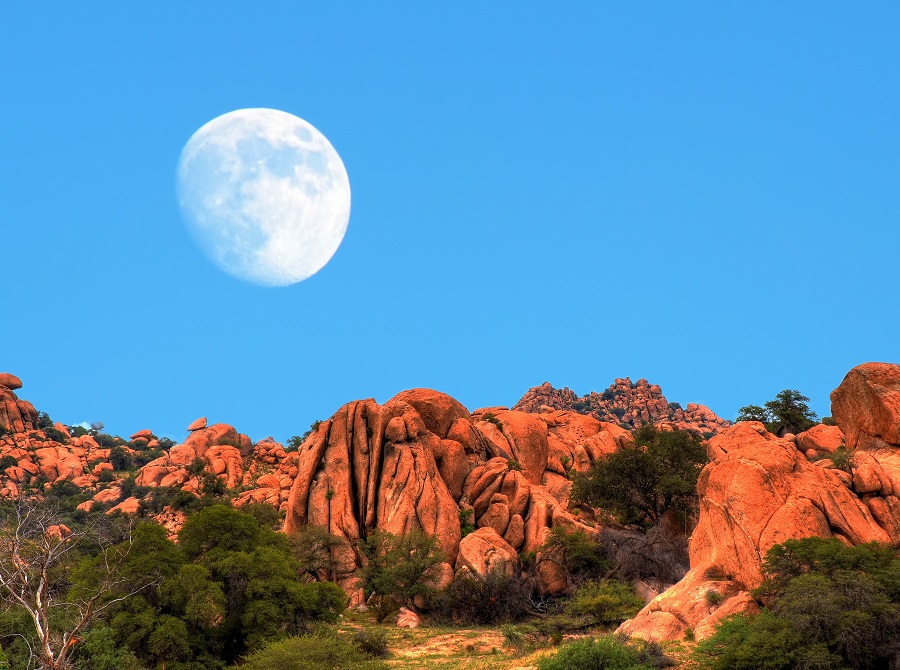
The Buck Moon will bathe New Mexico’s high desert in silvery light Wednesday night, casting long shadows across gypsum dunes, ancient pueblos and some of the nation’s darkest skies.
The full moon will be at its brightest at 10:36 a.m. EDT (8:36 a.m. MDT) on Wednesday. Across New Mexico, people will see it rise in the southeast just after sunset. When it’s near the horizon, the moon can look bigger and may appear orange before it moves higher into the sky.
Male deer grow their antlers quickly in July, giving the full moon its name, the Buck Moon. Summer storms give the July full moon its name, the Thunder Moon, while the harvest season inspires its other name, the Hay Moon. Indigenous peoples across North America used moon cycles as a natural calendar for planting, hunting and rituals. The growing antlers were seen as a sign of strength and renewal.
New Mexico is one of the best places to view the Buck Moon because of its dark skies. Chaco Culture National Historical Park, Capulin Volcano National Monument and White Sands National Park all offer clear views. White Sands will host a Full Moon Night with live music, talks and extended hours until 11 p.m., giving visitors a chance to watch the moonlight over the dunes.
If you plan to go outside and look, here are a few tips. The moon will be so bright that it will hide fainter stars and the Milky Way, but it’s perfect for casual viewing and taking photos of the moonrise. For the best view, find a high spot away from city lights with a clear view to the southeast. Binoculars can help you see details on the moon’s surface. You might also spot some bright meteors from the Southern Delta Aquariids shower, even with the moon’s glare.
Whether you watch from a dark-sky park or just step outside in Albuquerque, the Buck Moon is a good reason to pause and enjoy a sky tradition that people have followed for generations.

