

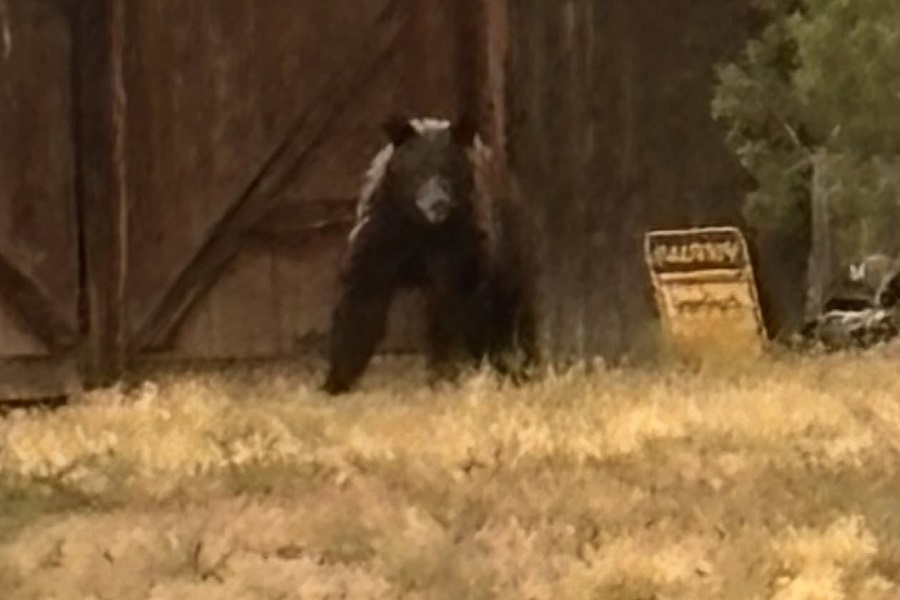
A man succumbed to injuries after being mauled by a bear at about 1 p.m. on Thursday in Crystal, about three hours from Albuquerque.
“The bear was shot and wounded by law enforcement, but it fled into nearby woods. The bear was located and neutralized,” the Navajo Police Department said in a statement on social media.
Navajo Nation President Buu Van Nygren offered condolences after the tragic loss. He described the man as “one of our Diné relatives.”
He highlighted the special place bears hold in Navajo culture. “This incident is especially troubling for us as Diné people. In our traditional teachings, the bear is regarded as a powerful and sacred being of the mountains. Our elders have taught us to respect these beings, keep our distance and approach encounters with wildlife carefully and with reverence,” Nygren wrote on X.
Deadly bear attacks remain uncommon in North America. But recent encounters in New Mexico, including non-fatal bear attacks near Cedar Crest and Red River, have signaled that bears have been increasingly coming into contact with people.
Wildlife agencies, including the National Park Service and state wildlife authorities, advise the public that prevention is the first line of defense.
Avoiding a bear encounter
Make your presence known when walking through wooded or grassy terrain. Sing, talk, clap, or make other noises, especially around blind corners or areas where bears can hide behind vegetation.
Whenever possible, travel in groups and remain alert. Don’t use headphones that could prevent you from hearing a bear’s approach.
Look for signs that bears are nearby, including tracks, scat, claw marks and disturbed vegetation.
Wildlife officials advised the public to avoid approaching a bear for a photograph. Don’t feed a bear or place yourself between a mother and her cubs.
Campers should safely store food, garbage, and other scented products because they attract bears.
Keep dogs on leash. Dogs may approach or provoke a bear and flee toward its owner, which can be potentially dangerous.
Residents in communities near mountain ranges should avoid attracting bears by securing garbage and removing outdoor food sources.
Keep this in mind
The first rule is do not run. Seeing or encountering a bear can trigger a chase response, which could be deadly because bears can easily outrun humans.
Instead, remain calm and identify yourself. Speak in a calm, firm voice so the bear recognizes you as a person. Stand tall, slowly wave your arms or raise a jacket to make yourself appear larger.
Then slowly back away while watching the bear. Avoid turning your back and give the bear an escape route by not blocking its path. In most cases, a black bear will simply leave.
Do not panic if a bear follows you. Remain calm and stand your ground. Yelling, clapping, and appearing to be threatening can help thwart a bear attack.
If bear spray is at hand, have it ready. Place bear spray in an easily accessible holster instead of keeping it inside a backpack. Familiarize yourself with how to operate bear spray before entering bear country.
It is important to know a bluff charge from an attack because a bear can also bluff by running toward you. Hold your ground and give the animal space.
Bear species matters
Yes, it matters. A brown bear behaves differently from a black one.
When attacked by grizzly or brown bears, wildlife officials usually advise playing dead. But that should not be a response when attacked by a black bear.
Fight back by targeting the bear’s face and muzzle once a black bear attacks or makes physical contact. If rocks, sticks, or other available objects, use it in fighting back.
If you can, try to reach a vehicle, building, or other secure location.
The deadly Crystal attack is a reminder that rare wildlife encounters can be dangerous and have to be taken seriously. Authorities urged residents and visitors to report sightings and avoid potentially dangerous wildlife.

