

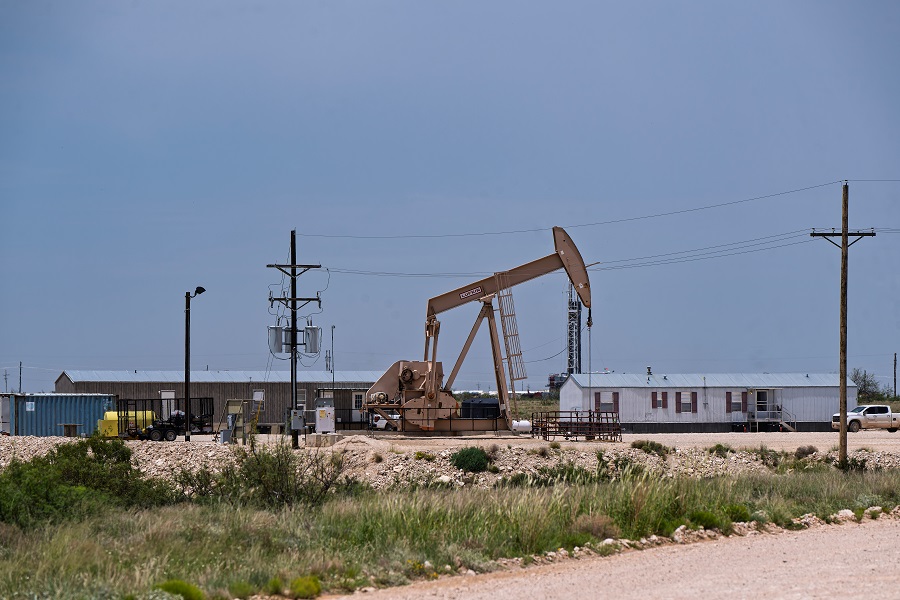
Two new studies have found that the air in Loving, southeastern New Mexico, showed intermittent spikes in radiation, with readings sometimes reaching about five times the site’s normal background level.
The findings backed up what the residents have complained about for years: that something seemed wrong with the air. They have reported unusual odors, a brown haze, and a persistent sense that the pollution around them was more than a nuisance.
Now, these two new studies suggest those concerns may have a scientific basis.
In the ozone study, researchers reported detecting higher levels of ground-level ozone, a pollutant linked to oil and gas emissions and known as a lung irritant.
The findings, published this month in two scientific papers, do not identify any one well or facility as the source. But people living in one of the country’s busiest oilfields say the studies confirm what they have seen and smelled for years.
“It’s pollution,” said Loving resident Jackie Onsurez, a former Democratic primary candidate for lieutenant governor. “You don’t have to be a scientist to wake up and see it’s brown and it’s not dirt.”
Scientists monitored the air in the area continuously from May 2023 to May 2024. They measured radon, radon decay products, ozone, and other pollutants.
The radiation study, published in the journal Elementa, found that airborne radiation levels varied with wind direction. At their peak, readings were about five times higher than the usual background level at the site. That finding indicates temporary increases above normal conditions, though not necessarily levels five times higher than any government health or safety limit.
Researchers said the results suggest that emissions associated with nearby oil and gas activity could be contributing to the spikes.
The research, however, has limitations. One of these is the collection of data at only one site. That means the study does not establish that any particular well, drilling site, or processing plant caused the radiation spikes.
Researchers said a larger network of monitoring stations and more studies are needed to determine and nail down the source of the emissions. That process, known as source apportionment, could help identify which facilities or activities are causing the pollution.

