Home Blog Page 57

Santa Fe’s Budget Process Overhaul: What It Could Mean for Taxpayers

0

Santa Fe officials have expressed intentions to improve the city’s annual budget process. Recent budgets have been criticized for being completed late, focusing excessively on minor details, and lacking clear connections to resident priorities such as road maintenance, park upkeep, and police staffing. (Charnot, 2025)

A City of Santa Fe resolution from September 2025 states that the budget process from 2023 to 2025 did not align with long-term objectives or annual priorities and placed excessive emphasis on spending details rather than service quality. The resolution establishes a new schedule to initiate the budget process earlier, incorporate community feedback, and monitor progress toward established goals.

City leaders have identified governance and timing as significant challenges. In a May 2025 report regarding the city’s FY2026 budget vote, then-city manager Mark Scott advocated for the involvement of all council members, stating, “I don’t believe that it’s helpful to do budget committees that aren’t the entire set of councilors.”

Why budget process problems matter for households

For taxpayers, the city’s budget process has direct implications. Inefficiencies or issues within the process can result in tangible costs and disruptions:

  • Services and reliability: If the city doesn’t focus on clear goals—like how often roads get fixed or how well parks are kept up—residents might see services that are uneven or unreliable, even when the city spends more money. The new plan aims to focus more on quality and results that people can actually notice.
  • Taxes and fees: When the budget is delayed, or priorities are unclear, the city may have to make quick decisions—like raising fees or delaying projects—because there isn’t enough time to plan better solutions. Santa Fe’s rules require each department to review its fees each year before the mayor submits a budget proposal. Outside experts and lenders also look at how well the city plans its budget.
  • Bond costs: People who lend money to the city pay attention to how well Santa Fe plans its budget. If the budget isn’t clear or doesn’t show real progress, it can make borrowing money more expensive for the city. Santa Fe’s budget always includes payments on money it already owes.
  • Household planning: If the city waits until the last minute to finalize the budget, families might suddenly have to pay higher rates or face delayed projects. The new plan is to give people earlier warnings about what’s coming and use better estimates to avoid surprises.

What’s next

For residents seeking to understand the impact of municipal financial decisions, key indicators will include the transparency of Santa Fe’s goals and progress updates, as well as the extent to which future budgets clearly delineate choices among service quality, taxes or fees, and long-term projects, in accordance with the resolution’s schedule.

UNM FiRES Center Works to Strengthen Wildfire Resilience in New Mexico

0

The Center for Fire Resilient Ecosystems and Society (FiRES) at the University of New Mexico (UNM) has committed to continuing to help communities across the state become more resilient to wildfires. 

FiRES, an interdisciplinary center, conducts research and community outreach to help communities address the negative impacts of fires. A team of UNM faculty experts is working with state officials and policymakers for the initiative. 

According to UNM News, the FiRES Center will continue to expand partnerships, engage communities, and lead projects to mitigate wildfire damage.

The team is partnering with Sandia National Laboratory scientists to improve the efficiency of wildfire smoke modeling. Current models run slowly, so collaborative researchers are working to improve efficiency to enable faster smoke predictions. This partnership was made possible through the center’s connections and ongoing conversations. 

Some additional projects the team is currently pursuing include landscape-scale risk modeling, fuel moisture monitoring, and improving post-fire reforestation methods. 

“The effect of these fires on our communities, ecosystems, and watersheds will depend on the choices we make in land management today. So, the center’s team is working toward solutions for living in a fire-prone landscape,” said the center’s Director Matthew Hurteau.

Reports show that New Mexico has been getting hotter and drier with each passing year. This winter, record-breaking warm temperatures across the state could significantly affect this spring’s wildfire season

How the UNM FiRES Center Started Its Work

Hurteau, a biology professor in the Biology Department at UNM, officially established the center in 2024. Although he started the connecting and research work much earlier. The center envisions a future where communities and ecosystems in New Mexico and the western U.S. are resilient to wildfire. 

“Our state is highly flammable,” said Hurteau. “There are people working to alleviate this, and I wanted to bring them all together to increase the efficiency and effectiveness of our discussions and solutions.”

The FiRES team includes multiple UNM departments, including biology, economics, communication and journalism, pharmaceutical sciences, and computer sciences. Team members also represent internal medicine, geography, environmental studies, and the Earth Data Analysis Center. They also collaborate with Sandia and Los Alamos National Laboratories, as well as the U.S. Fire Service.

“I wanted the FiRES Center to be a hub that connects all the folks working on fire research, not just at UNM, but beyond the UNM boundaries as well,” said Hurteau. 

The Center conducts fundamental and applied research to develop next-generation tools for fire and vegetation management. It assesses the economic impact of fires, the benefits of fire-resilience management, and the effects of air quality on public health. 

UNM FiRES Center’s Commitment to Sustainable Solutions for Communities

Apart from being ecological problems, fires affect the economy, public health, water supplies, and communities. The faculty are passionate about working in the community to help identify sustainable solutions. 

“We take the role of a public university very seriously and want to be of service and work with the community as much as we can,” Hurteau said. 

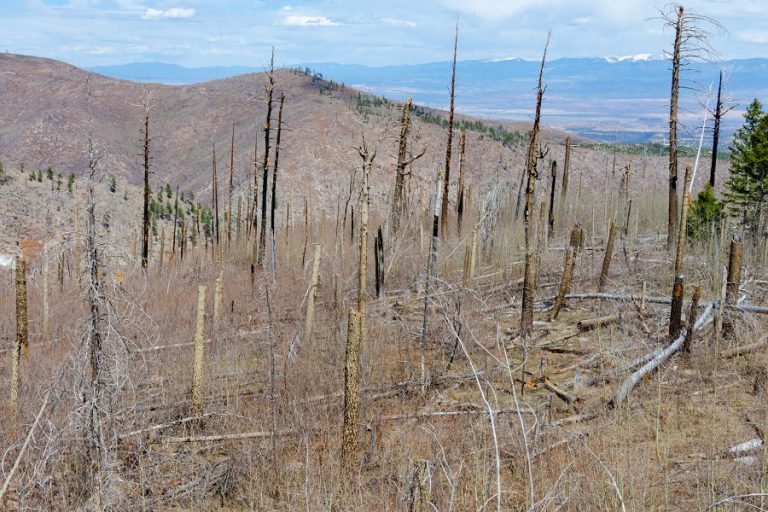
For one, Chris Marsh led NM’s Legislative Finance Committee on a burn-area tour discussing post-fire reforestation and watershed recovery. Marsh is a research assistant professor in the biology department. The tour highlighted where state investments would be needed after wildfires. 

In addition to tours, the faculty participates in legislative panels. They help share and analyze the impact of wildfires on watersheds, ecosystems, and community resilience. 

How a Passion Sparked a Meaningful Impact

Hurteau’s passion for this work stems from firsthand experience after moving to Flagstaff, Ariz., from Vermont. He recalled that in his first winter there, 1996, the climate shifted toward hotter, drier conditions. This change resulted in a severe fire season. The town watched as air tankers constantly circled, evacuations occurred, and several homes were lost. 

This experience sparked his interest in developing a way to assist communities affected by wildfires. He started by studying forestry. He then pursued wildland fire training and certifications, during which he learned that land management is a tool. 

With firsthand wildfire experience, he wanted to unite people from all aspects of wildfire work to promote communication and knowledge sharing. Hurteau ultimately formed a think tank of New Mexican experts to address pressing issues facing the state and communities. 

According to UNM News, the team’s work remains important today and directly impacts the state’s future. 

Director of New Mexico Wildfire Claims Office Placed on Leave Amid $500,000 Compensation Controversy

0

The director in charge of handling compensation claims for New Mexico’s Hermits Peak/Calf Canyon wildfire was put on administrative leave after reports showed he and his wife received more than $500,000 for smoke damage and other losses at their Angel Fire property.

Jay Mitchell and Deputy Director Jennifer Carbajal were placed on leave, according to an internal email reported by Source New Mexico and the Albuquerque Journal on February 12, 2026. The Durango Herald reported that a senior FEMA official is now leading the office and that claims processing will continue as usual.

There are concerns about both the size and location of the payments, including $266,000 given to Mitchell for smoke and ash cleanup at his Angel Fire home. Documents from Source New Mexico and New Mexico PBS show that Mitchell and his wife received over $500,000 from a $5.45 billion FEMA fund set up for victims of the 2022 Calf Canyon/Hermits Peak Fire (Lohmann, 2026). Reports also noted that their property was “far from the wildfire perimeter,” leading to criticism, as some victims have not yet been paid.

Political pressure grew after the news came out. Members of New Mexico’s congressional delegation and Governor Michelle Lujan Grisham called for Mitchell to resign, and protesters gathered outside the Las Vegas claims office. In a joint statement, Senators Martin Heinrich and Ben Ray Luján, along with Representative Teresa Leger Fernández, called Mitchell’s leave a “step in the right direction,” but said there are still “outstanding questions” about how the office is managed and held accountable.

FEMA emphasized that staff should avoid speculation and clarified that Mitchell’s administrative leave does not mean he has been found guilty of any wrongdoing. A spokesperson explained that, so far, there is no evidence of improper actions related to the payments. FEMA underscored its commitment to fairness and transparency, stressing that all claims are reviewed carefully and taken seriously.

Next Steps

Lawmakers are asking more questions about how the compensation program is run and whether it’s as transparent as it should be. They want to know how many claims still haven’t been paid, how much money remains, and whether FEMA or Congress will make any changes to how things are done. Representative Leger Fernández said Congress needs regular updates about claims, remaining funds, and timelines, and stressed that the office must keep up with its legal reporting duties.

NMSU Alumni Pond Renovation Begins, Completion Expected in May

0

New Mexico State University’s (NMSU) Alumni Pond renovation project is underway and scheduled for completion by late May. 

The development marks the next phase in restoring one of NMSU’s recognizable campus spaces, with construction set to begin in early January.

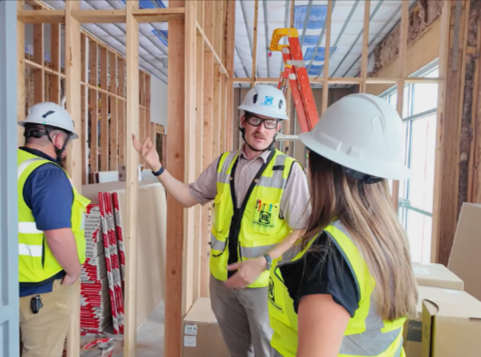
NMSU reported that the renovation is being completed in partnership with local contractor Crosstown Construction. Local designers Molzen-Corbin & Associates are leading the project design.

Safety a Priority During NMSU Alumni Pond Construction 

While construction continues, crews will maintain the area surrounding Alumni Pond as an active construction zone. Temporary fencing and restricted access remain in place. 


“Safety is our top priority as we move through this phase of construction,” said Jose Loera, executive director of Facilities and Services. 

Loera said campus community members can expect heavy equipment on site and hauling trucks operating in the area. “…but routes have been planned to minimize traffic impacts as much as possible.”

Campus officials are rerouting pedestrian traffic around the perimeter of the fenced construction zone to ensure safe access to nearby areas. They encourage pedestrians to follow posted routes while construction is ongoing; signage has been installed to guide foot traffic.

“This project represents an important investment in preserving a space that holds meaning for generations of Aggies,” Loera said. “We appreciate the campus community’s patience as we work to complete the renovation safely and efficiently.”

NMSU Raises Funds for Alumni Pond Renovation

The Alumni Pond renovation helps NMSU reinvest in key campus amenities. It also aims to enhance the overall experience for students, employees, alumni, and visitors. 

The university will share updates on the project’s progress as construction continues through the spring semester.

NMSU, along with the NMSU Foundation, continues raising funds for the Alumni Pond restoration project. They aim to support additional enhancements beyond current construction.

Contributions will help fund features such as a new pedestrian bridge, lighting, landscaping, and other elements designed to further enhance the space.


Those interested in contributing to the Alumni Pond Restoration Fund can visit alwaysanaggie.org/donate/alumni-pond.  

How To Make an Investing Plan for 2026, With Tips Just for New Mexico Residents

0

Investing doesn’t have to be complicated—success often comes down to building a few healthy habits. Start by keeping an eye on your money, saving steadily, and making contributions that align with your goals and risk tolerance. Financial journalist Mallika Mitra recently outlined six straightforward steps for the new year: check your spending, build your emergency fund, boost your contributions, set up automatic deposits, plan ahead for taxes, and rebalance your investments to keep them diversified.

This plan works for New Mexico households, too, but there are a few extra considerations. If your income isn’t steady—maybe you work in tourism, energy, or with the government—it’s smart to keep a bigger emergency fund for peace of mind. When it comes to saving for education, Kiplinger highlights that 529 plans offer valuable tax benefits. Plus, New Mexico taxpayers can get extra state tax breaks that make saving even more rewarding.

Step 1: Begin with Existing Financial Data

Before you set new goals, check your 2025 numbers. Look at your total income, expenses, and how much you saved or invested. See if there are habits you can change, like cutting back on subscriptions, eating out less, or avoiding surprise costs. Try to increase your contributions if you can.

Step 2: Build a Strong Financial Base Before Taking Bigger Investment Risks

The article recommends a simple order: build emergency savings first, pay off high-interest debt next, and then invest more. Credit card interest is usually higher than what you earn from safe investments, so paying off that debt often makes more sense than chasing bigger returns in a regular investment account.

Step 3: Review Your Financial Goals and Adjust Your Accounts

Long-term goals like retirement, buying a home, or saving for college usually stay the same, but your short-term goals might change each year. In New Mexico, you may need to decide whether to put money into retirement accounts or education savings. The New Mexico Higher Education Department says state taxpayers can deduct contributions to the state’s 529 plan from their New Mexico income tax. (Education Trust Board of New Mexico Presentation, 2023)

Step 4: Raise Your Contributions Carefully Without Waiting Too Long

If you can raise your workplace retirement contributions by just 1 or 2 percent, it can add up over time. The IRS has also increased the 2026 limits for 401(k) and IRA accounts. (IRS Announces 2026 Contribution Limits for 401(k) and IRA Plans, 2025) The article suggests increasing your contributions, and if it feels like too much, you can always lower them later. As financial planner Craig Ferrantino says, “If you overdo it, you can always bring it back down.”

Step 5: Set Up Automatic Contributions to Keep Making Progress

Automation is a useful habit. If you move money early in the month, you’re less likely to spend it on other things. The article says this makes saving easier, especially when life gets busy, and spending is tempting.

Step 6: Plan for Taxes All Year Long

Even if you won’t file your taxes until next year, you can start getting organized now. Keep a folder for W-2s, 1099s, mortgage interest statements, and brokerage tax forms. The article also notes that you usually have until April 15 to make extra IRA or HSA contributions for the previous year, which can affect your taxable income.

For New Mexico residents, state tax breaks may affect which accounts you put money into first, such as the state 529 deduction. When investing in municipal bond funds for taxable income, state tax rules can vary depending on where the bonds are from and where you live. In New Mexico, it’s important to track how much of a fund’s income comes from New Mexico bonds versus those from other states. Income from state and local bonds is taxed in New Mexico, but you may be able to deduct some related investment costs.

NM Prosecutors Allege Meta Misled the Public About Harms to Minors on Facebook and Instagram

SANTA FE, New Mexico — The New Mexico Attorney General’s Office alleged that Meta Platforms lied about the harms its platforms, such as Facebook and Instagram, pose to teens and children in a landmark lawsuit against the social media giant.

Evidence showed that Meta raked in profits while concealing the harms its platforms pose to children, said Attorney Don Migliori, representing New Mexico, in a Santa Fe courtroom.

Migliori accused Meta of “downplaying or outright lying about what it knows about the dangers of its platforms.”

He said the state will call former employees of the social media giant who raised internal warnings. The state will also present child welfare experts as witnesses, Migliori added.

Attorney General Raúl Torrez filed the lawsuit against Meta and its CEO, Mark Zuckerberg, in 2023.

The complaint alleges that Meta knew that Facebook and Instagram could be unsafe for minors. Publicly, however, it minimized or misrepresented these risks.

Speaking to reporters outside the courtroom on Monday, Torrez said that a win in this case could also result in the court telling Meta to change how its platforms operate. The company could also face financial penalties amounting to billions of dollars.

Torrez said a New Mexico win against Meta will “completely change the narrative about what they claim is possible everywhere else.”

Meta, in its defense, has rejected the allegations.

Kevin Huff, one of the lawyers representing Meta, told the court during the opening statements that the company has been transparent about the limits of its safety measures.

He said his client regularly publishes reports on the prevalence of child sexual abuse material and other harmful content. And it consistently worked to remove harmful material from its platforms.

Meta informed the public of these risks, Huff claimed. “It didn’t deceive anyone.”

The trial is expected to last about seven weeks.

New Mexico is the first U.S. state to hold the company accountable for the alleged harms it caused to children.

Wildfire Near I-40 in New Mexico Threatens Structures, Burns 1,000 Acres

0

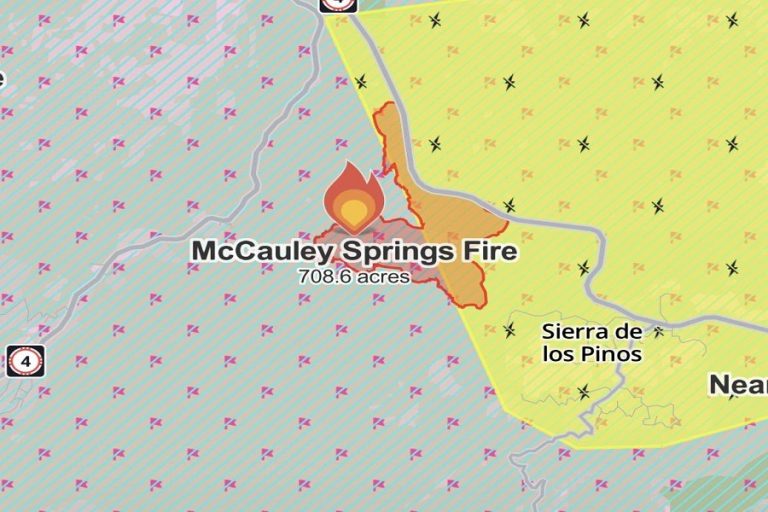
QUAY COUNTY, New Mexico – A wildfire burning near Interstate 40 in Quay County threatening nearby structures has already burned some 1,000 acres. Firefighters have yet to contain the fire as of Monday.

The blaze, known as 352 Fire, was discovered Monday at around 12:30 pm near mile marker 352, north of San Jon, according to the federal inter-agency website, New Mexico Fire Information. The fire has spread through grass and brush. It sent thick smoke visible from I-40 and prompted road closures and advisories to evacuate.

Authorities have closed State Road 469 north of San Jon as local officials went house to house notifying residents in areas near the fire. They advised residents to evacuate if instructed and stay clear from the area to allow emergency crews to conduct the containment efforts safely.

Firefighters of the New Mexico Forestry Division led the fire suppession operation, with support from local and state responders.

Authorities have yet to determine the cause of the fire.

Quay County has recorded dozens of wildfires from 1997 to 2003, burning thousands of acres. The recent grass fires continued to affect the county.

People are advised to take extra precautions especially those who are sensitive to wildfire smoke. To assess whether it is safe to stay outdoors, residents can use the New Mexico Department of Health’s 5-3-1 Visibility Method.

EP Wealth Advisors Expands to New Mexico to Enhance Client Services: Broader Planning and Local Expertise Await

0

EP Wealth Advisors has acquired LongView Asset Management, a registered investment adviser in Santa Fe, New Mexico, with over $390 million in assets under management. This acquisition significantly expands EP Wealth Advisors’ presence in New Mexico. Financial and legal terms were not disclosed.

Founded in 2002, LongView is known for its commitment to sustainability and responsible investing. As the first financial services firm in New Mexico to earn B Corporation certification, LongView is recognized for its values-driven approach. (LongView Asset Management – B Corp Certification, 2019) With this acquisition, EP Wealth Advisors will leverage local expertise and offer LongView clients expanded planning services, including tax, estate, and legacy planning support.

David Cantor, founder of LongView, will join EP Wealth Advisors as senior vice president, along with seven team members. Advice Dynamics Partners served as LongView’s advisor during the transaction.

As of December 31, 2025, EP Wealth Advisors manages more than $42.2 billion in client assets and operates over 64 offices in 23 states. The firm also receives minority equity investments from Berkshire Partners and Ares Management.

Statements from Leadership

This partnership strengthens EP Wealth and expands our capabilities in New Mexico,” said CEO Ryan Parker. He added, “LongView clients will benefit from our expanded services.”

Everfi and Its Partners Are Giving Students a New Way To Pay for College: Over $1.5 Million in Scholarships for Those Who Finish Financial Education Courses

0

Everfi just rolled out a new scholarship program worth more than $1.5 million, supported by nine companies and nonprofits. The idea is simple: students who take financial and life skills courses on Everfi’s platform can earn scholarships to help them continue their education after high school.

Companies and organizations backing the scholarships include CalKIDS, Center for Audit Quality, City National Bank, Edward Jones, MassMutual Foundation, OneMain Financial, PenFed Credit Union, Principal Foundation, and Truth Initiative. Everfi says this program lets its partners reach more students by leveraging their school connections and their online platform.

Everfi says the new scholarships are a response to how expensive college has become and the fact that fewer teens are enrolling. In 2024, only about 63% of recent high school grads enrolled in college, and many say money is a major reason.

Ray Martinez, CEO of Everfi, said the goal is to turn what students learn in class into real help for their futures. “More than ever, students and families need pathways that translate education into opportunity,” he said.

Paola Garcia-Abbo, a vice president at OneMain Financial, called these scholarships a way to break down barriers for students who are trying to learn—and build a better future for themselves.

Everfi said it works with thousands of school districts across the U.S., Puerto Rico, and Canada, and that its partners use the platform to run scholarship and awareness efforts while aligning implementation with state and federal guidance.

New Mexico Homebuyers Face a “Lock-In” Market as Sellers Sit Tight on Low-Rate Mortgages

0

New Mexico’s housing market is experiencing a trend seen across the country. Many homeowners do not want to sell because they have low-rate mortgages of 2% to 3%. Selling would mean buying a new home at much higher rates. This “mortgage lock-in” keeps the number of homes for sale low, which limits choices for buyers and helps keep prices high, even though homes are less affordable.

Economists say mortgage lock-in happens when homeowners are discouraged from moving because they would have to take on a new mortgage at a higher rate. Research from the Federal Reserve Bank of Philadelphia shows that this can lead people to move less often and to fewer homes for sale, tightening supply and pushing prices up.

Key Facts for New Mexico Homebuyers:

  • The number of homes for resale remains low when owners keep their low-rate mortgages rather than putting their homes on the market.
  • New Mexico is still one of the least affordable states for homebuyers. In 2024, the median listing price was $392,571, and only a small number of homes were affordable for people earning the median income. In 2025, the median home price in Albuquerque is $360,000, and in Santa Fe, it is $675,000. Homes also tend to stay on the market longer across the state.
  • Homeowners who locked in 2% to 3% mortgage rates during 2020 and 2021 are understandably reluctant to move and give that up, Rocket Mortgage executive Bill Banfield said.

What “lock-in” means for New Mexico buyers

In practice, lock-in makes it harder for buyers, especially first-time buyers, because fewer homeowners are selling and moving up. With fewer homes for sale, buyers have to compete for fewer listings. This can keep prices higher than expected, even as borrowing costs rise.

Pew’s reporting shows that New Mexico’s housing shortage has deeper roots than today’s high rates alone. Rules and processes have limited homebuilding for years, resulting in fewer homes available for sale. This makes the lock-in effect even more important. When fewer people move, there is even less flexibility in the market.

Why the market doesn’t “unlock” quickly

To see real improvement, the market usually needs one or more of the following changes:

  • Lower mortgage rates, which would reduce the difference between what current owners pay and what new buyers would pay;
  • More new homes are being built, especially those that are affordable for first-time buyers, or
  • Life events, such as job changes, growing families, or retirement, can prompt people to move even when the financial situation is not ideal.

The Philadelphia Fed says lock-in is mainly about incentives. When it costs a lot to get a new mortgage, many people wait to move, which means fewer home sales and listings.

The bottom line

In New Mexico, where there have often been too few homes for sale, mortgage lock-in can make the shortage even worse. This keeps the market tough for buyers, especially those who do not already own a home, until rates drop, more homes are built, or both.