Home Blog Page 62

Meta Faces New Mexico Trial as Legal Pressure Mounts on Big Tech Over Child Safety

0

Albuquerque, NM Legal pressure is intensifying in the United States on major technology companies over child safety and online harms.

Meta Platforms Inc. and YouTube are facing off in court this week over claims that their platforms are addictive and harmful to children, while TikTok opted to settle on Tuesday.

TikTok, however, is not off the hook. Joseph VanZandt, co-lead counsel for the plaintiffs, said in a statement that the company continues to face other personal injury lawsuits.

Meta, meanwhile, will face trial on February 2 in a lawsuit filed by the state of New Mexico.

The lawsuit accuses the social media giant — owner of Facebook, Instagram, and WhatsApp — of exposing children and teenagers to sexual exploitation on its platforms and profiting from it.

It is the first child safety case against Meta to reach a jury, with jury selection set to begin Monday at the Santa Fe District Court.

New Mexico Attorney General Raul Torrez filed the landmark case in 2023, alleging that Meta promoted illegal content and failed to prevent predators from accessing underage users across its platforms. Prosecutors allege the company’s systems enabled adults to connect with minors, in some cases leading to real-world sexual abuse and human trafficking.

Meta has denied the allegations. The company claimed it has invested heavily in safety tools and safeguards to protect young users.

The case stems from a 2023 undercover investigation dubbed “Operation MetaPhile,” conducted by Torrez’s office.

Investigators created Facebook and Instagram accounts, posing as users under 14. Those accounts allegedly received sexually explicit material. Investigators alleged that some adults contacted users seeking similar content, leading to criminal charges against three individuals.

The Meta trial next week will highlight mounting scrutiny of social media platforms over their impact on children and adolescents. It underscores a broader push by US states and lawmakers to hold Big Tech accountable for alleged online harms ti caused to users, especially minors.

How UNM Alum Kahalah Founded Monaco Market, Albuquerque’s Viral Snack Shop

0

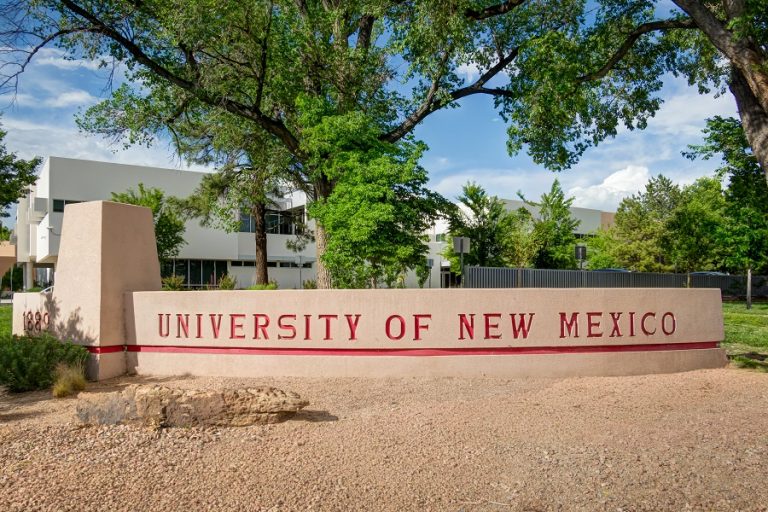
Ever wondered who is the brain behind the shop in Albuquerque, New Mexico offering the world’s viral snacks? A University of New Mexico (UNM) News report highlights the life of a UNM alumnus who founded Monaco Market

Munji Kahalah is the “creative force” behind New Mexico’s largest exotic snack store, Monaco Market. Its shelves stock viral snacks, from Dubai chocolates and Chinese mango ice cream to South Korean juice pouches trending on TikTok and Instagram.

Kahalah, a computer science and computational math major, started the business. Along the way, he found his true passion in technology,  creativity, and entrepreneurship. 

Kahalah’s Student Life at UNM

Kahalah entered UNM in 2015, where he immersed himself in computational math and computer science. While enjoying the challenge, he got interested about the broader applications of innovation beyond the technical side. 

He enrolled in several courses through UNM’s Innovation Academy (IA), a decision he now regards as pivotal.

“It was the total opposite of what I was doing on the engineering side,” he told UNM News. “Those courses were more hands-on and real-world. I enjoyed them a bit more because they were right up my alley.”

Through IA, Kahalah joined pitch competitions and applied entrepreneurial thinking to real problems. He also gained mentorship that left a lasting impact. The UNM alumnus said that IA Executive Director Robert Del Campo and professor Bill Szaroletta influenced his business mindset. 

The Story Behind Monaco Market’s Launch

Inspired by the viral snack shops in Los Angeles, Miami and New York, Kahalah saw an opportunity to bring the same “big city” experience to Albuquerque.

Around three and a half years ago, Monaco Market officially opened to bring the world’s most viral snacks to Albuquerque.

“My job is basically to scout what the internet is talking about,” Kahalah said. “I’m scrolling TikTok or Instagram, seeing what snacks are blowing up in big cities, and then figuring out how to bring that experience here.”

Kahalah, Monaco Market’s creative director, said blending pop culture, food trends, and community engagement is a “super fun job.”

In 2020, Kahalah went to Amsterdam for a summer boot camp focused on machine learning and data analytics.

“I knew data was important,” he said. “With so many snacks, we needed a way to figure out what works and what doesn’t.”

Kahalah uses data analysis to track trends and guide inventory decisions, bridging his computer science training with real-world business needs.

Like many growing businesses, Monaco Market has encountered challenges. Import tariffs and global logistics have influenced purchasing decisions, requiring flexibility and quick adaptation.

For Kahalah, that is part of navigating entrepreneurship, acknowledging that “there are always unknowns.”

Meanwhile, Kahalah considers Monaco Market’s partnership with New Mexico United one of his most rewarding projects. They crafted a custom snack box that merges excitement of soccer fandom with the thrill of trying exotic snacks.

When asked about his personal favorites at Monaco Market, Kahalah answered the mango ice cream and the South Korean juice pouches. “But honestly, go crazy. That’s the whole point,” he quipped.

Kahalah said that Monaco Market isn’t just about snacks, it’s about curiosity, creativity and making global experiences accessible right here in Albuquerque.

“You don’t have to fly to LA or New York,” Kahalah said. “You can come down the road, try something new and have fun with it.”

Monaco Market is located at 4400 Wyoming Blvd NE STE C, Albuquerque, NM 87111 and is open 9:00 a.m. to 9:00 p.m daily.

Public Sector Drives New Mexico Job Growth, Unemployment Inches Up

0

ALBUQUERQUE, New Mexico – New Mexico’s labor market showed mixed signals in December. Overall employment grew driven by public sector while unemployment is ticking up.

The seasonally adjusted unemployment rate rose to 4.3 percent in December, which is slightly higher than November’s figure at 4.2 percent and has remained the same from a year earlier. The national unemployment rate stood at 4.4 percent, slightly lower from 4.5 percent in November, higher than December 2024 by 0.4 percent.

New jobs, uneven growth

Year on year basis, the state, according to US Bureau of Labor Statistics, has added some 8,800 nonagricultural jobs, a mere 1.0 percent increase from December 2024. Most of the growth came from the public sector, which has added 5,800 jobs. The private sector grew slightly with 3,000 new jobs.

The private sector has seen uneven growth.

A construction boom has largely contributed to 3,800 new jobs or 3.5 percent increase in goods-producing industries. Mining and construction together created 4,000 new jobs. The construction sector accounted for 3,500 of the new jobs or an increase of 6.3 percent from a year earlier while temployment in mining rose by 500 jobs or 2.1 percent.

But employment in the manufacturing sector declined by 200 jobs or 0.7 percent. Losses in durable goods manufacturing outweighed small growth in nondurable goods.

Overall, private service-providing industries lost 800 jobs or 0.1 percent. Education and health services recorded the highest gains with 7,200 jobs or 4.7 percent, led by health care and social assistance. Financial activities has also increased with 1,400 new jobs or 3.9 percent.

New jobs but reliant on public sector

There is a decline in several major service sectors.

Professional and business services dropped by 4,600 jobs or 3.8 percent. Leisure and hospitality have also lost some 1,800 jobs or 1.8 percent. Trade, transportation, and utilities sectors have also shed some 1,400 jobs due to sharp decline in transportation and warehousing. The steepest drop, however, is in the information sector with 11.0 percent decline year on year.

The public sector continued to buoy overall employment. Some 6,700 jobs were added by the local government including sharp uptick in education. State government employment on its part rose with some 1,900 jobs while the federal government employment decreased by 2,800 jobs or 9.5 percent.

The overall trend points to an economy that create new jobs but increasingly reliant on public sector expansion with some private industries are facing headwinds.

UNM SHAC Acute Care Clinic to Be Named After Dr. Olga M. Eaton

0

The University of New Mexico (UNM) has taken a step to rename and transform its Student Health and Counseling (SHAC) ASAP Acute Care Clinic. 

UNM will soon turn the facility into Olga M. Eaton, M.D., ASAP Acute Care Clinic, UNM News reported.

On January 13, 2026, family, friends,and colleagues of former SHAC Director Dr. Olga M. Eaton gathered for a dedication ceremony to officially mark the major development.

Olga’s husband, Dr. R. Philip “Phil” Eaton, helped lead the effort to rename the clinic after his late wife, who served as UNM SHAC director for 14 years. The new name will appear at the clinic’s entrance. It will also feature a handcrafted tin memory box celebrating her compassionate and supportive nature.

SHAC Executive Director Dr. Stephanie McIver envisioned the memory box after meeting with Phil and UNM Foundation staff. Santa Fe master tin artisan Fred Ray Lopez created it, in collaboration with Facilities Coordinator Nicholas Ross and local craftsman Zecharia Starks.

The box contains meaningful items honoring the clinic’s new namesake, including her 1999 Regents’ Award, a biography, a poem, flower, and a subtle nod to curanderismo, a collection symbolizing Olga’s commitment to students, staff, family and all who knew her.

McIver expressed support for the project. She highlighted that the clinic needs an upgrade to meet modern standards for medical and treatment room space.

“The redesign of the new clinic will improve patient flow for students, workflow for staff, be modernized, increase privacy and is aesthetically appealing,” she said.

Additionally, she said that the memory box will help educate every UNM student utilizing these medical services about the significant contributions of Olga to SHAC and to the field of medicine.

The clinic will begin renovation and installation this spring. UNM aims to open the Olga M. Eaton, M.D., ASAP Acute Care Clinic to students in 2027.

These new changes will allow students and visitors to the soon-to-be redeveloped facility to sincerely recognize Olga’s impact on SHAC, UNM, and the individuals she encountered throughout her life.

Olga’s Legacy Through Her Husband’s Perspective

For 90-year-old Phil, Olga’s presence guided him through every step of his endeavor and reintroduced him to the art of curanderismo. “Olga and I used to go to the Albuquerque Botanic Garden quite a bit,” he said. “Olga led me to the El Jardín de la Curandera Healers Garden there shortly after her passing.”

Phil said that the principles of curanderismo should guide student care, emphasizing touch, listening, and genuine care. He said these are the qualities Olga embodied, even without the formal curandera title. 

“Olga would make anyone she was talking to feel like they were the only person in the room,” Phil said. “She greeted every student with a warm touch, eye contact and a knack for really listening to what they had to say.”

Phil described Olga as “the train driver” of SHAC, the steady presence who listened and ensured students always felt supported.

“SHAC is the mother and father for the students and one of the ways we as a university can ensure that students don’t drop out,” Phil said. “Olga was able to give students the value of really being heard, and she really felt it was a privilege to be able to help someone.”

Since Olga’s passing, Phil has composed poems, a practice he finds therapeutic. One poem, No. 115, Heritage, an Awesome Reality, is featured in the memory box. It reflects on learning from ancient experience: “Healing with extracts of herbs, fruit, corn and faith. Generation after generation passing on the legacy of remedies.”

At 90, Phil embraces life with gratitude, cherishing the more than 60 years he shared with Olga and treasuring the joys this milestone has brought him. “I can’t believe it took 90 years for me to find out the most important thing of my life,” he said. “Don’t feel sorry for me — I love to look back. That way you don’t forget anything.”

COMMUNITY FEATURE: Albuquerque High School Students Planning On Participating in City-Wide Walkout On Friday

ALBUQUERQUE, NEW MEXICO – Last Tuesday, January 20, many high schools around Albuquerque walked out of their classes in protest of recent events around the country involving federal immigration enforcement. This Friday, January 30, many are planning to do it again.

Maxwell Meiklejohn, a 16-year-old junior at Albuquerque High School, helped organize the first walkout, and he has been working again with his peers to organize the walkout scheduled for Friday. However, the protest planned for Friday is intended to be a bit more of a feat, with citizens meeting in the Civic Plaza downtown.

The first walkout was initially a nationwide protest, under the title “Free America Walkout,” and word spread through social media. In an interview, Maxwell explained that he was encouraged to get involved by his mother Lauren Meiklejohn, a local community organizer who helped put together the Women’s March in the Civic Plaza.

In preparation for the “Free America Walkout”, Maxwell got together with one of his classmates, who created an Instagram post on her personal account to reach out to their other classmates and get them involved. “It just instantly got feedback,” he said, “And we were super hyped about it.”

The students made posters and banners for the walkout, and Maxwell emphasized two very large banners that they placed at the front of the school. He wanted to give students something to see: “One of the questions I get asked the most is, ‘Is this really happening?’” As an organizer and a leader, he wanted to make sure his classmates knew where to go. “I think it’s important when you’re organizing something like this to make sure that there’s physical proof for people to see as well, rather than just online.”

That Tuesday, at 2 p.m., so many students gathered by the signs to walk out of the school that Maxwell and his fellow organizers were surprised by the turnout. “The most amazing thing to me, just having that kind of experience,” he said, “was realizing how many people just need a little push or a little example to just get out there and be a part of it.”

Since that successful turnout, Maxwell and other students have been working hard to plan their walkout for Friday. This protest has also been spread as a nationwide plan, circling on social media under a post calling for a “nationwide shutdown,” and urging those who want to participate not only meet up in downtown Albuquerque, but also to refrain from working and shopping that day. Other students working with Maxwell to organize their classmates helped create an Instagram account with the handle “ahswalk.2026” to spread the word at Albuquerque High.

When asked about how high school students were planning on participating in this event, Maxwell explained that for Albuquerque High students specifically, they are planning on walking the entire way. “Our plan is to meet at 12, and then we’re going to march from the school to Civic Plaza, which is about half an hour,” Maxwell said. “We think it will be good to just be united, and represent Albuquerque High.”

He also said that they’ve been focusing heavily on coordinating safety, and have consulted outside adults for advice on de-escalation and crowd control. However, the march to the plaza itself will be just students.

“We expect hopefully as many, or some, high schools participating in this as were participating in the walkout,” Maxwell said in the interview. He also explained that Albuquerque High students have gotten in touch with students and organizers from other high schools in the city, and are planning to meet to coordinate further potential protests. “The walkout wasn’t a standalone thing, I think we’re going to try to keep the ball rolling on this, and just keep ramping up involvement.”

For Friday’s walkout and protest, the social media post includes an email address for students with questions or concerns to contact. The walkout is planned for 12:30 p.m., and students and other participants are planning on meeting in the Civic Plaza at 2 p.m.

New Mexico Legislature Tackles Budget, Health, Education and Public Policy Early in 2026 Session

0

Santa Fe, NM — New Mexico lawmakers began the 2026 regular session with a packed agenda aimed at addressing the state’s budget priorities, health care access, education issues, and public safety reforms. The 30-day session — set to run through mid-February under state law — opened in Santa Fe’s Roundhouse with a blend of bipartisan and intra-party negotiations shaping early legislative activity.

With Democrats holding majorities in both the state House and Senate, and Governor Michelle Lujan Grisham in her final regular session before leaving office, the Legislature faces pressure to finalize a budget, pass long-standing priority bills, and respond to constituent concerns in areas ranging from medical services to public safety and economic stability. The session’s pace has been brisk in its opening days, with lawmakers and advocates lining up behind key proposals that could affect New Mexicans statewide.

Lawmakers in Santa Fe are navigating a mix of policy measures that seek to balance fiscal discipline with long-term investments, amid a backdrop of broader economic concerns and social needs. Some of the early priorities reflect repeated issues from past years, including stabilizing health care access, updating public safety statutes, and revising economic incentives to support workforce development.

Several bills have already drawn attention this month, including proposals to make New Mexico a participant in regional medical compacts for doctors and social workers, updates to civil commitment law definitions, and financing measures linked to transportation infrastructure. Negotiators also anticipate discussion on public education funding, rural health care support, and housing stability — all topics that have featured prominently in New Mexico public policy debates.

Key developments shaping early session

The Legislature’s early days in Santa Fe have underscored several themes that could influence outcomes this year:

  • Budget negotiations: As a short 30-day session focused largely on budget appropriations, lawmakers are prioritizing how to allocate limited state dollars for health care, education, infrastructure, and public safety.
  • Health care access and workforce: Proposals to join interstate medical compacts and address doctor shortages reflect ongoing concerns about health care access in rural and urban communities alike.
  • Infrastructure spending: Funding for roads and capital projects is emerging as a central piece of the budget conversation, with proposals for multi-year investments under review.
  • Public safety and legal reforms: Changes to civil commitment procedures and other public safety statutes are under consideration as lawmakers balance individual rights with community concerns.

These policy streams have drawn stakeholders from business groups, health care advocates, education organizations, and local civic leaders to Santa Fe’s Roundhouse in recent weeks. Many have testified before committees, underscoring how state government decisions directly affect residents and local economies.

One crucial element this session is the broader economic context in which legislators are operating. National economic indicators and state revenue trends are influencing decisions on spending, taxation, and public investments. With limited revenue growth anticipated, lawmakers are under pressure to make difficult choices about how to sustain essential services while avoiding unsustainable deficits.

At the same time, some members of the Legislature are pushing for policy changes that reflect longer-term structural shifts. These include efforts to attract and retain medical professionals, enhance educational outcomes through targeted funding formulas, and strengthen rural broadband access — a priority for many underserved communities across the state.

In the House, leadership has emphasized the need for fiscal discipline coupled with targeted investments, while some Senate committees are advancing measures that could reshape business tax incentives and economic development programs. These debates reflect broader questions about how New Mexico can position itself for economic resilience in the years ahead.

Interim meetings and committee hearings held before the session underscore the depth of preparation behind many of this year’s proposals. Legislative staff, aides, and advocates have worked since late 2025 to refine language, build coalitions, and gather public input ahead of the 30-day session. The approach reflects an increasingly strategic Legislature that is leveraging short session constraints to focus on actionable policy outcomes.

What to watch next

As the 2026 session progresses, observers will be tracking whether lawmakers can reach consensus on contentious budget items and policy goals. Key markers include final appropriations bills, negotiations over health care reform proposals, and whether bipartisan support emerges on areas such as infrastructure funding and workforce development.

The coming weeks will also reveal how legislators respond to public feedback and adjust proposals to address concerns raised by constituents and interest groups. Committees scheduled to meet throughout the session will play a central role in shaping final language on bills that could have lasting impact on New Mexico residents and the state’s fiscal outlook.

With lawmakers in Santa Fe racing against a constitutional deadline, compromises, amendments, and last-minute negotiations are expected. The outcomes will set the tone for New Mexico’s policy direction in areas such as education funding, medical services, public safety, and economic competitiveness for the remainder of 2026.

Former Albuquerque Church Treasurer Indicted in $2M Fraud and Tax Case

0

Seven federal counts allege that James Joseph Owens, 68, abused his position of trust at the Norbertine Community of New Mexico and Santa María de la Vid Abbey in Albuquerque by diverting funds for personal gain. Prosecutors say the indictment details a pattern of transfers from foundation support, seminary and education funds, and retirement accounts into accounts controlled by Owens, including one tied to a nonprofit law practice he established.

From May 2022 to March 2023, Owens allegedly transferred more than $2 million in church funds to accounts under his control, including for personal investments and the purchase of a home in Placitas, a suburb north of Albuquerque. Federal court records indicate he moved funds through domestic and international wire transfers, brokerage accounts, and cryptocurrency transactions, allegedly to conceal their origin.

Prosecutors also allege Owens concealed the misuse of funds from the Internal Revenue Service by filing a false 2022 tax return that significantly understated his income. Authorities say that by reporting taxable income of just $24,000 while concealing the proceeds of his alleged misappropriation, he sought to evade federal tax obligations.

Key details at a glance

  • Defendant: James Joseph Owens, 68, former treasurer for the Norbertine Community of New Mexico and Santa María de la Vid Abbey.
  • Allegations: More than $2 million in funds diverted from church accounts to personal or controlled accounts.
  • Additional charges: False tax return, wire fraud, and monetary transaction offenses.
  • Penalties: If convicted, Owens could face up to 20 years in federal prison.

Officials from the U.S. Attorney’s Office for the District of New Mexico and the IRS Criminal Investigation Division publicly announced the indictment, an action that underscores federal law enforcement’s focus on financial integrity in nonprofit and religious institutions.

The alleged misuse of Abbey funds involved repeated transfers over nearly a year, according to court filings. By moving money into accounts he controlled and engaging in financial transactions that may have obscured the funds’ origin, Owens is accused of concealing the alleged scheme from both the church and federal authorities.

The indictment also charges Owens with multiple violations of the money laundering statutes for using funds derived from unlawful activity. These counts highlight the broad scope of alleged efforts to obscure the financial trail used to move the church funds.

Authorities say that if convicted, Owens would be subject not only to imprisonment but also the forfeiture of assets obtained through the scheme and other penalties under federal law.

Legal experts note that cases involving alleged financial misconduct within nonprofit organizations, including churches, often involve complex investigations that require cooperation among agencies such as the IRS and the Department of Justice. They say charges ranging from fraud to tax evasion reflect how federal statutes are applied when individuals in positions of trust are accused of misusing funds.

The indictment marks a significant development in Albuquerque’s legal landscape as local communities and church members await further proceedings. Court documents from the U.S. District Court for the District of New Mexico have set the stage for pretrial motions and hearings that could shape the next phase of the case.

Fatal Overdose Deaths Climb in New Mexico Despite Earlier Progress

0

New Mexico is seeing an uptick of fatal overdoses in 2025 after years of declining overdose deaths, federal data showed. The trend signals new challenges in the state’s campaign against substance use.

The state has recorded a decline of overdose deaths for two straight years, a steady progress in the state’s response to substance use. Fatalities dropped from 1,029 in 2021 to 997 in 2022— a difference of 32 deaths. It further fell to 948 in 2023—an 8 percent decline over the three-year period.

State officials attribute the sustained decrease to expanded access to treatment, greater availability of harm-reduction services, and strengthened community-based prevention programs. These programs were rolled out across New Mexico.

Gains are also emerging in suicide prevention, especially among historically vulnerable groups. Suicide deaths among women dropped to 42 percent, from 116 in 2022 to 67 in 2023. Deaths among Indigenous communities had also declined by 43 percent, from 77 to 44 over the same period.

According to state officials, the improvements reflect the broader reach of New Mexico’s behavioral health investments. These health investments integrate substance use treatment with suicide prevention and mental health support.

Annabel Martinez highlighted the classroom-based PAX Good Behavior Game, which helps students manage stress and develop self-regulation skills. She is the deputy director of behavioral health services at the New Mexico Health Care Authority (HCA).

The agency implemented the program in 85 schools across 43 districts, including 14 tribal community schools.

Technology has also expanded access to care through text and chat services that connect individuals with behavioral health professionals. These tools, officials said, have made mental health support less intrusive, particularly for older adults who are hesitant to seek help in person.

But the data from the Centers for Disease Control and Prevention (CDC) point to a slight increase in overdose deaths in New Mexico compared to recent periods. Reports show some 851 overdose deaths in 2024. It rose to around 881 in 2025.

Martinez said the state stays committed to protective strategies for individuals, families, and entire communities.

“We want every person to know that treatment works and support is available,” Martinez said.

“Recovery is not only possible—it is happening every day,” she said.

NMSU Art Grad To Design LCIFF Poster, Set For March Reveal

0

A New Mexico State University (NMSU) art graduate will play a significant role in creating the official poster for this year’s Las Cruces International Film Festival (LCIFF), the country’s largest university-run film festival.

Local artist Asiah Thomas-Mandlman, who was born and raised in Las Cruces, is the brain behind the poster art for the 11th annual festival, which will appear on all LCIFF apparel, including T-shirts, sweatshirts, hats, and all festival badges.

Thomas-Mandlman’s masterpiece debuts at the LCIFF poster reveal party from 5:30 to 8:00 p.m. Friday, March 6, at the New Mexico Farm and Ranch Heritage Museum, 4100 Dripping Springs Road.

NMSU hints that the artwork is not likely to be a landscape. 

Captivated by  people’s faces and their emotions, Thomas-Mandlman photographs subjects and creates art using colored pencils or charcoal from those images. 

“Asiah is an emerging young artist, so we wanted to bring attention to her and her work,” said Ross Marks, LCIFF executive director and NMSU Creative Media Institute professor. 

“We always select a local artist, and I tell them to do whatever speaks to them. We’ve had a tattoo artist, we’ve had a photographer, we’ve had watercolor and we’ve had oil on canvas,” he said. 

Thomas-Mandlman will sign limited edition prints of the poster at the LCIFF poster party. The event also features an auction of the original artwork. Admission is $30 and includes a signed collectible poster, food, drinks (beer & wine) and music. The festival runs April 8-12, and discounted VIP tickets are available for $150 only at the poster party.

NMSU reports that the Doña Ana Arts Council gallery and in El Paso’s Take the Stage series showcase Thomas-Mandlman’s portrait work. But she excels in other areas as well. She sings with the jazz ensemble Lush Life Quintet and new band Groove Runner, appears in the Music in the Park series, and performed at the Las Cruces Juneteenth Jazz Festival.

What to expect at the LCIFF?

LCIFF is a five-day festival showing 168 films in person at the Allen Theatres Cineport 10. VIP passes cost $200, All-Access Passes $100, Day Passes $35 and admission to the Outstanding Achievement celebrity screening of “Guardians of the Galaxy Vol. 2” with Michael Rooker is $35. Tickets are available now at www.lascrucesfilmfest.com.

The festival also features eight panels and workshops for students and community members.

Founded by Marks in 2016, the LCIFF has grown into the largest student-run film festival in the country. Marks teaches two courses on producing film festivals. During the fall course, he teaches students to prepare for the festival, while the spring course gives them the hands-on experience of producing the festival. 

An estimated 80 to 100 NMSU students in the Creative Media Institute and the Creative Media Technology program at Doña Ana Community College are collaborating to stage the festival, which organizers expect will gather more than 12,000 visitors to the region.

Many regard LCIFF as one of the most prestigious film festivals in the Southwest and often call it as “The Sundance of the Southwest.” 

TD’s Brew & BBQ Secures State Aid to Expand Lovington Operations, Add 16 Jobs

0

LOVINGTON, New Mexico — TD’s Brew & BBQ, a Lovington-based maker of barbecue sauces and spice rubs, has received state economic development assistance, New Mexico officials said. With the new funding, the company will expand its operations and plans to create 16 new local jobs.

Officials said the project is expected to generate more than $14 million in economic impact over the next ten years. The expansion will bring production in-house, requiring the hiring of 16 additional full-time employees. The program is administered by the New Mexico Economic Development Department (EDD).

TD’s Brew & BBQ growing jobs

“As a Lovington native, I love seeing this project bring the taste of southeast New Mexico to the rest of the country while growing good jobs at home,” EDD Cabinet Secretary Rob Black said.

“Small businesses are what keep our rural communities thriving, and TD’s has now put Lovington on the national food map,” he added.

TD’s Brew & BBQ was founded and is owned by Tearl “TD” Dunlap. The company has outgrown its current out-of-state co-packing facility.

The expansion will enable the company to manufacture its products locally at its Lovington site, further strengthening its presence in the regional economy.

To support the project, the New Mexico Local Economic Development Act (LEDA) fund has committed $150,000 to the company. The funding will be released in installments as TD’s Brew & BBQ meets construction and hiring benchmarks.

A source of pride

Since its launch in March 2019, the brand has gained national distribution. Its products are now sold in more than 600 stores across the United States, as well as through the company’s website and Amazon. The company also provides co-packing, warehousing, and e-commerce fulfillment services.

“This facility will serve as a critical manufacturing hub, bringing both our brands and out-of-state production directly into our community,” Dunlap said.

According to Dunlap, building this facility in Lovington and southeast New Mexico is a source of pride. He noted that “a legacy of hardworking excellence and a standard of performance that we intend to uphold every single day” has defined the area.

The City of Lovington has pledged $20,000 in local LEDA funds and will act as the fiscal agent for the project. The city is also supporting the expansion by offering the company a discounted land purchase.

Lovington Mayor Robbie Roberts said Dunlap’s decision to expand locally “demonstrates a strong commitment to the community.”

“Building on the success of the spices and rubs TD is already known for, this expansion into ready-to-grill meats and additional offerings represents meaningful growth and new economic opportunity for our city,” Roberts said.

The Lovington City Commission approved the expansion project in December 2025. Construction is expected to be completed within the next five years.

LEDA is a state program. It invests public funds in private companies to help offset costs related to land acquisition, building construction, and infrastructure development. The goal is to stimulate job creation and long-term economic growth.