
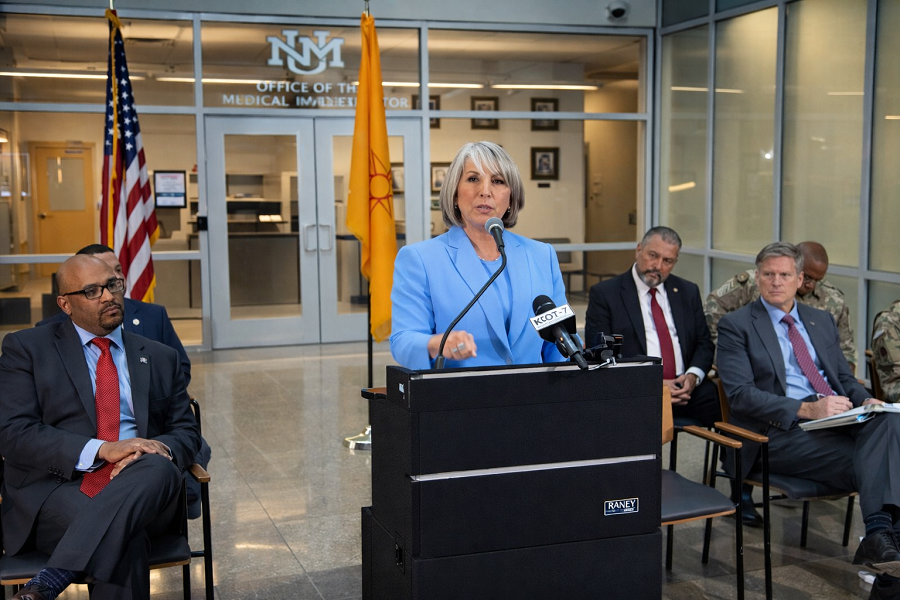
Gov. Michelle Lujan Grisham demanded federal reparations after she alleged that the Drug Enforcement Administration (DEA) allowed millions of fentanyl pills to flood New Mexico during an undercover operation without notifying state or local officials.
The governor called the alleged operation “the most derelict, despicable act in my long career.” Lujan Grisham said Monday the fallout has forced the state to spend more than $1.5 billion on law enforcement, behavioral health, substance abuse treatment and other public safety programs while grappling with overdose deaths and widespread addiction.
“The DEA stood silently by and watched thousands of fentanyl pills get distributed with no arrests, no evidence, no notice that we know of anywhere else,” Lujan Grisham said at a news conference. Someone must pay for the damage done to the state and the public safety risks that will burden New Mexicans for the next decade, she added
Lujan Grisham asked Congress to prohibit similar DEA operations. Congress, Lujan Grisham urged, should also require federal reimbursement for state costs and hold officials involved personally accountable. She compared the controversy to federal failures that harmed New Mexico in the past, including the U.S. Forest Service’s prescribed burns that sparked the state’s most massive wildfire and the federal response to the COVID-19 pandemic.
Her remarks came on the heels of Attorney General Raúl Torrez’s announcement of a criminal investigation into allegations that DEA agents knowingly allowed hundreds of thousands of fentanyl pills to reach New Mexico communities while pursuing larger criminal cases. Torrez said the investigation will examine potential criminal charges, civil litigation, and reforms to prevent similar conduct.
“The families who have lost children, siblings, and parents to fentanyl deserve the truth about what the federal government knew and what it failed to do,” Torrez said in a statement.
Lujan Grisham said her administration repeatedly asked both the Biden and Trump administrations for more federal resources, including additional DEA agents. But she received no response, the governor claimed. She urged the federal government to restore $25 million in behavioral health and public safety funding. The federal government, she said, had cut the funding.
“I want the people who knew this distribution was occurring without notifying anyone and allowing it to occur over and over again held accountable,” she said. “My bet is many of those people are still in that DEA office.”

