
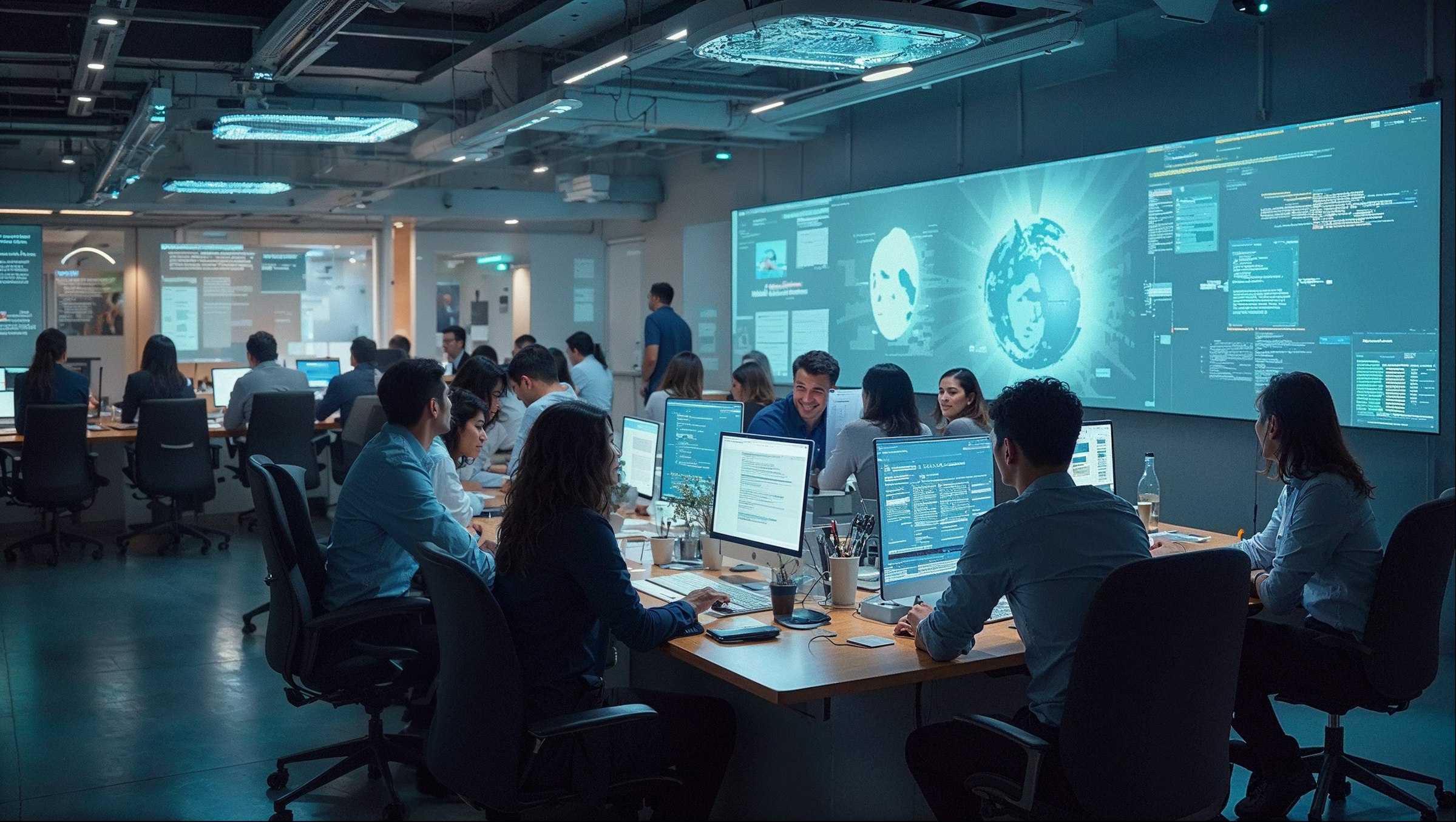


The students filing into artificial intelligence courses at universities these days look different than they used to. Alongside the usual cohort of computer science majors and engineers, there are nurses hoping to understand predictive analytics, elementary school teachers curious about chatbots in the classroom, and middle managers trying to figure out what their CEO means when he talks about “AI transformation.”
This shift reflects a larger trend in the American workforce. Artificial intelligence is no longer confined to tech companies or research labs. It has moved into hospitals, schools, marketing departments, and HR offices. And workers in those fields are realizing they need to catch up.
Universities have noticed. Schools across the country report growing enrollment in AI-related courses from students with no technical background whatsoever. These are not people looking to become data scientists. They are professionals who want to understand the tools already changing how they do their jobs.
The pressure to learn comes from multiple directions. The World Economic Forum estimated last year that nearly half of all workers will need some form of reskilling over the next few years due to advances in artificial intelligence. That prediction, whether exact or approximate, has clearly resonated. People are signing up for classes.
Why the Rush?
Part of the motivation is defensive. Workers see AI creeping into their industries and worry about being left behind. But there is also genuine curiosity. Many professionals want to understand what AI can actually do, rather than what the hype suggests.
In healthcare, for example, nurses and doctors are encountering AI tools that help analyze patient data or flag potential diagnoses. Some of these tools work well. Others do not. But either way, medical professionals increasingly need to understand how the technology operates and where it might go wrong.
Teachers face a different set of questions. AI can grade essays, personalize lesson plans, and answer student questions at odd hours. Some educators see this as a breakthrough. Others see it as a threat to their profession. Most just want to figure out how to use it responsibly.
In business, the stakes are more straightforward. Companies are investing heavily in AI, and employees who understand it have an advantage. Marketing teams use AI to analyze consumer behavior. Finance departments use it to detect fraud. Human resources uses it to screen job applicants. Workers who can speak the language of machine learning, even at a basic level, are more likely to advance.
What the Courses Look Like
The classes popping up for non-technical students tend to avoid heavy mathematics and coding. Instead, they focus on concepts. What is machine learning? How do algorithms make decisions? What are the ethical implications of using AI in hiring or healthcare?
Some schools offer these courses online, recognizing that working professionals cannot always show up to campus in the middle of the week. Others have developed executive education programs aimed specifically at mid-career professionals who need flexible schedules.
The goal is not to turn a nurse into a software engineer. It is to give people enough literacy to work alongside AI tools, ask the right questions, and spot problems before they become disasters.
The Bigger Picture
This trend points to a broader reality about the modern workplace. Technology changes faster than most people can keep up with, and the gap between those who understand new tools and those who do not keeps widening.
For decades, the assumption was that workers in technical fields needed to keep learning throughout their careers while everyone else could rely on the skills they picked up early on. That assumption no longer holds. A teacher who graduated in 2010 is now working in a completely different environment from the one they trained for. The same goes for nurses, accountants, and just about everyone else.
Educational institutions and employers will need to figure out how to make ongoing training accessible and affordable. Right now, much of the burden falls on individual workers to find courses and pay for them themselves. That is not sustainable if the pace of change continues to accelerate.
What is clear is that AI literacy is becoming as fundamental as computer literacy was a generation ago. The professionals enrolling in these courses understand that. They are not trying to become experts. They are just trying to keep doing their jobs in a world where the tools keep changing.