
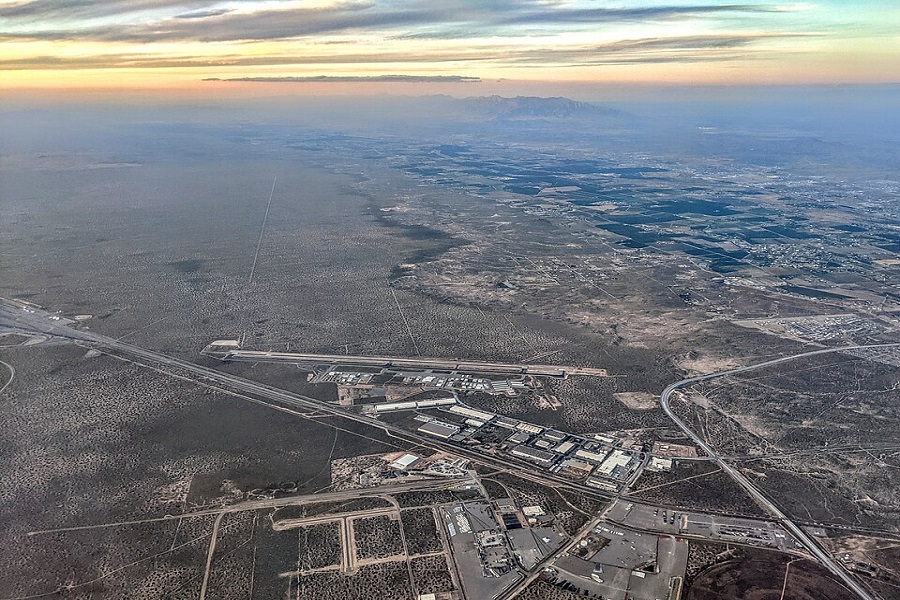


A proposed multibillion-dollar data center in southern New Mexico, where water scarcity shapes daily life, has ignited a political fight. Four Democratic lawmakers are planning to introduce a legislative measure that would halt all new large-scale data centers statewide — a moratorium that could make New Mexico the first state to hit the brakes on the industry.
The lawmakers unveiled the proposal this week, which comes from state Reps. Micaela Lara Cadena of Mesilla, Angelica Rubio of Las Cruces and Eleanor Chávez of Albuquerque, along with state Sen. Carrie Hamblen of Las Cruces. It would stop new developments while the state drafts a comprehensive framework to assess impacts on water usage, electricity demand, utility rates for residents, emissions, and potential community benefits.
“New Mexico cannot keep saying yes before we understand what we are saying yes to,” Rep. Rubio said in a statement. The state legislators emphasized the need for guardrails amid the astronomical growth of data centers driven by artificial intelligence and cloud computing.
Attractive Frontier for Data Centers
New Mexico, with its vast tracts of land, tax breaks, and untapped renewable energy, has become an attractive frontier for data center developers. High-profile proposals like Project Jupiter — a huge $165 billion campus planned near Sunland Park and Santa Teresa in Doña Ana County — have highlighted the tensions. The developers initially projected substantial water needs for cooling servers, later revised it to emphasize recycling and alternatives such as fuel cells.
But local skepticism refuses to die out in a region already facing drought and declining groundwater. “I have a little plot of land out here, grow some pecans,” says Eddie Estrada, a weekend farmer with a day job at the state capital. “I had 28 trees, but due to the water shortage, many of them died.”
Data centers are notorious for being resource-intensive. They devour electricity — sometimes on par with a small city — and vast amounts of water to stay cool, fueling concerns about grid strain, carbon emissions, and the relatively few local jobs they generate. Projections from utilities like Public Service of New Mexico have raised red flags about data centers as a major driver of surging demand.
Across the U.S., the AI boom has triggered a data center-building frenzy, prompting regulatory pushback in multiple states over energy pricing, water disclosure, and siting. Some locales have offered incentives to attract investment and jobs, but others face public backlash over rising power costs passed to residents and environmental trade-offs. No state has passed a comprehensive moratorium on new large-scale facilities so far, though local pauses and bills have proliferated.
Economic Opportunities or Long-Term Risks?
Critics of the New Mexico proposal contend that a moratorium could send a negative signal to investors and forgo economic opportunities in a state that ranks among the poorest states in the country. Moratorium supporters, however, argue that unchecked growth risks long-term harm to residents’ utility bills, scarce water resources and climate goals without clear accountability.
The lawmakers plan to file the measure temporarily banning data centers in the 2027 session, which starts in January. Details of the legislation have yet to be drafted, including the precise definition of “large-scale” and the duration of any pause. Local battles continue — especially in Doña Ana County, where Project Jupiter has residents pressing for transparency, demanding to know whether water will come from existing rights and whether the region’s infrastructure can withstand the strain.
“We are watching this industry move faster than our laws, our water systems, and our communities can keep up with,” Rep. Rubio said. “A moratorium gives us the time to get this right, instead of finding out the consequences after the concrete is already poured.”
Environmental advocates and some utility observers welcomed the lawmakers’ moratorium plan, describing it as a proactive step toward responsible development. “It is imperative that the New Mexico legislature step in, require a pause, and establish guidelines and guardrails for all industries that put our communities’ futures, and our land, air, and water in danger,” Rep. Chávez said.
Legislators must decide whether to broadly support the data centers moratorium, even in a chamber known for balancing economic development with resource protection. The move signals a nationwide reckoning: tech titans push to anchor the AI age, while states with land but limited resources ask if the payoff justifies the strain before signing on.