


New Mexico High Schools Win Big in FAFSA Face-Off 2025: Who Won, What They Earned, and How Students Made It Happen

High schools across New Mexico are celebrating big wins after going all in for the FAFSA Face-Off 2025—an annual competition designed to boost the number of students completing the Free Application for Federal Student Aid (FAFSA). Organized by the New Mexico Educational Assistance Foundation (NMEAF), the contest challenged schools across five classifications, from 1A to […]

High schools across New Mexico are celebrating big wins after going all in for the FAFSA Face-Off 2025—an annual competition designed to boost the number of students completing the Free Application for Federal Student Aid (FAFSA).

Organized by the New Mexico Educational Assistance Foundation (NMEAF), the contest challenged schools across five classifications, from 1A to 5A, to raise awareness and increase FAFSA completions. And students delivered in a big way.

What’s the FAFSA Face-Off?

The FAFSA Face-Off is more than just a competition—it’s a statewide effort to help students unlock financial aid opportunities for college, training programs, and beyond. Schools that achieved the highest FAFSA completion rates in their classification earned cash prizes. But more importantly, they made real strides in helping their seniors take that first crucial step toward higher education.

This year’s challenge wrapped up in April, with schools proudly announcing completion rates, community efforts, and creative outreach strategies. From social media campaigns to classroom support, students and staff teamed up to make sure their classmates didn’t miss out.

And the Winners Are…

Let’s take a closer look at the schools that topped their divisions and walked away with both bragging rights and prize money:

5A First Place: Albuquerque High School

Albuquerque High claimed the top spot in the 5A category, earning a $5,000 prize after reaching a 60% FAFSA completion rate. Their campaign focused on student-to-student encouragement, persistence, and strong leadership from the senior class.

5A Second Place: La Cueva High School

La Cueva secured second place and a $2,500 prize with a 53.25% completion rate. Their team proved that consistent effort and school-wide collaboration can make a major impact.

4A First Place: St. Pius X High School

With a 59% FAFSA completion rate, St. Pius X earned the $4,000 prize for their division. Their students came together with a shared purpose—supporting each other through the process and leading with school pride.
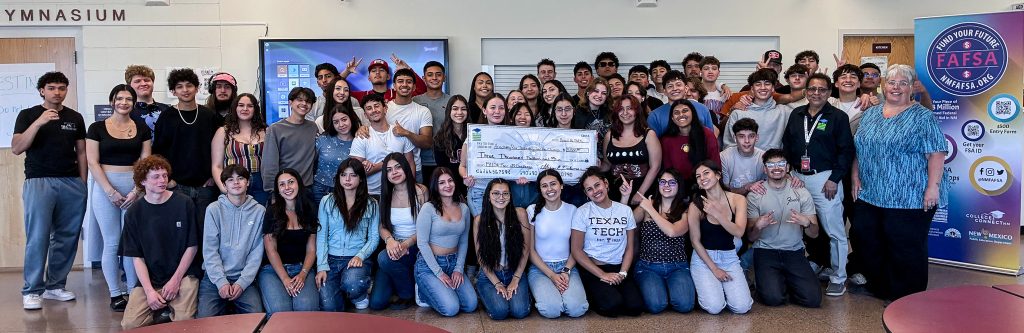
3A First Place: Academy for Technology & Classics

This school stood out with an 83% completion rate and a $3,000 prize. Their strategy blended academic readiness with strong community involvement, offering a model for other schools to follow.
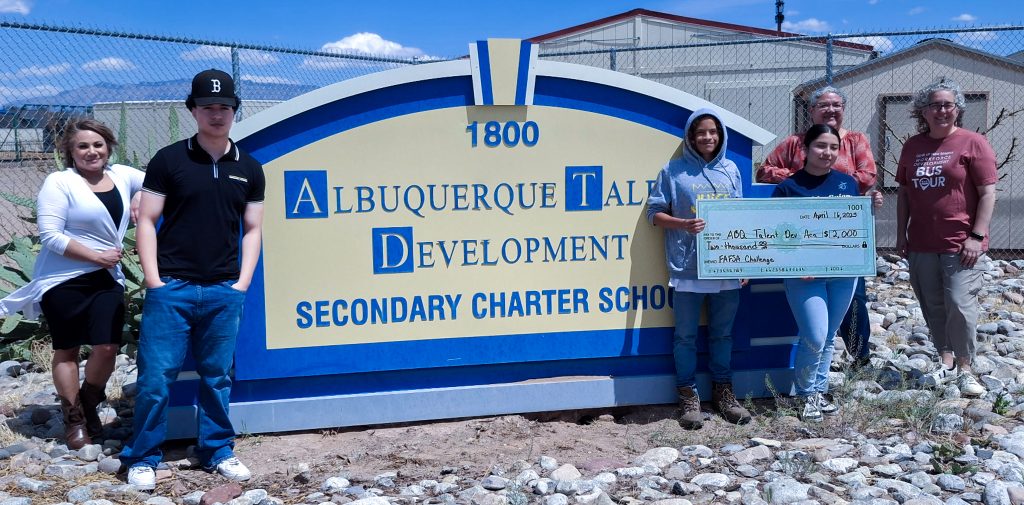
2A First Place: Albuquerque Talent Development Secondary Charter School

Earning ,000 and boasting an 85% completion rate, this school succeeded through targeted outreach and meaningful student engagement. Their team inspired peers to take the FAFSA seriously—and it paid off.
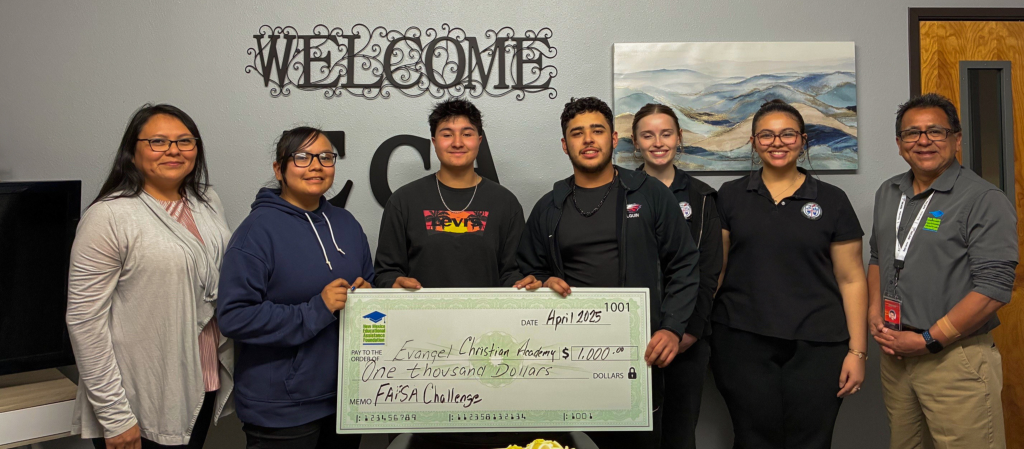
1A First Place: Evangel Christian Academy

Evangel Christian Academy achieved a perfect 100% FAFSA completion rate. Their small but mighty team earned the $1,000 prize by making sure every senior completed the form. The school’s leadership and community spirit were key to their success.

What Can Schools Do With Their Prize Money?

NMEAF gives winning schools the freedom to decide how they’ll use their funds—with a few basic guidelines. Options include:

  • Hosting prom or graduation events
  • Installing commemorative benches or murals
  • Starting scholarship funds for future seniors

As long as a class sponsor approves the plan and it follows school rules, the prize money belongs to the students—and the possibilities are wide open.

Why This Matters

Completing the FAFSA is one of the strongest predictors of whether a student will attend college. According to the National College Attainment Network, students who complete the FAFSA are 84% more likely to enroll in postsecondary education.

For many families in New Mexico, where affordability remains a major barrier to higher education, the FAFSA can unlock grants, scholarships, and work-study opportunities. By boosting awareness and providing support, the Face-Off helps remove those barriers—one form at a time.

Not Just the Winners—Everyone Made a Difference

Even schools that didn’t place in the top tier played a crucial role. NMEAF recognized the hard work of all participants, noting that many were just a few submissions away from victory. From organizing school-wide events to helping a friend through the application, every effort helped New Mexico move toward its goal of a college- and career-ready future.

FAFSA Support Is Still Available

Though the competition is over, the mission continues. Students and families who still have questions about FAFSA or need help completing the form can join “Money Mondays,” a free virtual support session hosted by real financial aid experts. These sessions are open every Monday from 3 to 6 p.m., offering a judgment-free space for families to get the answers they need.

FAFSA Face-Off 2025 was more than a contest—it was a movement. Across the state, students stepped up, educators rallied behind them, and entire school communities worked toward a common goal: opening doors to education. Whether they took home a check or not, every school that participated helped make a difference. And that’s a win worth celebrating.

For more information or FAFSA help, visit nmeaf.org.

For corrections, news tips, and any other content requests, please send us an email at [email protected].

Hot this week

UNM Steps Up to Cut Food Waste, Boost Food Access

The University of New Mexico works to turn food waste into resources that help address food insecurity on campus.

New Mexico’s Recipe for Hantavirus Risk—Climate, Deer Mice, and Country Living

More than 30 years after the Four Corners outbreak, New Mexico continues to report among the nation’s highest hantavirus pulmonary syndrome cases. Experts say the state’s ecology, climate cycles and rural living conditions have created an enduring hotspot for the rare but deadly disease carried by deer mice.

Community Solar Program Took Years to Arrive. Now the Solar Panels Are Finally Rising.

After years of delays, New Mexico’s community solar program is beginning to expand, with new projects coming online across the state. But developers and advocates say high interconnection costs and complicated billing rules still threaten the program’s long-term success.

Patient Voices Push New Mexico Lawmakers to Spotlight Healthcare Access and Affordability

New Mexico lawmakers spotlighted healthcare after hearing directly from patients, emphasizing urgent concerns about access, affordability, and workforce shortages.

Health Officials Clarify Hantavirus Risk: No Person‑to‑Person Spread

New Mexico's health officials have emphasized that the state's Hantavirus (Sin Nombre Virus) is not transmitted from person to person, which differs from the Andes virus that was responsible for an outbreak aboard a cruise ship. There have been many reports around the world about the Andes virus being transmitted by other people, and this caused people to worry about being able to contract the Andres virus from residents of New Mexico. The Andes virus is the only hantavirus known to be transmitted by another person in South America. The Sin Nombre Virus can only be contracted by contact with infected rodents, or their excrement. There are several ways to help to prevent hantavirus exposure, including disinfecting rodent nests and debris, ensuring that all points of entry into the home are sealed and practicing safe cleanup methods.

Topics

UNM Steps Up to Cut Food Waste, Boost Food Access

The University of New Mexico works to turn food waste into resources that help address food insecurity on campus.

New Mexico’s Recipe for Hantavirus Risk—Climate, Deer Mice, and Country Living

More than 30 years after the Four Corners outbreak, New Mexico continues to report among the nation’s highest hantavirus pulmonary syndrome cases. Experts say the state’s ecology, climate cycles and rural living conditions have created an enduring hotspot for the rare but deadly disease carried by deer mice.

Community Solar Program Took Years to Arrive. Now the Solar Panels Are Finally Rising.

After years of delays, New Mexico’s community solar program is beginning to expand, with new projects coming online across the state. But developers and advocates say high interconnection costs and complicated billing rules still threaten the program’s long-term success.

Patient Voices Push New Mexico Lawmakers to Spotlight Healthcare Access and Affordability

New Mexico lawmakers spotlighted healthcare after hearing directly from patients, emphasizing urgent concerns about access, affordability, and workforce shortages.

Health Officials Clarify Hantavirus Risk: No Person‑to‑Person Spread

New Mexico's health officials have emphasized that the state's Hantavirus (Sin Nombre Virus) is not transmitted from person to person, which differs from the Andes virus that was responsible for an outbreak aboard a cruise ship. There have been many reports around the world about the Andes virus being transmitted by other people, and this caused people to worry about being able to contract the Andres virus from residents of New Mexico. The Andes virus is the only hantavirus known to be transmitted by another person in South America. The Sin Nombre Virus can only be contracted by contact with infected rodents, or their excrement. There are several ways to help to prevent hantavirus exposure, including disinfecting rodent nests and debris, ensuring that all points of entry into the home are sealed and practicing safe cleanup methods.

‘You Are Not Alone’: Grief Kits Help Students Cope with Loss 

Albuquerque Public Schools received grief kits after the Rotary Club of Albuquerque and the Grief Center worked together to provide resources that help students cope with loss.

New Mexico Reopens Fight Over Toxic Oil and Gas Wastewater — Environmentalists Call It a Political Gamble

New Mexico regulators voted to revive a contentious rulemaking process that could expand the use of treated oil and gas wastewater beyond drilling sites, reigniting a fierce clash between industry advocates and environmental groups over public health, water scarcity and political influence.

Wastewater Sounded the Measles Alarm in New Mexico—Before Doctors Even Caught It

A new study shows New Mexico health officials detected measles in wastewater five days before hospitals confirmed cases, highlighting sewage surveillance as a powerful early-warning system during the nation’s largest measles outbreak in decades.

Related Articles