

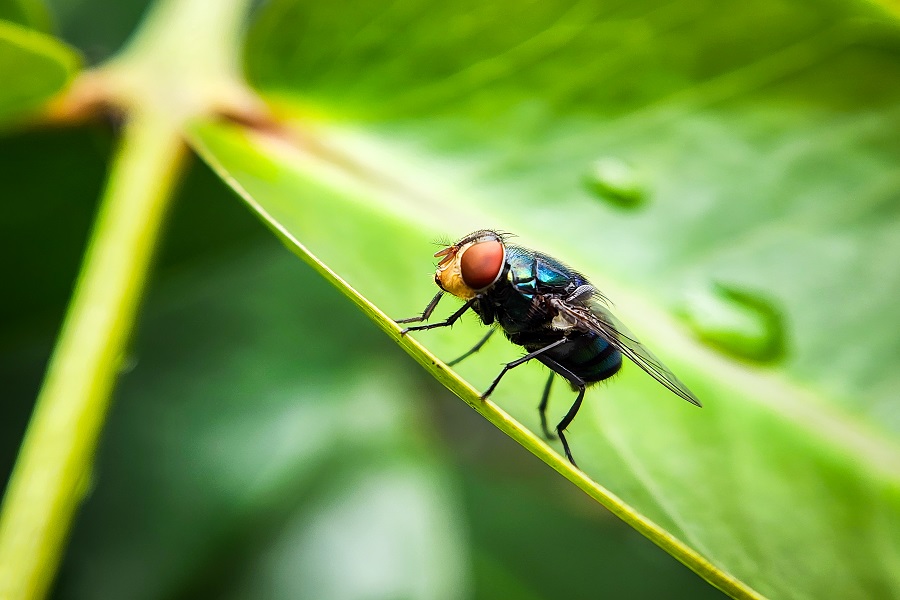
New Mexico agriculture and health officials urged residents to remain vigilant after federal authorities confirmed a case of the New World screwworm, a flesh-eating parasite, in South Texas. The development highlights how quickly animal health threats can cross state borders and disrupt agriculture, wildlife, and rural economies.
New Mexico has detected no flesh‑eating parasite within its borders. But officials say the June 3 confirmation by the U.S. Department of Agriculture in Zavala County, Texas, is a warning that vigilance—not panic—is the most effective defense against a pest once eradicated from the United States. “While New World screwworm has not been detected in New Mexico, USDA’s confirmation of the pest in South Texas serves as an important reminder for everyone to remain vigilant,” said Jeff Witte, secretary of the New Mexico Department of Agriculture.
The New World screwworm is not merely a fly. Its larvae feed on the living tissue of warm-blooded animals, including cattle, horses, wildlife, pets, and, in rare cases, humans. Common maggots consume dead tissue, but screwworm larvae burrow into open wounds, causing severe injuries that can become fatal if untreated.
State officials say the greatest danger lies not in the confirmed Texas case, but in delayed detection. They asked livestock producers, veterinarians, hunters, wildlife managers, and pet owners to watch for wounds that fail to heal or contain unusual maggot infestations, which are early signs that could indicate a screwworm infection.
Officials warn people who recently traveled to South Texas or who plan to bring animals into New Mexico from areas near the confirmed detection to monitor for early symptoms. They also encouraged close monitoring of all animals returning from affected regions.
Livestock production remains a backbone of the rural economy in New Mexico. A screwworm outbreak could cause animal losses, costly control measures, and restrictions on animal movement, affecting ranchers and agricultural businesses across the state.
Wildlife officials are also concerned about the possible impact of the deadly parasite on deer, elk, and other wild animal populations. These animals can serve as hosts and may complicate eradication efforts.
Public health experts stress that awareness is critical because the parasite’s spread can often be stopped when infestations are identified and reported quickly. The United States Department of Agriculture eradicated screwworm in 1966 and again in 2016 in Florida Keys deer. But periodic detections near the southern border continue to require constant monitoring.
The message for the public is straightforward: New Mexico remains free of screwworm, but the Texas case is a reminder that biosecurity depends on the eyes and ears of the public. Officials urged residents to acquaint themselves with the signs of the New World screwworm and immediately report suspicious cases to authorities. Early reporting, officials say, remains the best defense against the flesh-eating parasite.

