Home Blog Page 3

Greg Taylor Named Chair of UNM Physics and Astronomy Department, Richard Rand Retires

0

The University of New Mexico’s Department of Physics and Astronomy is set to welcome a new leadership. Starting July 1, professor Greg Taylor will assume the role of chair. He brings more than two decades of experience as a faculty member, researcher, and academic leader within the department.

This leadership transition comes as Professor Richard Rand retires from the department after three decades of service to UNM. He concludes a career that included more than seven years as department chair.

Taylor joined UNM in 2005 and currently serves as director of the Center for Astrophysical Research and Technologies. He is also the founding director of the Long Wavelength Array. Before joining UNM, he spent over a decade on the scientific staff at the National Radio Astronomy Observatory in Socorro.

His research focuses on instrumentation, meteors, space weather, pulsars, gamma-ray bursts, active galaxies and their environments. Taylor has advised 14 doctoral students and authored or co-authored more than 330 peer-reviewed publications throughout his career. 

“UNM and the Physics and Astronomy Department have been very good to me, providing a supportive environment where I could develop the Long Wavelength Array telescope and work with students both inside and outside the classroom,” Taylor said. “Being named chair provides me with an opportunity to provide support in turn to all the faculty and staff that have been so helpful to me.”

Incoming Chair Taylor Outlines Priorities for the Department 

Taylor said he looks forward to helping the department navigate a rapidly changing higher education landscape. He also aims to strengthen its research and teaching missions.

“I also feel that these are challenging times for our department, for UNM and for higher education in general,” he said. “I hope that my experience and connections with the national laboratories and elsewhere can help us weather the current storm.”

As chair, Taylor plans to address ongoing space challenges resulting from the closure of portions of Regener Hall. He also aims to advance efforts to replace the department’s campus observatory, which has been impacted by increasing light pollution from surrounding development.

Taylor on Rand’s Leadership

Taylor also spoke about Rand’s impact on the department and on his own career.

“Rich was my informal mentor, especially during the first several years as I was learning my way around the classroom and at UNM in general,” Taylor said. “As chair, we all appreciated his open-door policy, his steady guidance and his unfailing wit.”

Rand and Taylor have met regularly over the past several months to ensure a smooth leadership transition.

Rand’s Leadership and Legacy

During his tenure as chair, Rand guided the department through periods of significant growth and challenge. He oversaw the department’s move into the Physics, Astronomy and Interdisciplinary Science (PAIS) building and led faculty and staff through the COVID-19 pandemic. He also navigated staffing shortages, secured the department’s first endowed chair, and initiated efforts to build a new campus observatory.

“It’s been a time of great challenges and great successes,” Rand said. “The Department of Physics & Astronomy is simply extraordinary, and I can’t say enough about the exceptional research carried out here and the dedication of the faculty and our outstanding staff to its mission.”

“It’s also been so rewarding to see our students succeed and go on to all kinds of interesting STEM-related careers,” he added. “And we are poised to achieve much more so I think there should be exciting times ahead for physics and astronomy at UNM.”

Rand is an internationally recognized astrophysicist. His research focuses on gaseous galactic halos, spiral structure, interstellar gas and star formation, and the magnetic field of the Milky Way. He also studies collisional ring galaxies using radio, millimeter-wave, optical, and infrared telescopes.

A Southwest Albuquerque Neighborhood Was Targeted for a Year—Now, a Woman is Behind Bars for Allegedly Attacking Her Neighbors

Southwest Albuquerque residents say a woman targeted their neighborhood for at least a year, repeatedly throwing objects into their yards and prompting one family to spend more than $1,000 on security measures.

Her neighbors said they repeatedly contacted Albuquerque police, city officials and state agencies. They said the latest encounter left a father with a cut on his face.

Residents said an arrest brought some relief, but they still do not feel safe.

Authorities identified the woman as Andrea Padilla-Garcia.

Neighbors’ Worries Over Their Safety

According to Richard and Lindsay Boldin, they have dealt with harassment for at least a year. They claimed she has thrown broken glass, frozen food, a MacBook, metal poles, and wood over their fence and dumped nail polish on it.

The incident with the glass resulted in Richard’s cut on his face. “She can’t come back to where she lives. I won’t feel safe. There’s no way,” Lindsey Boldin said.

To ensure their safety, Boldins spent more than a thousand dollars on security cameras, motion-sensor lights, and other preventive measures to protect their property. They also blocked their view into their yard. But even after all this, they still don’t feel safe.

“It hurts the whole family. We’ve got to watch animals going outside. We have to watch when we go outside. You know, when can we go outside?” Richard Boldin said. She repeatedly attacked the fence, shaking and striking it while shouting at the children, making inappropriate remarks toward them, he added.

Their neighbor, Lawrence Lovato, said he has lived in the neighborhood for about a year, and what he has seen stands out from anything he has experienced before. He said he has called police multiple times. “Never in my life have I seen something as horrible that I’ve seen here,” Lovato said.

Lovato worries over his own safety and his daughter’s. Neighbors said they plan to keep looking out for each other. They hoped that the latest arrest would lead to help for Padilla-Garcia, who is now in jail and is facing charges of battery and aggravated assault.

Families Are Putting Groceries on Credit Cards. Can Financial Literacy Ease the Pain of Rising Prices?

0

Albuquerque leaders are confronting a sobering reality. Grocery bills and utility costs continue to climb, and many families are turning to credit cards not for luxuries, but for necessities. City officials and community advocates gathered to address a growing affordability crisis that has left many New Mexicans juggling debt and trying to keep food on the table. Their message was not that financial literacy can solve inflation, but it can help families weather economic strain and prevent temporary hardships from turning into long-term financial crisis.

At a forum held Monday at the American Federation of Teachers New Mexico offices on Jefferson Street, panelists discussed how every household can reassess spending habits, build savings, and lessen reliance on credit as prices continue to squeeze budgets. The discussions reflected a greater challenge facing New Mexico. The sharp disparities in wealth have left many residents grappling to buy essentials even as economic growth and overall public spending have increased.

“Credit card spending is through the roof, and it is because people can’t afford to buy things that they need, and I guarantee you if you look at those credit card bills, it’s groceries, and it’s utility bills,” said Albuquerque City Councilor Stephanie Telles.

Telles’ remarks highlighted how debt has increasingly become a bridge between paychecks for working families. Financial experts at the event emphasized that budgeting alone cannot offset rising prices. But a better understanding of spending patterns, reducing unnecessary expenses, and planning can help households avoid accumulating high-interest debt.

The panel also widened the discussion beyond individual finances. Telles said the government must practice the same principles it promotes to residents. She argued that the state should manage funded projects efficiently to ensure taxpayers gain the greatest benefit from public spending.

The event highlighted an uncomfortable truth many Americans are facing. That is: financial discipline can provide relief. But it cannot fully compensate for an economy in which daily necessities consume an increasing share of household incomes. Official data from Consumer Expenditure Surveys confirm that while financial literacy helps households manage budgets, rising prices of necessities are consuming a larger share of incomes, leaving many families in a difficult situation.

Effective financial management is not a cure against inflation for families facing higher prices at the checkout counter. But in a time when Americans increasingly use credit cards to pay for groceries and other bills, financial literacy offers a measure of stability—and perhaps a path away from debt.

El Niño Is Back — and It Could Soak New Mexico This Winter. But Don’t Get Too Comfortable.

El Niño has officially come to the tropical Pacific after a season of drier La Niña patterns that worsened drought across the Southwest. Forecasters say the phenomenon is already present and is expected to intensify into a moderate or strong weather event — with about a 63 percent chance of becoming a “very strong,” or super, El Niño by the Northern Hemisphere winter.

In a state like New Mexico that is used to the boom-and-bust cycles of the El Niño-Southern Oscillation, the change carries both promise and peril.

The Good: A Tilt Toward Wetter Winters and Potential Drought Relief

Historically, El Niño events push the jet stream southward, steering Pacific storm systems toward the southern tier of the United States. In New Mexico, this translates to above-average rainfall during the cool season — roughly October through April — offering a respite to reservoirs, snowpack, and soil moisture.

Stronger events, such as those in 1982-83 or 1997-98, have caused wet periods across the region. With forecasts pointing to a stronger influence, state officials and water managers are closely monitoring for improvements in the Rio Grande, San Juan, and other basins after years of strain.

Ranchers and farmers growing chile, pecans, and other crops could experience reduced irrigation demands and greener rangelands. Eastern New Mexico, in particular, will likely see wetter summer conditions at the onset or strengthening of El Niño, alongside slightly cooler temperatures across the state that might temper extreme heat.

Wildfire risk could be reduced in the short term as vegetation will be healthier. The period can provide a breather for the state’s fire-prone forests and grasslands.

The Risks: Extremes, Flooding and No Guarantees

However, El Niño is no panacea. It is no guarantee of a drought-free winter. Outcomes vary widely depending on the event’s strength, exact positioning, and interactions with other climate patterns. Even a positive seasonal cycle can feature long dry spells punctuated by deluges.

A stronger El Niño raises the possibility of heavy rainfall events. It can increase the possibility of flash flooding, especially when Pacific storms interact with monsoon rain. Post-wildfire wreckage flows and urban flooding in areas with poor drainage remain vulnerable

More extensive climate change complicates the picture. The Southwest is leaning toward hotter and more arid conditions overall, with higher evaporation rates that can sap even heavy rainfall. A very strong El Niño, according to the World Meteorological Organization, could amplify extreme temperatures globally while delivering intense weather shifts in the state.

What Residents and Officials Should Watch

  • Water and Agriculture. Signs of early improvement of snowpack or reservoir inflows could ease restrictions, but planning for variability remains essential.
  • Fire Season. Near-term relief is possible. But quick drying later in the season or in subsequent years could increase risks.
  • Infrastructure. Preparations for winter storms, heavy rains, and flooding in vulnerable canyons and arroyos must be in place.
  • Longer View. Even a beneficial El Niño needs time. A sustained adaptation to a warmer baseline is still critical for New Mexico’s water security and economy.

Meteorologists at NOAA’s Climate Prediction Center and the National Weather Service in Albuquerque will provide forecasts monthly. The return of El Niño, at the moment, offers cautious optimism for a drier state — shaped by the knowledge that in a disrupted climate era, no season is average anymore.

Editor: This article draws on current NOAA, WMO and regional climate analyses as of late June 2026.

Albuquerque Installs Public Restrooms at Transit Hubs to Improve Rider Access

0

The City of Albuquerque has installed new public restroom facilities at several major transit hubs as part of an effort to improve accessibility, cleanliness, and convenience for public transportation users. Officials said the additions provide an essential service for residents and visitors, especially those who rely on the transit system throughout the day.

According to officials, thousands of riders use the restroom units each week after the city placed them at key transit centers. Designers created the facilities to provide reliable restroom access and foster a more welcoming environment for passengers.

Officials said the lack of public restrooms has been a longstanding concern at many of Albuquerque’s larger transit centers. The builders constructed the new facilities to meet demand for durable, easy‑to‑maintain restrooms that remain accessible during normal operating hours.

The restrooms will benefit transit employees, visitors, and others who spend extended periods at transit centers, in addition to serving commuters. The project is part of the city’s broader efforts to improve public infrastructure and enhance services at transit hubs.

According to officials, the restroom units include several safety and sanitation features. City crews conduct regular inspections and maintenance, ensuring that the facilities remain clean and operational.

“Public restrooms may seem like a small thing, but they make a big difference in how people experience our city,” Department of Municipal Development Director Jennifer Turner said.

Albuquerque also continues to invest in other transit amenities. City leaders say access to basic services, like restrooms, can improve the overall rider experience and encourage greater use of public transportation.

Transit advocates described restroom access as an important quality-of-life issue for passengers. They said the facilities address a practical need while making transit centers more accommodating for residents and visitors.

City officials said they will continue monitoring the performance of the restroom facilities and may consider additional improvements in the future. Riders need to keep the restrooms clean and report maintenance concerns through the city’s customer service channels.

NMAA Approves New Transfer Rule for Student-Athletes

0

The New Mexico Activities Association (NMAA) has approved a significant change to its transfer rules. This change paves the way for student-athletes to gain greater flexibility when changing schools. The decision follows months of discussion among athletic administrators, school officials, and association leaders across the state.

NMAA’s governing bodies have approved changes to their bylaws regarding eligibility. These changes allow one-time transfers for students previously restricted from transferring due to Athletic Eligibility Restrictions. The amendments will change how schools and the NMAA treat students who have already transferred. This signals an important shift in how New Mexico schools manage student-athlete transfers.

As stated by NMAA staff, the revised regulation aims to provide students and families with more options. It also aims to enhance safeguards against improper recruitment and excessive influence. Should a student change schools under the new policy, the NMAA will permit immediate varsity eligibility. This applies if they meet the conditions specified by the Association.

Supporters of the change believe the new rule reflects how student-athletes experience today’s world. They say it gives families flexibility if they want to transfer to another school for academic, personal, or athletic reasons. Supporters also say it provides the same amount of oversight over the transfer process as before. However, it now allows for more flexibility.

In contrast, some school administrators and athletic leaders are concerned about how this change will impact competitive balance in sports. Therefore, they warn that schools must closely monitor the implementation of this new rule. They emphasize that student-athletes must transfer for legitimate reasons and that schools must continue following current recruitment regulations.

The rule change comes as high school athletic organizations across the country continue to review transfer policies and eligibility standards. NMAA leaders said the updated bylaw seeks to balance student opportunities with fairness in interscholastic competition.

Association officials expect the revised transfer policy to affect student-athletes beginning with the upcoming school year. Schools throughout New Mexico will receive guidance on implementing the new eligibility standards and ensuring compliance with association regulations.

Field Expeditions Return to WNMU Marine Biology Program, Expanding Hands-On Learning

0

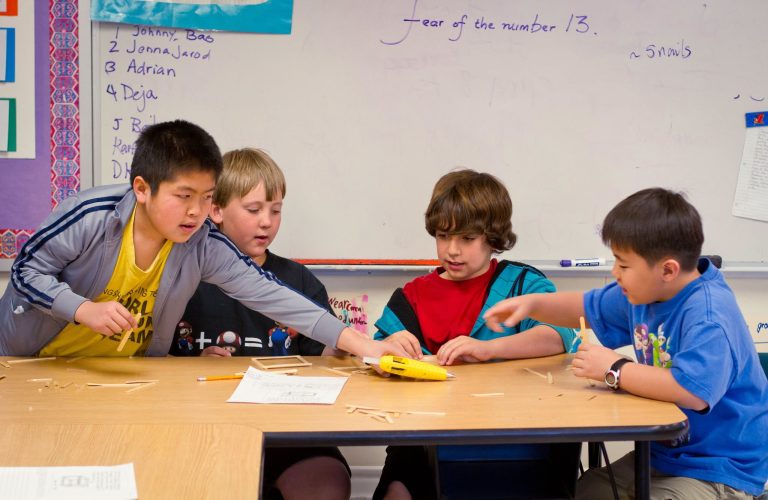
Western New Mexico University has revived its flagship hands-on regional expeditions, strengthening its marine studies program through field-based learning that gives students firsthand experience with climate change and coastal ecosystems.

Students recently returned from a four-day field expedition to San Diego, where they used the Pacific coast as a living laboratory to study the local effects of climate change.

The annual April excursion is a cornerstone of the field curriculum offered by the Western New Mexico University Department of Natural Sciences. This year’s expedition also serves as preparation for a more rigorous voyage to Sonora, Mexico, scheduled for June.

The regional excursions are co-led by biology professor Manda Jost and assistant biology professor Caleb Loughran. The program provides students with direct exposure to coastal ecosystems and field research techniques.

During the San Diego trip, students camped at Sweetwater Regional Park in Bonita. They conducted biodiversity surveys at Sunset Cliffs, Point Loma, and the La Jolla tide pools. The June marine biology course marks the return of the international field expeditions for the first time since the COVID-19 pandemic.

“The expeditions can serve as a professional rite of passage,” Jost said. “Long before reaching the coast, students are fully immersed in the logistics of fieldwork, showing up hours in advance to remove van seats, organize field kitchen kits, and secure delicate laboratory gear to roof racks. Once on-site, they manage everything from base camp assembly to shared cooking rotations.”

How the San Diego Trip Went

Students begin days at sunrise with field sessions, tide pooling, swimming, snorkeling, or hiking to collect ecosystem data WNMU reports. They rest during a midday siesta at the peak of the day’s heat. They then transition to afternoon data logging, daily quizzes and lectures, and finish with a second field session at dusk.

Students use dive slates while snorkeling to document marine life. They sketch the precise body shapes and fin positions of fish for later identification.

“We very quickly create an experience where, if you intend to become a professional biologist, and you’re going on field trips, you have to do these kinds of things,” Jost said. “A van’s not going to pull up and say, ‘Hop in.’ You need to prepare the gear in advance and be part of a team. Once you get out in the middle of nowhere, you can’t just run back and grab something you forgot.”

Applying Field Data to Future Research

Officials said this year’s San Diego expedition provided a critical, sobering lesson in modern marine ecology. Faculty and students observed a dramatic decline in biological diversity across the intertidal zones compared to previous years. Jost attributed the change to El Niño conditions, which raised local water temperatures by at least five degrees above normal.

The department plans to integrate these observations into its expanding long-term data sets. Jost said marine biology courses must focus on how changing oceanic temperatures alter food webs and organism distribution patterns.

The California fieldwork will be tested almost immediately in a four-week course. Students will then complete a two-week wilderness camping research expedition in the Gulf of California in Sonora, Mexico.

The Mexico trip offers an intense, remote survival experience, according to WNMU. Students must haul water, food, and shade structures to a rugged desert beach up to two hours from the nearest medical facilities. Faculty leaders are trained Red Cross lifeguards and wilderness first responders. They manage the risks in the isolated environment, Jost said, adding that “student safety is our priority.”

Students say this course is the toughest they’ve ever faced — and the most rewarding, Jost said. “They come home as field biologists who worked for it.”

APS Student Finishes Third in State Civics Bee

0

A student from Albuquerque Public Schools recently raised the district’s banner by winning a state contest.

Eisenhower Middle School student Eliza Sprinkle earned third place at the New Mexico State Civics Bee competition. The event was held on June 13 at Berna Facio Professional Development Center in Albuquerque.

The competition brought together top students from across the state, according to APS. 

Sprinkle advanced to Round 3, which involved public speaking and a question-and-answer segment with judges. She took home a $250 check after securing third place. 

The New Mexico Chamber of Commerce Foundation and APS partnered to hold the event.

About the National Civics Bee

The U.S. Chamber of Commerce Foundation organizes the National Civics Bee as an annual initiative. It invites students in grades 6-8 to explore civics and create a change in their communities. 

Finalists not only vie for prizes in the competition. They also develop their writing, public speaking, and civic knowledge while building connections with peers. 

Students submit a four-paragraph essay to qualify for the Civics Bee. The write-up outlines a community issue, proposes solutions, and connects the idea to the values that shaped the country. 

Judges across the nation review the essays. They then select 20 to compete in regional competitions.

Sprinkle qualified for the Regional Civics Bee competition with an essay on driver safety and the license renewal quiz. She competed alongside three other APS students at regionals and finished second. 

Armed and Dangerous: Santa Fe Police Launch Search for 2 Suspects After a Mall Shooting

Santa Fe police are searching for two suspects after a shooting at Santa Fe Place Mall left a man with a gunshot wound to the leg.

Officers responded to the mall at about 3:54 p.m. on June 20 after the Santa Fe Regional Emergency Communications Center received several reports of a shooting.

Police said the shooting occurred inside the mall but away from the main shopping areas frequented by customers. Responders brought the victim to a local hospital with non-life-threatening injuries to his left leg.

Authorities said two male suspects fled the mall on foot before the officers arrived. The Santa Fe County Sheriff’s Office assisted Santa Fe police in searching the area.

Investigators described the suspected shooter as wearing a black T-shirt with a face design on the front and black shorts. The police recovered one spent shell casing and one projectile at the scene.

The suspects remained at large as of Sunday, and the investigation is ongoing. Police said the mall stays open and continues its normal business operations.

Authorities warned the public to stay away from the suspects. They considered the suspects armed and dangerous. Anyone with information is urged to contact the Santa Fe Police Department at 505-428-3710 or call 911 in an emergency.

The Nightmare is Over for Deer Canyon Residents. Evacuations Lifted After Lightning-Sparked Wildfire.

0

A wildfire in Torrance County continued to grow Sunday, keeping dozens of residents on standby for possible evacuations.

Officials said the Deer Canyon Fire, located south of Mountainair, had burned 117 acres. The fire started Saturday afternoon, prompting evacuation orders for some residents in the area.

Among those forced to leave was Deer Canyon resident Vincent Versage, who said uncertainty about the fate of his home has weighed heavily on him. “You just hope that when you get to your home that it is still standing,” Versage said. “We just finished building two years ago, so overcoming that huge hurdle would be difficult if it were totally decimated and we had to rebuild again.”

Versage said he evacuated with his RV and truck. He has since been clearing them of combustible materials as firefighters work to contain the blaze. “It’s a minor inconvenience,” Versage said.

The New Mexico Forestry Division said the Deer Canyon fire started from lightning and grew to 117 acres. “So we saw some increase in fire activity today under the extremely dry, extremely warm temperatures that we’re continuing to see,” said Emery Veilleux, Communications Coordinator, NM Forestry Division.

Veillux also confirmed there are no structures.

Tunner Inn and RV Park, along with other businesses, offered a place for Deer Canyon residents, including Chuck Dinsdale. According to him, he had never seen a fire like this in the last 12 years. He recognized it was real because he could read the wind shifts, and the Mesa nearby caused the directions to change in a way he understood, Dinsdale said.

Officials have lifted evacuations, but residents remain cautious.

Residents are now making their way back home. But they must show proof of residency. The community holds the set status, meaning residents should be ready to go home at a moment’s notice.