Home Blog Page 29

New SNAP Rules Threaten Food Security for Thousands in New Mexico

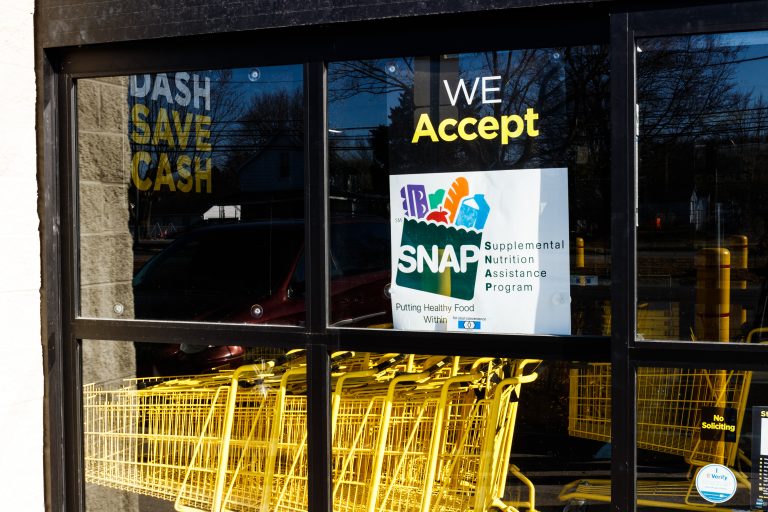
On May 1, 2026, New Mexico will enforce new SNAP rules that could cut food assistance for thousands. Families must meet stricter work requirements and submit more paperwork to keep their benefits.

SNAP supports more than 440,000 New Mexicans, including 113,000 in Bernalillo County. Families who cannot provide the required documents risk losing access to food. In a state already burdened by high child poverty, the impact would be devastating.

At a food bank in Albuquerque, a mother of three clutches her paperwork, unsure if she has the right forms to continue receiving help. Her struggle reflects the anxiety spreading across households statewide.

Officials say the new rules will ensure families receive accurate benefit amounts. They require proof of housing, utilities, and dependent care costs. The governor’s office also points to free job training and career support through the SNAP Employment and Training Program, which helps recipients meet the 80‑hour monthly work requirement.

Yet the urgency remains: thousands risk losing food assistance if they cannot meet the new standards. The rules highlight the tension between accountability and accessibility in public welfare programs.

Food pantries such as Storehouse New Mexico expect demand to surge as families struggle with renewals every six months. Legislators are debating funding solutions, but the larger conflict persists — balancing fiscal limits with the moral responsibility to ensure no family goes hungry.

Students Serve Gratitude and Knowledge in Unique School Events

0

Marking a major milestone, how do you thank the people who helped you get here? Graduating seniors at a school under Albuquerque Public Schools (APS) has a fun and meaningful way to do it. 

The Early College Academy recently hosted a special tradition that honors both hard work and gratitude.

During the school’s annual Senior Parent Breakfast, all 52 graduating seniors from the Class of 2026 welcomed more than 150 parents, grandparents, and family members. They prepared and served the entire meal themselves.

Students arrived early to set up, cook breakfast, serve guests, and clean up everything after the event. The breakfast gave seniors a chance to personally thank the families who supported them throughout their high school journey.

The event has become a meaningful tradition at Early College Academy. It brings students and families together to celebrate graduation and the community that helped make it possible.

Families Treated to a “Readers Restaurant”

Speaking of celebration of student-family connections, another APS school offered its memorable experience. This time, young students took the lead. 

The cafeteria at Pajarito Elementary recently transformed into a restaurant with a special menu, where students served stories instead of food. 

Young readers welcomed families to a dining-style “Readers Restaurant,” complete with menus and table settings, creating a fun, immersive literacy experience. Instead of ordering food, guests enjoyed something just as meaningful as students proudly read books aloud to them.

Throughout the evening, students acted as hosts, guided their families, and shared their literacy skills in English and Spanish. The event celebrated reading, family engagement, and built students’ confidence as they shared their voices with others. 

For many families, the event let them see their children shine as readers while enjoying a creative, memorable night together. 

Governor Orders Resumption of Food and Health Inspections Across New Mexico

0

Governor Michelle Lujan Grisham ordered the New Mexico Environment Department to resume statewide food and health inspections on April 30, 2026. Inspections had stopped several days earlier due to budget constraints.

The governor called the pause “premature” and stressed that inspections are a core duty of the state. Regular checks protect sanitation in restaurants, schools, hospitals, nursing homes, correctional facilities, and public pools.

Meanwhile, other jurisdictions are reinforcing oversight. For example, the Philippine Food and Drug Administration pledged to conduct continuous inspections of health product establishments in February 2026 to enforce safety rules. In the U.S., the FDA launched the BRIDGE Project in March 2026 to modernize food facility inspections with a data‑driven approach through 2030. These efforts show how governments are strengthening public health safeguards despite funding challenges.

By resuming inspections, New Mexico ensures that 35 inspectors can complete 17,500 checks annually. These inspections reduce contamination risks, uphold food safety, and build public confidence in health standards.

The governor’s directive reinforces the headline’s message: public health cannot be sacrificed for budget shortfalls. New Mexico’s move aligns with national and international efforts to prioritize safety and accountability.

Legislators are now seeking alternative funding after rejecting a $1.2 million proposal. This debate highlights a broader tension in U.S. health policy—balancing fiscal limits with the need for consistent, equitable public health enforcement.

UNM Health to Offer Free Skin Cancer Screenings in Albuquerque Metro

0

UNM Health will host free skin cancer screenings on Saturday, April 27, 2026, at the UNM Hospital dermatology clinic in Albuquerque and Sandoval Regional Medical Center in Rio Rancho. Screenings run from 9–11:30 a.m. on a first‑come, first‑served basis, assisted by medical students.

Skin cancer is the most common cancer in the United States, and early detection greatly improves survival rates. Free screenings give residents access to preventive care they might otherwise miss.

Similar efforts are happening nationwide. The Skin Cancer Foundation’s “Destination Healthy Skin” program will visit 40 U.S. cities in 2026 with a mobile RV clinic offering free screenings and education. The American Academy of Dermatology’s program has conducted more than 2.9 million screenings since 1985, detecting over 33,700 suspected melanomas.

These programs have identified cancers in their earliest stages, when treatment is most effective. They also provide free sunblock and educational materials, helping communities lower risks and improve outcomes.

UNM Health’s initiative fits squarely into this national movement. Local screenings reinforce the headline’s message: community‑based preventive care is becoming a cornerstone of public health policy.

Participants in Albuquerque and Rio Rancho will receive screening results and follow‑up options if needed. Together with national programs, UNM Health’s effort reflects a growing commitment to equitable, preventive healthcare that saves lives.

Gallup Faces High-Stakes Decision on Turning Wastewater Into Fuel for Massive Data Center

0

Across Gallup’s western high desert, the struggle with limited water has shaped community life and decision‑making. Now, city officials are weighing an unusual proposition: whether they will allow treated wastewater — considered a municipal byproduct — to power a massive data center campus.

The Gallup City Council delayed its decision on the proposal Tuesday night after a 4-1 vote. Under the proposal, the city would allow Teraplex Data Centers LLC to buy about 110 million gallons of treated wastewater annually to power the 330-acre development in the Gallup Tradeport. On the line is not only a large-scale industrial undertaking, but the redefinition of wastewater itself as a marketable asset in an increasingly data-driven economy.

Shift from wastewater to currency

The proposal, if approved, signals a shift across the American Southwest. That wastewater is no longer waste. It is becoming infrastructure — and a currency.

According to the BioSpectrum Asia report, Teraplex co-founder Greg Thompson told council members the wastewater would help cool a sprawling data center complex, which will eventually host tenants such as Oracle Corporation, Meta Platforms, Amazon, or Microsoft. He said the facility could create 300 jobs while generating its own electricity through solar power and natural gas.

But residents, environmental advocates, and even some council members did not ask about jobs or technology. They asked about water — and whether Gallup can afford to convert its wastewater into a marketable asset at a moment when its broader water future remains uncertain.

The city currently produces some 2.3 million gallons of wastewater per day. If the city council gives the green light to the proposal, Gallup will divert a substantial volume of that output to serve a single private industrial user.

To supporters, the setup represents an emerging model of resource efficiency by harnessing runoff water that would otherwise be discharged and putting it to economic use. Their argument is simple: In a region where freshwater supplies are scarce, wastewater reuse may offer a unique opportunity to reconcile development with scarcity.

‘Deal-changer’?

Mayor Marc DePauli, who opposed the majority of the council, described the proposal as a pragmatic response to a structural constraint. “I was always skeptical and still kind of am about data centers,” he said during the meeting. “But bringing us the option of using our wastewater, it’s kind of a deal-changer.”

Interviews and public testimony, however, suggest that the same concept being promoted as an innovation — the monetization of wastewater — also triggers skepticism. Fueling the skepticism is a question public hearings rarely resolve: the ownership of reclaimed water after treatment and its role in industrial commitments.

“Gallup has an unclear future concerning water rights,” said Larry Winn, the former chairman of the local water board. He warned council members that the agreement could force the city to take on obligations before resolving the broader regional water disputes. The former water board executive described data centers as part of a growing national pattern of resource-intensive development that often outpaces local capacity to regulate it.

The Gallup proposal is unraveling alongside a wider regional controversy over large-scale data infrastructure.

Brant reported that in southern New Mexico, the Project Jupiter — linked to Oracle Corporation and OpenAI — has drawn public attention over its energy and emissions footprint. Data centers, especially those driving AI and cloud computing, consume enormous amounts of electricity and water.

Councilor Sierra Yazzie Asamoa-Tutu reminded fellow council members of a legal filing from the New Mexico Environmental Law Center over Project Jupiter. She urged colleagues to slow down before Gallup follows a similar trajectory to that of Doña Ana County officials.

While the council has chosen delay over approval, Gallup stands at the crossroads: either to dismiss wastewater as mere discharge or harness it as the next AI resource.

New Mexico Escalates Pressure on U.S. Department of Energy in the Nuclear Waste Fight—What You Need to Know

0

Federal officials over the years vowed to clean up the radioactive legacy of the Cold War in northern New Mexico. But state officials are now saying they failed to deliver their promises, leaving hazardous nuclear waste in precarious situations and prompting an escalating standoff with the U.S. Department of Energy.

The center of the dispute is a backlog of so-called legacy waste at Los Alamos National Laboratory. These wastes were produced during the earliest days of the nation’s nuclear weapons program. Some of that waste, state officials said, remains stored in aging containers or buried in unlined pits above groundwater, factors that increase the risk of long-term contamination threats.

Department of Energy’s disposal facility

The federal government’s plan largely depended on shipping such waste to the Waste Isolation Pilot Plant, or WIPP, an expansive underground storage site carved into a salt formation near Carlsbad. Opened in 1999, the site isolates legacy nuclear wastes and still stands as the United States’ only permanent disposal facility of transuranic nuclear waste.

But state regulators pointed out, after a review of enforcement actions, the widening gap between federal commitments and on-the-ground progress. New Mexico’s Environment Department says cleanup schedules have slipped repeatedly, even as shipments from other states have moved ahead.

“The U.S. Department of Energy has failed to meet the Environment Department’s requirements to clean up legacy waste at Los Alamos National Laboratory and prioritize the disposal of such waste in the Waste Isolation Pilot Plant,” said Environment Secretary James Kenney.

Records show that state regulators have issued compliance orders and levied nearly P16 million in fines against the Department of Energy in recent months. State officials accused the federal government of failing to meet cleanup milestones. New Mexico considers revising WIPP’s permit so its own waste gets priority for disposal.

The Department of Energy denied the accusation. It claimed that safety rules, technical hurdles, and cross‑state transport challenges have hampered efforts to clean up. Federal officials also blamed competing demands from other states, including Idaho, which has sent significant volumes of waste to WIPP under federal agreements.

Those explanations, however, have done little to ease frustration in New Mexico. Communities near Los Alamos have borne the risks of radioactive waste while the weapons program spread its benefits nationwide.

Residents around Los Alamos

The conflict also highlights the boundaries of federal authority when states regulate. Washington controls the nation’s nuclear weapons complex, but New Mexico holds substantial power over environmental permits and compliance—an instrument it is increasingly willing to use.

At stake is not only the progress of cleanup at Los Alamos but also the fate of WIPP. The facility has limited capacity, and as cleanup efforts expand nationwide, competition for space has intensified. Officials decide which waste to ship—and when—making those choices into both logistical considerations and political judgments.

The issue comes down to accountability. The federal government cannot continue delaying the removal of nuclear waste while relying on the state to host both the storage sites and the disposal facility. With enforcement actions mounting, the standoff shows little sign of easing. Its outcome could ripple far beyond New Mexico, and will determine how the United States deals with the environmental legacy of its nuclear past.

Governor Lujan Grisham Set for WNMU 2026 Commencement Address

0

Students at Western New Mexico University (WNMU) are about to close another chapter of their academic journey. As they prepare for what’s next, Governor Michelle Lujan Grisham will join them to deliver inspiring valuable guidance.

Lujan Grisham will take the stage as keynote speaker at the WNMU Spring 2026 Commencement Ceremony on Friday, May 8. For the university, her visit highlights WNMU’s growth, underscoring its role as a regional hub for education and workforce development. 

The governor’s participation reflects her administration’s commitment to expanding educational access and celebrating graduates who help drive the state’s growth. Her address will honor the Class of 2026’s resilience and achievements, showing their journey through a dynamic, interconnected world.

WNMU Expresses Excitement Over Governor’s Participation

Interim President Chris Maples, Ph.D., said the university takes pride in welcoming the governor to a meaningful celebration. 

“We are honored to welcome Gov. Lujan Grisham to our spring Commencement ceremony. It is a testament to the Western New Mexico University mission to serve as a catalyst for economic and educational excellence in the Southwest,” Maples said.

“Gov. Grisham’s leadership has been instrumental in making higher education more accessible to all New Mexicans, and we are delighted to have her here to help inspire our graduates as they prepare to take their next steps as a new generation of New Mexico’s professionals and leaders,” he added. 

This year’s Commencement highlights WNMU’s dedication to community service and specialized education. The New Mexico Center of Excellence for Early Childhood Education at WNMU sets a standard for rural, high-quality educator training.

Dean of the College of Education Cindy Martinez, Ed.D., noted the importance of the governor’s support for specialized programs. These initiatives aim to give every child in New Mexico a strong foundational start.

“The Center of Excellence for Early Childhood Education represents our unwavering commitment to the future of New Mexico’s youngest citizens. With the governor’s steadfast support, we are not just training educators; we are building a sustainable infrastructure that ensures every child, regardless of their zip code, has access to the high-quality foundational learning they deserve. This partnership allows WNMU to lead the way in transforming the early childhood landscape across our state,” Martinez said.

Impact of Tuition-Free Higher Education Initiatives

Under Lujan Grisham, New Mexico has implemented progressive tuition-free college programs in the United States. These initiatives benefit WNMU students, enabling first-generation students and working adults to pursue degrees without heavy loan debt. 

The governor’s presence at Commencement serves as a celebration of these policies. The measures have opened doors for thousands of New Mexicans to gain the skills for the modern workforce.

“The last time I stood on the Western New Mexico University campus, I signed our state’s historic Opportunity Scholarship into law. When I return in May as the commencement speaker for the Class of 2026, I’ll get to witness for myself what that law made possible. This year’s graduates are proof that when New Mexico invests in its people, its people deliver — and I couldn’t be prouder to share this moment with them,” Lujan Grisham said.

Since 2022, the Opportunity Scholarship has helped over 118,000 New Mexicans, boosting enrollment and graduation rates statewide. 

The 2026 Spring Commencement is expected to draw thousands of family members and visitors to Silver City. Gates open at 3:30 p.m. and the ceremony begins promptly at 5:00 p.m. For those unable to attend in person, organizers will live-stream the event, allowing students, families, and communities worldwide to participate.

Heads Up: UNM Launches Free Cancer Screening

0

Ever wanted to get a skin cancer screening but can’t due to financial restraints? The University of New Mexico is launching a free skin cancer screening on May 2, 2026, from 9:00 A.M. to 11:30 A.M.

This initiative supports the American Academy of Dermatology (AAD) Spot Me Campaign. The UNM Department of Dermatology, in collaboration with the UNM Comprehensive Cancer Center, will hold free skin cancer screenings throughout the state.

Dr. John Durkin started this drive in May 2019 to prioritize New Mexico’s “dermatology deserts” and address cancer inequality in underserved communities.

UNM Hospital in Albuquerque and Sandoval Regional Medical Center in Rio Rancho will host the event on a first-come, first-served basis.

According to the UNM Department of Dermatology, patients do not need insurance or an appointment. The department encourages the public to take advantage of the opportunity to get screened without a doctor’s appointment or referral to a dermatologist.

UNM School of Medicine students will assist patients and assure them that they will receive the screening report and, if necessary, options for follow-up appointments.

For those who want to volunteer, you can contact Dr. John Durkin, and the UNM School of Medicine welcomes donations to the Ryan Daniell Memorial Fund.

Why New Mexico’s Universal Child Care Program Is in Court — and How It Could Help Families Save Thousands

0

A legal battle New Mexico is facing over its new universal child care program is raising questions for parents. Will the program be stopped? What does the lawsuit mean? And how much could families save?

Here’s what to know.

What is New Mexico’s universal child care program?

The Universal Child Care Program aims to expand access to affordable child care statewide.

Governor Michelle Lujan Grisham announced the initiative in September. The governor framed it as a major investment in working families. She says the program could save households about $12,000 per child each year.

“Child care is essential to family stability, workforce participation, and New Mexico’s future prosperity,” said Lujan Grisham. “By investing in universal child care, we are giving families financial relief, supporting our economy, and ensuring that every child has the opportunity to grow and thrive.”

That could significantly lower one of the biggest expenses many parents bear.

Why is it being challenged in court?

The case centers less on child care itself. It is more about how the program was launched.

Republican gubernatorial candidate Duke Rodriguez, who co-filed the lawsuit, argues the administration implemented the program without proper legislative authority. He said the action raises constitutional concerns and is a reminder of an earlier New Mexico Supreme Court precedent while serving as Human Services Department secretary in the Johnson administration. At the time, he was accused of implementing a program without legislative approval.

This week, a district judge ordered state officials to respond in court or pause the program. Rodriguez called that a victory. But Lujan Grisham’s office called it routine.

Is the program being stopped?

No, at least for now. The administration’s universal child care program remains in effect.

State officials say the judge did not suspend the program. Families, they say, should expect services to continue while the case moves forward.

The administration also says Senate Bill 241, which the governor signed into law this year, strengthens the legal basis for the program. It established funding and rules for future co-pays during economic downturns.

Rodriguez disputes that. He argued that the law was passed after implementation and does not settle the legal infirmities. That disagreement is now going deeper into court.

How does the program help families financially?

This is where the stakes become tangible. Child care can cost as much as a mortgage payment for most families. A reduction or elimination of that burden can reshape a family budget.

Supporters say families could use those savings for:

  • Rent or mortgage payments
  • Food and household bills
  • Transportation costs
  • Health care expenses
  • Debt repayment
  • Savings for emergencies
  • School needs and extracurriculars

For working parents, affordable child care makes it easier to stay employed or return to work. That can improve household income, not only reduce expenses.

Who benefits most?

Potentially many families benefit fromthe program, but especially:

  • Working-class households
  • Single parents
  • Families with multiple young children
  • Parents balancing jobs with rising living costs

The savings could be substantial for families paying full-price child care.

Why do supporters call this more than a child care program?

Supporters of the program see it as an economic policy. They argue that universal child care functions like infrastructure because it helps parents work, supports early childhood education, and can strengthen labor force participation.

And it can put money back into household wallets and local economies.

The courts will weigh the lawsuit. State officials say they are ready of their response and stay confident the program will survive.

But the benefits continue, at least, for now.

Why does this matter beyond New Mexico?

The case could become part of a bigger debate playing out across the United States. The debate centers on the question of whether child care is a private family expense or a public investment. New Mexico is testing one answer.

And for most families, the result could affect not only access to care. It could also affect what remains in their wallets at the end of each month.

Court Pushes Grisham’s Administration to Answer Senate Bill 241 Child Care Rollout Without Legislative Backing

0

A courtroom battle in New Mexico has opened a larger debate. It is not simply about child care. It is about power, law, and what government owes working families.

A state judge this week has allowed a legal challenge to New Mexico’s universal child care program to advance. The order did not stop the program. But it gave critics an opening, underscoring how even social safety nets can unravel in the crossfire of politics and procedure.

Gov. Michelle Lujan Grisham framed universal child care as an economic lifeline. Her administration says this program could save families about $12,000 annually for each child. For many households, that is not an abstract policy. It is rent, groceries, and survival.

The governor’s allies say the legal challenge is more of a political theater than a constitutional principle. Duke Rodriguez, who co-filed the lawsuit, argues otherwise. He says the administration implemented a sweeping public benefit ahead of legislative authority. He views the judge’s order as a defense of transparency and constitutional order.

Grisham calls that claim fabricated. Both sides are fighting over more than legal timing, but who gets to determine legitimacy.

At the center of the legal skirmish is Senate Bill 241. The governor signed the measure earlier this year to fund the child care program and establish social safety nets during economic downturns. State officials say the law settles the matter.

Michael Coleman, the governor’s communications director, said on Tuesday, “The New Mexico Legislature settled the legal question when it passed Senate Bill 241. The governor is confident the courts will agree and toss out this ‘controversy’ manufactured by a Republican political candidate.”

Rodriguez counters that the law came after the program was implemented and does not cure what he sees as the original defect.

That dispute may appear technical. It is not. It reminds the public of a familiar American dilemma. Can an urgent public need justify executive speed? Or must the officials wait for every procedural question of a program to be resolved first?

The question matters beyond New Mexico’s border. Universal child care has become a poster child of the country’s most ambitious responses to rising economic inequality. It is also a test of whether states can craft resilient social programs even amid political divides.

Supporters frame the lawsuit as an attack on one of the policies aimed squarely at alleviating family hardship. But critics see it as a warning of an executive overreach.

Both views carry political force. But for parents enrolled in the child care program, the stakes are less ideological. They are practical.

Many parents ask. Can they keep working? Can they afford care when the need arises? Do they have an assurance that the benefit promised today will exist tomorrow? That is why the case resonates among many families.

It is not a matter of one governor moving too fast. It is about whether transformative policies can withstand legal and partisan attacks once they begin changing lives.

The program remains in place, for now. Families continue to receive support while the court has yet to rule on the merits of the lawsuit.

Coleman said the court rejected Duke Rodriguez’s request to halt universal child care without giving the governor or the Early Childhood Education and Care Department a chance to respond.

But the case has laid bare a deeper divide. In politics, even programs that aim to help children can become battlegrounds over constitutional mandate. And in that skirmish, families often find themselves caught in the crossfire.