Home Blog Page 79

New Mexico Expands Free Summer Reading Program to Boost Literacy Statewide

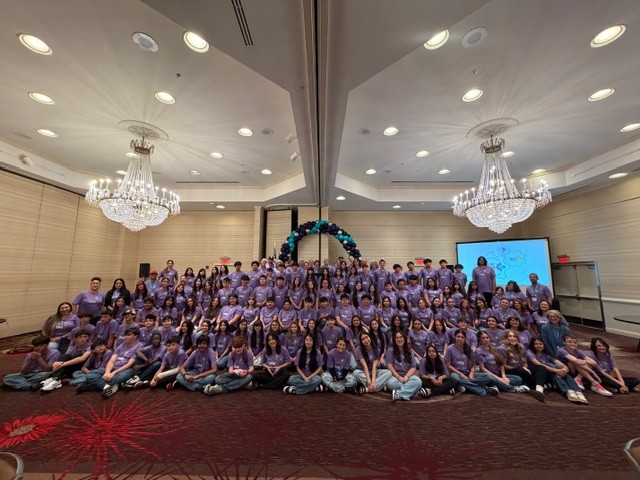
​New Mexico is expanding its free Summer Reading Program this year, aiming to reach up to 15,000 students from kindergarten through eighth grade. The initiative follows the success of last summer’s pilot, which saw over 9,000 participants improve their reading skills by nearly 5 percentage points on average.

The program offers four weeks of structured literacy instruction, grounded in the science of reading—a method that emphasizes phonemic awareness, phonics, fluency, vocabulary, and comprehension. Students work in small groups with trained instructors, maintaining a 4-to-1 student-teacher ratio. This year’s sessions will run from June 2 to June 27, 2025, across more than 100 sites statewide.

Public Education Secretary Marianna Padilla highlighted the urgency of addressing literacy challenges, noting that only 39% of elementary and middle school students in New Mexico are proficient readers. She emphasized that while change won’t happen overnight, consistent efforts like the Summer Reading Program are steps toward improvement.​

The program is free for all New Mexico families, funded by a $30 million allocation from the state legislature. Instructors, who may be current or retired educators or pre-service teachers, receive $35 per hour and undergo specialized training before the program begins.

Parents can register their children and find more information at literacy.nm.gov. The deadline for student registration is May 20, 2025.

This expansion reflects New Mexico’s commitment to improving literacy rates and ensuring that students have the foundational skills necessary for academic success.

Albuquerque to Use Lottery System for Summer Youth Program Registration Starting April 28

0

​Albuquerque families looking to enroll their children in city-run summer programs will need to participate in a lottery-style registration process, starting April 28. The system is designed to manage high demand and ensure fair access to limited spots across the city’s community centers.

Key Dates and Details

  • Lottery Sign-Up: April 28 – May 9
  • Notification of Selection: May 14 – May 23
  • Program Dates: June through August
  • Hours: Monday to Friday, 7:30 a.m. – 5:30 p.m.
  • Ages: 5–15 years (children must turn 6 by September 1)
  • Fee: $10 one-time, non-refundable registration fee

Parents can enter the lottery online through the City of Albuquerque’s Youth & Family Services portal. A free Community Center Youth Membership is required to participate in the lottery.

Program Overview

The full-day summer programs offer structured activities, including arts and crafts, sports, games, and educational enrichment. They are hosted at more than 20 community centers and two multi-generational centers across Albuquerque.

Due to the popularity of these programs, the city uses a lottery system to allocate spots fairly. Families not selected in the initial draw will be placed on a waitlist and notified if space becomes available.

Additional Summer Opportunities

  • Multi-Generational Center Programs: For ages 5–13; $30 per month plus a one-time $20 annual center membership fee.
  • PLAY+ School Playground Program: For kindergarten through grade 5; registration opens May 22 at 8 a.m.; fees vary based on the number of children enrolled.
  • Inclusive Recreation Programs: For kindergarten through high school; $40 fee; lottery sign-up April 28 – May 9.
  • Early Head Start Program: For ages 0–3; ongoing registration; free.
  • Preschool & NM Pre-K: For ages 3–5; ongoing registration; free or low cost.

Executive Order Sets New Standards for U.S. Higher Education Accreditation

On April 23, 2025, the White House issued an executive order aimed at reforming how colleges and universities in the United States are accredited. The order introduces changes intended to improve accountability, ensure better student outcomes, and shift the focus of accreditation agencies toward measurable educational quality.

Emphasis on Student Outcomes and Transparency

The executive order directs the U.S. Department of Education to work with accrediting agencies to place greater emphasis on student outcomes—such as graduation rates, employment after graduation, and overall financial return on education.

Data cited in the order highlights that many students, particularly those completing certain bachelor’s and master’s programs, graduate with significant debt and limited earning potential. These findings have prompted calls for more transparency about the value of individual programs and institutions.

To address these concerns, the order requires accreditors to:

  • Use program-level data, including graduation and job placement rates, in their evaluations.
  • Provide more transparent information to students and families about the performance and value of educational programs.
  • Support institutions in making improvements when student outcomes fall short.

Review of Accreditation Practices

The order also calls for a review of current accreditation standards to ensure they are aligned with lawful and effective educational practices. It instructs the Secretary of Education to assess whether any accreditor requirements—such as those tied to institutional policies or internal governance—exceed what is necessary for quality assurance.

In particular, the Department of Education is asked to evaluate whether certain standards related to diversity, equity, and inclusion (DEI) initiatives are being applied in a way that may conflict with federal law or court rulings. Accreditors are expected to ensure that any policies they require institutions to adopt comply with current legal guidelines.

Encouraging Innovation and New Accrediting Agencies

Another key part of the order promotes the development of new accrediting agencies and quality assurance models. The Department of Education is directed to:

  • Resume recognition of new accreditors, where appropriate.
  • Launch experimental sites to test alternative forms of quality assurance.
  • Streamline the Accreditation Handbook to remove unnecessary regulatory burdens.

This move is intended to foster innovation and increase competition in the accreditation space, with the goal of expanding educational opportunities and reducing barriers for new institutions.

Support for State and Local Governance

The order also reaffirms the role of state and local authorities in overseeing public colleges and universities. It instructs accreditors to respect these governance structures and avoid imposing unnecessary conditions on institutional management or leadership.

Next Steps

The U.S. Department of Education will now begin implementing the executive order’s directives. As part of this process, accrediting agencies may be required to revise their standards and procedures to align with the new federal priorities.

While responses from education leaders and advocacy groups may vary, the order represents a significant policy shift focused on performance, transparency, and regulatory reform in the higher education system.

Hobbs High School Seniors Craft Heartfelt Gifts for Elderly Residents

In Hobbs, New Mexico, a unique initiative led by veteran educator Wilma Brooks is bringing together high school seniors and senior citizens in a heartwarming display of community spirit. Brooks, who has dedicated 62 years to teaching and is the second-longest-serving educator in the state, guides her students at Hobbs Alternative School in creating handcrafted gifts for residents of local nursing homes.

The classroom buzzes with activity as students produce a variety of items, including wall and door decorations, poster cards with meaningful messages, and personalized photos. These creations are adorned with bold animal prints and other vibrant designs, aiming to bring joy to over 200 nursing home residents during the holidays.

Brooks’ commitment to this cause dates back to 1970, when she began similar outreach projects at Houston Junior High. Her passion for community service was influenced by her upbringing, where her mother emphasized the importance of giving, even if it was just a small, wrapped bar of soap. This ethos has driven Brooks to apply for grants, recruit volunteers, and even personally fund materials to ensure that every resident receives a gift.

Wilma Brooks. PHOTO: Hobbs News

The impact of these gestures is profound. Brittany Gama, Director of Social Services at Desert Springs Healthcare, notes that many residents lack family connections and deeply appreciate the attention. “We have a lot of residents that don’t have any family, so it gives them something to look forward to. It’s an uplifting thing and it uplifts their spirits,” Gama said. She added that gifts on non-major holidays are especially surprising and meaningful to the residents.​

For the students, this project offers more than just academic credit. Brooks explains that many of her students are working to recover credits and have faced challenges in their personal lives. Engaging in this community service provides them with a sense of purpose and connection. Some students have even discovered that their own relatives are among the nursing home residents, adding a personal dimension to their efforts.

As Brooks reflects on her decades of teaching and community involvement, she finds fulfillment in the intergenerational bonds being formed. “Now I’m having former students and parents of students of mine working at the nursing homes, so it means more as a whole. For the residents and the staff, because they deserve it,” she said.

This initiative exemplifies how acts of kindness can bridge generational gaps, enrich lives, and foster a stronger, more compassionate community.

Source: Hobbs News

Florida Teacher Fired for Using Student’s Chosen Name Without Parental Consent Under New State Law

​A Florida high school teacher has lost her job after using a student’s chosen name without parental consent, marking the first known case under a 2023 state law that restricts such actions in public schools.

Melissa Calhoun, an English teacher at Satellite High School in Brevard County, was informed that her contract would not be renewed for the upcoming school year. The decision followed an internal investigation confirming she had referred to a 17-year-old student by a name that aligned with the student’s gender identity, without obtaining the required parental approval.

Florida’s “Parental Authorization for Deviation from Student’s Legal Name Form” law, enacted in 2023, mandates that educators must have written parental consent before using any name other than a student’s legal name. This includes nicknames and names reflecting gender identity. The law is part of a broader set of regulations introduced under Governor Ron DeSantis, aimed at reinforcing parental rights in educational settings.

Brevard Public Schools spokesperson Janet Murnaghan stated that Calhoun knowingly violated the statute. Superintendent Mark Rendell emphasized the importance of parental involvement, saying, “The parent is our partner in this education endeavor that we have with our children.”

The district’s decision has sparked significant community response. At a recent school board meeting, dozens of students and parents advocated for Calhoun’s reinstatement, highlighting her positive impact on students. A Change.org petition supporting her has garnered over 14,500 signatures.

Critics argue that the law may infringe upon First Amendment rights. The ACLU of Florida expressed concerns about potential viewpoint discrimination, especially if the law is applied selectively based on the nature of the name used.

This incident underscores the ongoing national debate over the balance between parental rights and the rights of students and educators, particularly concerning issues of gender identity and expression in schools.​

Albuquerque Public Schools See Graduation Gains, But Gaps Persist for Native American and Low-Income Students

​Albuquerque Public Schools (APS) reported a notable rise in graduation rates for the Class of 2024, achieving a 75.9% graduation rate—up 4.3 percentage points from the previous year. This improvement surpasses the state’s overall increase, as New Mexico’s public high schools saw a 1.3 percentage point rise, reaching a 78% graduation rate.

Among APS high schools, La Cueva High School led with a 91.3% graduation rate, marking an 11.5 percentage point increase. Volcano Vista High School followed closely at 89.2% (up 6.9 points).

Schools of choice also showed strong performance: Early College Academy achieved a 99.75% graduation rate (a 7.2-point rise), while College and Career High School reached 96.3% (up 9.3 points).

However, disparities persist among different student groups. White, non-Hispanic students experienced the highest increase at 4.9 percentage points, followed by Hispanic students at 4.5 points and Black students at 1.2 points.

Conversely, Native American students saw a 2.8-point decline. English learners had the most significant improvement, with a 6.8-point increase, while graduation rates for economically disadvantaged students decreased by 0.4 points.

Superintendent Gabriella Blakey acknowledged the progress, stating, “This increase shows APS is going in the right direction, but I know we can do better.” She emphasized the district’s commitment to enhancing the high school experience and addressing the needs of underrepresented student groups.

The APS Board of Education has set goals to improve outcomes for Native American and Black students, as well as for English learners, economically disadvantaged students, and those in special education programs. Efforts include reimagining graduation requirements and implementing initiatives focused on career and college readiness.

While APS’s graduation rate remains below the national average of 87%, these gains indicate positive momentum. Continued focus on equity and targeted support aims to sustain and build upon this progress.

Federal Government to Resume Collections on Defaulted Student Loans Starting May 5

The U.S. Department of Education will resume collections on defaulted federal student loans starting May 5, 2025, ending a pause that began in March 2020 during the COVID-19 pandemic. This move affects over 5 million borrowers currently in default and another 4 million who are severely delinquent, meaning nearly a quarter of the federal student loan portfolio could soon be in default.

The Department plans to restart the Treasury Offset Program, allowing the government to withhold federal benefits such as tax refunds, Social Security payments, and federal salaries to collect overdue debts . Additionally, administrative wage garnishments are set to begin later this summer, potentially deducting up to 15% of a borrower’s disposable income.

Education Secretary Linda McMahon stated that resuming collections is necessary to protect taxpayers and ensure borrowers fulfill their obligations. She criticized the previous administration’s approach to student debt relief, asserting that “American taxpayers will no longer be forced to serve as collateral for irresponsible student loan policies.”

To assist borrowers, the Department will launch a communication campaign over the next two weeks, urging those in default to contact the Default Resolution Group. Options include enrolling in income-driven repayment plans or initiating loan rehabilitation, which involves making nine voluntary payments over ten months.

Advocacy groups have expressed concern over the resumption of collections. The Student Borrower Protection Center labeled the move as “cruel” and warned it could exacerbate financial instability for millions of Americans already facing economic challenges.

Borrowers are encouraged to act promptly to explore repayment options and avoid potential penalties such as wage garnishment and loss of federal benefits. The Department’s outreach aims to facilitate a smoother transition back into repayment and mitigate the risk of further defaults.​

Trump Administration Eyes Nationwide AI Education Push in K–12 Schools

0

The Trump administration is weighing a sweeping executive order that would embed artificial intelligence (AI) education into every corner of the U.S. K–12 system, The Washington Post reported Tuesday. The draft proposal, titled “Advancing Artificial Intelligence Education for American Youth,” signals a bold shift toward integrating emerging technology into classrooms nationwide—with potentially far-reaching implications for students, educators, and states like New Mexico.

A Nationwide Plan for AI Literacy

According to the draft order, the administration seeks to launch a comprehensive strategy that includes teacher training, student skill-building, and public-private partnerships to make AI a foundational component of public education. A White House Task Force on AI Education would be created to lead the effort, chaired by Michael Kratsios, Director of the Office of Science and Technology Policy. The panel would include the Secretaries of Education, Agriculture, Labor, and Energy, alongside David Sacks, serving as Special Adviser for AI and Cryptocurrency.

The initiative would direct federal agencies to work with schools to train students in using AI tools and integrate the technology into day-to-day classroom practices. Partnering with industry leaders is a key component, as agencies would be encouraged to collaborate with private companies, nonprofits, and universities to deliver AI-focused curricula and resources.

Teacher Training and Workforce Development

Under the draft order, Education Secretary Linda McMahon would prioritize federal grants to fund teacher training programs in AI. The order calls for all educators to receive professional development focused on integrating AI into teaching—not only in computer science, but across all subject areas.

This move has particular relevance for New Mexico, where persistent teacher shortages and wide rural-urban disparities could pose barriers to large-scale implementation. With many educators already stretched thin, questions remain about whether districts—especially those in tribal and rural communities—have the capacity or infrastructure to adopt such a mandate.

Beyond the classroom, the plan highlights workforce development. Labor Secretary Lori Chavez-DeRemer would be tasked with developing AI-focused apprenticeship programs to prepare students for careers in the tech-driven economy.

Engagement and Incentives

To incentivize participation, the administration would launch a new “Presidential AI Challenge,” encouraging students and educators to showcase their AI skills. While the draft does not specify competition details, it signals an effort to engage young learners and teachers alike in a national conversation around emerging technologies.

Additionally, the draft order emphasizes support for “lifelong learners,” acknowledging that the pace of technological change demands continual reskilling—even beyond the traditional K–12 and college pipelines.

A Predecisional Document

Though the draft outlines a clear federal agenda, it remains a predecisional document. It could be modified, delayed, or even abandoned altogether. Nonetheless, its release reflects a growing federal interest in shaping the future of AI education—and raises questions about the balance between federal direction and local control of schools.

Potential Implications for New Mexico

In New Mexico, where education challenges range from broadband access gaps to high teacher turnover, implementing such a directive may prove complex. The state has made strides in STEM and bilingual education initiatives, but integrating AI across all classrooms could require major investment in infrastructure, professional development, and curriculum redesign.

If finalized, the executive order could bring federal funding opportunities—but also increased expectations and responsibilities for state and local education leaders.

What’s Next?

As the executive order awaits formal approval, stakeholders across the education spectrum—teachers, administrators, parents, and policymakers—will be watching closely. Whether this marks a transformational moment in education or another federal initiative with uneven outcomes may hinge on how states like New Mexico adapt and respond.

ERIC Faces Major Cutbacks as Federal Funding Stalls

The Education Resources Information Center (ERIC), a key repository of education research managed by the U.S. Department of Education, is facing significant operational changes due to funding constraints. Effective April 24, 2025, the number of actively cataloged sources in ERIC will be reduced by approximately 45%, decreasing from 1,200 to 700 titles.

This reduction stems from efforts by the Department of Education and the Department of Government Efficiency to “reduce overall Federal spending” and “reallocate spending to promote efficiency” as outlined in Executive Order 14222.

While all existing records in ERIC will remain accessible, the addition of new documents will be significantly curtailed. The selection process for source reduction did not consider subject matter, leading to a broad impact across various educational topics. The delay in notifying publishers affected by this content reduction has been attributed to a government reduction in force.

The potential defunding of ERIC has raised concerns among educators and researchers. Gladys Cruz, a superintendent of Questar III BOCES and past president of the AASA, The School Superintendents Association, stated that “Defunding ERIC would limit public access to critical education research, hindering evidence-based practices and informed policy decisions vital for the advancement of American education.”

In response to the funding challenges, Erin Pollard Young, the former manager of ERIC, proposed reducing the annual budget from $5.5 million to $2.25 million. This proposal included cutting nearly half of the journals added each year and eliminating the public help desk.

However, the proposal was not approved, and Pollard Young, along with over 1,300 other Department of Education employees, was laid off in March.

The reduction in ERIC’s operations is expected to impact educators, researchers, and policymakers who rely on the database for access to educational research. The long-term effects of these changes on the accessibility of education research and informed policy-making remain to be seen.​

Gmail Users Targeted in New Phishing Scam Using Fake Google Legal Notices

A sophisticated phishing campaign is targeting Gmail users by sending emails that appear to originate from Google’s official address, “[email protected].” These emails claim that the recipient’s account is under legal scrutiny, urging them to click on a link to review purported subpoena details.​

The scam exploits Google’s own infrastructure by using the Google Sites platform to host counterfeit support pages. These pages closely mimic legitimate Google interfaces, making it challenging for users to discern the fraud. The attackers have managed to bypass standard email authentication protocols, such as DomainKeys Identified Mail (DKIM), allowing these phishing emails to pass through spam filters and appear in the same conversation threads as genuine Google alerts.

Nick Johnson, a developer with the Ethereum Name Service, was among those targeted. He reported the incident to Google, highlighting the misuse of Google’s OAuth applications. Initially, Google dismissed the concern, stating it was “working as intended.” However, the company has since acknowledged the vulnerability and is working on a fix.

In response to this threat, Google advises users to enable two-factor authentication (2FA) and consider adopting passkeys for enhanced security. Passkeys are cryptographic credentials that provide a more secure alternative to traditional passwords and are resistant to phishing attacks.

Users are urged to exercise caution with unsolicited emails, especially those requesting personal information or prompting immediate action. It’s recommended to verify the authenticity of such messages by accessing account settings directly through Google’s official website, rather than clicking on links within the email.​

To report suspicious emails, Gmail users can use the “Report phishing” option found in the three-dot menu of the message. This helps Google identify and mitigate similar threats in the future.​