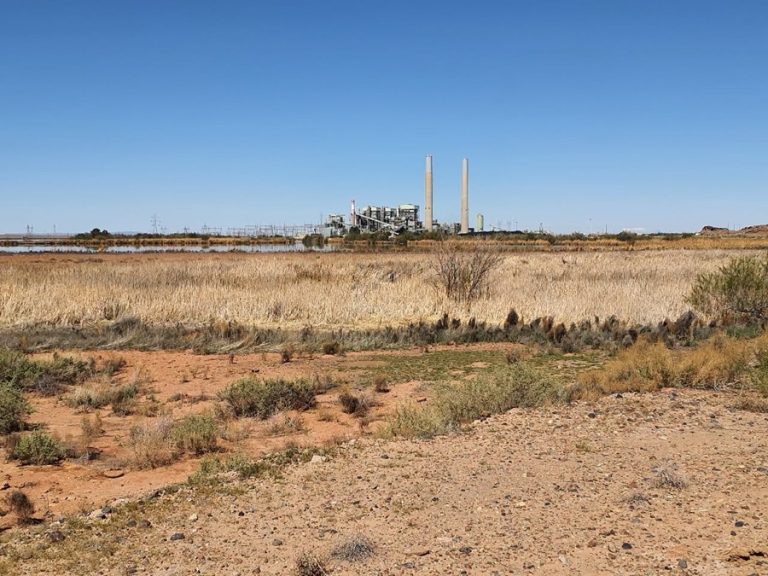
A recent agreement between Arizona Public Service (APS) and the Navajo Transitional Energy Company (NTEC) could keep a coal-fired power plant in northwestern New Mexico operating until 2038, seven years beyond its previously planned 2031 retirement date.
The agreement, signed in September, would extend operations at the Four Corners Power Plant by seven years.
The plant, located on Navajo Nation land near Fruitland, consists of two units with a combined capacity of about 1,540 megawatts. APS owns about 63 percent of the facility, or roughly 970 megawatts. The remaining shares are held by the Public Service Company of New Mexico, Salt River Project, and Tucson Electric Power.
The plant’s operating permit runs through 2041, and full decommissioning is expected to take about three years, allowing power generation to continue beyond the earlier 2031 target.
Although APS has been reducing its reliance on coal, the company says Arizona’s electricity demand is rising at an unprecedented pace, driven by hotter summers, economic expansion, population growth, and large new energy loads such as data centers.
“Arizona’s energy needs are growing faster than at any time in our history, making access to reliable generation resources more important than ever,” APS spokesperson Casey Taggatz said in a statement.
The utility says continued operation of the plant would provide an economically viable, around-the-clock power supply while avoiding the risks associated with building new generation facilities. Planning documents submitted to the advisory council also show that extending Four Corners’ operations would cost customers less than retiring the plant in 2031, while helping preserve resource diversity.
APS says any extension would be paired with continued growth in renewable energy and would not change its aspirational goal of reaching carbon neutrality by 2050.
Continuing operations would also help preserve jobs and revenue for the Navajo Nation. NTEC, which supplies the plant with coal from the nearby Navajo Mine, has welcomed the proposal.
Together, the mine and power plant are a major economic resource for the Nation, providing hundreds of jobs and generating significant taxes and royalties.
Extending the plant’s life is expected to produce higher greenhouse gas emissions and use more water than an earlier shutdown would.
Environmental advocates and some community groups have criticized the potential delay, arguing that it would prolong air pollution and its health effects in the region while slowing the transition away from fossil fuels.
APS will continue evaluating the plant’s future through its integrated resource planning process. The company plans to submit an updated resource plan to state regulators and has held, or intends to hold, public meetings on the issue. Because the plant’s lease with the Navajo Nation runs through 2038, final decisions will depend on reliability, affordability, and the overall energy mix needed to meet rising demand.
The Four Corners plant is now the only coal-fired power station remaining in APS’s generation portfolio. The proposed extension underscores the tension many utilities face as they try to balance reliability and cost with decarbonization goals amid rising electricity demand in the Southwest.