

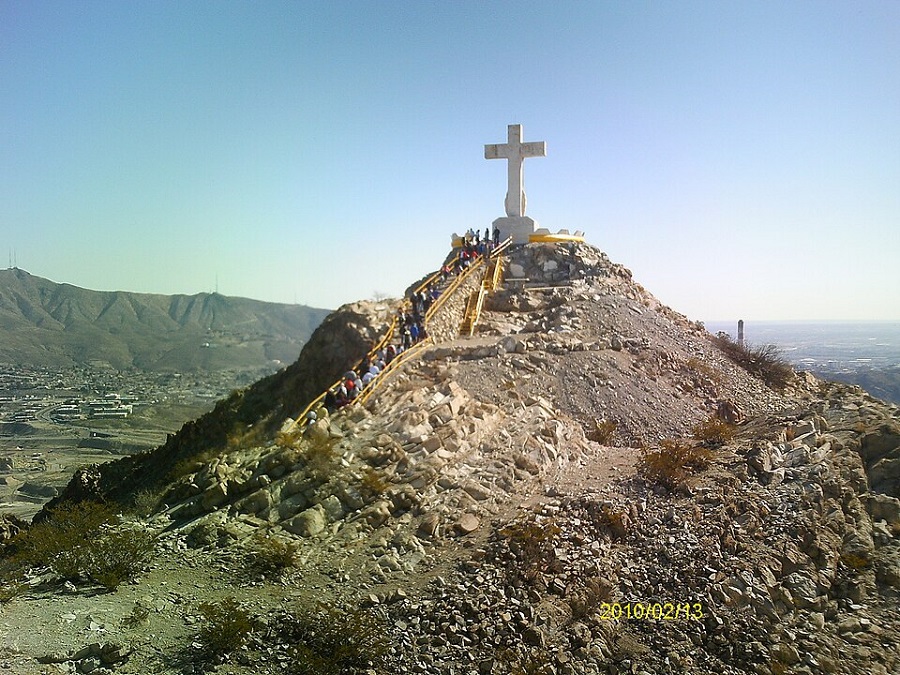
A Roman Catholic diocese in southern New Mexico is resisting a federal government-initiated effort to seize church-owned land near the U.S.-Mexico border. The legal skirmish is setting up a constitutional clash between border security and religious freedom that threatens sacred Mount Cristo Rey, one of the region’s most revered pilgrimage sites.
In a civil action filed on May 7 in the U.S. District Court for the District of New Mexico, the U.S. government moved to seize the land owned by the Roman Catholic Diocese of Las Cruces. The court filing claims the land through eminent domain to expand border wall infrastructure in southern New Mexico.
DHS Offers Compensation
The United States Department of Homeland Security (DHS) requested the submission of the court filing. It said the land would be used to “construct, install, operate, and maintain roads, fencing, vehicle barriers, security lighting, cameras, sensors,” and other structures to secure the border between the United States and Mexico.
The property DHS wants to acquire lies northwest of El Paso, an area where the government plans to build an extensive border wall system. Federal officials said the government will compensate the defendants approximately $183,000 for the land. The filing also named the treasurer of Doña Ana County in the case.
Catholic Diocese Pushes Back
The Catholic diocese, however, argues the land is not merely real estate. The land seizure, according to the diocese in its court filing a day after the government’s action, would “substantially burden” the religious freedom of the church and worshippers. It stressed that they use the property for prayer and pilgrimage for nearly a century.
Mount Cristo Rey lies at the center of the dispute. It is a popular religious site overlooking the border between the U.S. and Mexico, where a 29-foot-tall statue of Christ stands on top of the mountain. The site draws thousands of pilgrims each year, particularly during religious observances and Holy Week rites.
Church officials contend that the federal seizure of the land would interfere with sacred land, associated with Catholic devotion in the region for a long time. The diocese informed the court that the takeover would amount to “a significant infringement on religious freedom and the rights of worship.” It cited protections under the First Amendment.
The filing of the Catholic diocese asked the court to halt the eminent domain proceedings unless the constitutional issues surrounding the site’s religious significance are resolved.
The case represents a new dimension to America’s ongoing border wall battles. These border wall skirmishes often centered on environmental concerns, private property rights, and immigration politics. In this instance, the battle reaches into a symbolic intersection of faith, land, and federal power — a towering statue of Christ, standing in the path of a proposed border wall.

