

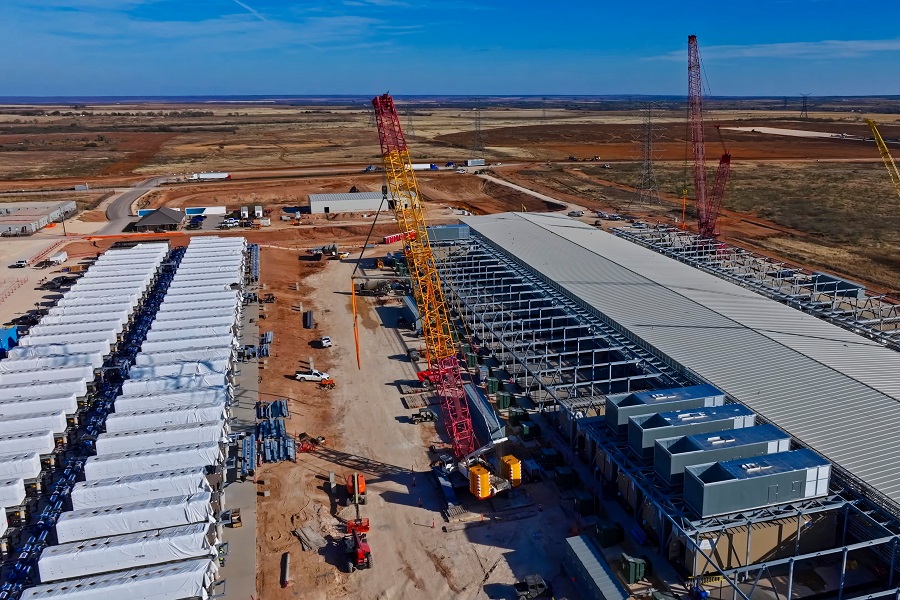
Developers are constructing one of the country’s largest data centers among the scrub brush and old farms in the dry Chihuahuan Desert of southern New Mexico. Project Jupiter could bring thousands of jobs and billions in investment, becoming a hub for Oracle and OpenAI.
Many local residents wonder whether chile fields and pecan orchards can survive alongside a campus that will require a lot of water and electricity in a region already under strain.
Data centers used to be little-known server warehouses, but now they are major features in communities across the country. As tech companies build more to support AI and cloud computing, people are noticing the real-world costs of their digital habits. This awareness is spreading through town hall meetings, higher utility bills, and local protests.
Data centers store and process information for everything from online streaming to AI models. A big facility can use as much electricity as a small city and needs a lot of water to stay cool.
Project Jupiter is in Doña Ana County and is a $165 billion campus spanning hundreds of acres, with plans for its own power generation. Developers point to economic benefits such as thousands of construction jobs and long-term employment. Still, residents and advocates are anxious about water use in a state already dealing with drought and stressed aquifers.
NPR summed up the situation as “Worries over water as a giant data center moves into the New Mexico desert,” highlighting the tension between promises of growth and limited resources.
People are having similar debates on Wisconsin farms near Meta’s facilities, in Virginia suburbs, and in fast-growing Texas towns. As AI technology grows, more people are paying attention. Communities that once looked forward to tax revenue are now worried about noise from cooling systems, pressure on the power grid, a lack of permanent jobs, and tax breaks for companies.
Critics say these projects make the public pay for infrastructure while companies keep the profits. Estimates indicate that data centers in New Mexico could place additional pressure on the Rio Grande and local water utilities.
Water Resource Advocates say that in February 2025, the Public Service Company of New Mexico reported getting 4,197 megawatts of interconnection requests from large users, with 87 percent coming from data centers. Peak demand for the utility is expected to rise by 40 percent by 2035. Annual energy demand will also increase by 11 percent in 2030 and by 12 percent in 2035.
The group also said that cooling data centers will increase water use. By 2035, new demands could reach 138 million gallons per year, enough water for about 3,316 people.
Industry leaders center on innovation and growth. Brant Bernet, a data center expert at CBRE in North Texas, says Texas could become a global leader because of its policies and resources, which could affect the whole Southwest. A 2025 PwC report found that the sector contributes significantly to jobs and government revenue, though local impacts vary.
Officials in Doña Ana County mostly support the investment as a way to diversify the economy. But advocates want stronger rules to protect water and energy resources. Project Jupiter’s developers say they are committed to efficient designs that will use less water over time. Still, many people are skeptical in a region already dealing with drought and a shrinking Rio Grande.
People across the country are learning quickly. Residents realize that every online action depends on these facilities, but building them means making tough choices about energy, water, and the community’s character. Some towns have blocked or delayed projects, while others are trying to find solutions through talks.
As more proposals come up in New Mexico and beyond Doña Ana, scrutiny is also increasing. Small towns are facing off against Big Tech. The results of these debates will shape how the U.S. balances its tech goals with real-world limits in an era defined by the demands of AI, which requires large amounts of water and power.