

Las Cruces Catholic Diocese Pushes Back Against Border Wall Land Grab That Threatens Sacred Mount Cristo Rey

The U.S. government is seeking to seize land owned by the Roman Catholic Diocese of Las Cruces for border wall construction near Mount Cristo Rey, a revered pilgrimage site in southern New Mexico. The diocese argues the move violates religious freedom protections and threatens access to sacred ground visited by thousands each year.

A Roman Catholic diocese in southern New Mexico is resisting a federal government-initiated effort to seize church-owned land near the U.S.-Mexico border. The legal skirmish is setting up a constitutional clash between border security and religious freedom that threatens sacred Mount Cristo Rey, one of the region’s most revered pilgrimage sites.

In a civil action filed on May 7 in the U.S. District Court for the District of New Mexico, the U.S. government moved to seize the land owned by the Roman Catholic Diocese of Las Cruces. The court filing claims the land through eminent domain to expand border wall infrastructure in southern New Mexico.

DHS Offers Compensation

The United States Department of Homeland Security (DHS) requested the submission of the court filing. It said the land would be used to “construct, install, operate, and maintain roads, fencing, vehicle barriers, security lighting, cameras, sensors,” and other structures to secure the border between the United States and Mexico.

The property DHS wants to acquire lies northwest of El Paso, an area where the government plans to build an extensive border wall system. Federal officials said the government will compensate the defendants approximately $183,000 for the land. The filing also named the treasurer of Doña Ana County in the case.

Catholic Diocese Pushes Back

The Catholic diocese, however, argues the land is not merely real estate. The land seizure, according to the diocese in its court filing a day after the government’s action, would “substantially burden” the religious freedom of the church and worshippers. It stressed that they use the property for prayer and pilgrimage for nearly a century.

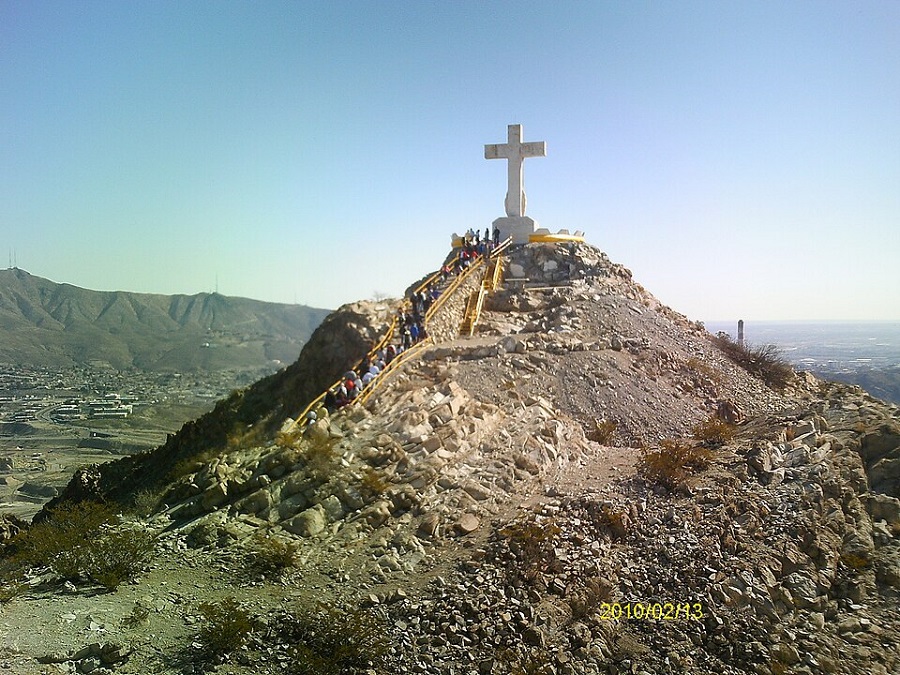
Mount Cristo Rey lies at the center of the dispute. It is a popular religious site overlooking the border between the U.S. and Mexico, where a 29-foot-tall statue of Christ stands on top of the mountain. The site draws thousands of pilgrims each year, particularly during religious observances and Holy Week rites.

Church officials contend that the federal seizure of the land would interfere with sacred land, associated with Catholic devotion in the region for a long time. The diocese informed the court that the takeover would amount to “a significant infringement on religious freedom and the rights of worship.” It cited protections under the First Amendment.

The filing of the Catholic diocese asked the court to halt the eminent domain proceedings unless the constitutional issues surrounding the site’s religious significance are resolved.

The case represents a new dimension to America’s ongoing border wall battles. These border wall skirmishes often centered on environmental concerns, private property rights, and immigration politics. In this instance, the battle reaches into a symbolic intersection of faith, land, and federal power — a towering statue of Christ, standing in the path of a proposed border wall.

For corrections, news tips, and any other content requests, please send us an email at [email protected].

Hot this week

Officials and U.S. Air Force Agree on PFAS Cleanup Plan at Cannon

In New Mexico, environmental officials have reached an agreement...

Agencies Focus on Outreach as Screwworm Threat Approaches

New Mexico agencies are focusing on outreach as the New World screwworm approaches, raising concerns among ranchers about livestock health and economic impacts. This headline matters because the screwworm, eradicated from the U.S. decades ago, has resurged in Mexico and threatens to cross the border.

UNM Steps Up to Cut Food Waste, Boost Food Access

The University of New Mexico works to turn food waste into resources that help address food insecurity on campus.

New Mexico’s Recipe for Hantavirus Risk—Climate, Deer Mice, and Country Living

More than 30 years after the Four Corners outbreak, New Mexico continues to report among the nation’s highest hantavirus pulmonary syndrome cases. Experts say the state’s ecology, climate cycles and rural living conditions have created an enduring hotspot for the rare but deadly disease carried by deer mice.

Community Solar Program Took Years to Arrive. Now the Solar Panels Are Finally Rising.

After years of delays, New Mexico’s community solar program is beginning to expand, with new projects coming online across the state. But developers and advocates say high interconnection costs and complicated billing rules still threaten the program’s long-term success.

Topics

Officials and U.S. Air Force Agree on PFAS Cleanup Plan at Cannon

In New Mexico, environmental officials have reached an agreement...

Agencies Focus on Outreach as Screwworm Threat Approaches

New Mexico agencies are focusing on outreach as the New World screwworm approaches, raising concerns among ranchers about livestock health and economic impacts. This headline matters because the screwworm, eradicated from the U.S. decades ago, has resurged in Mexico and threatens to cross the border.

UNM Steps Up to Cut Food Waste, Boost Food Access

The University of New Mexico works to turn food waste into resources that help address food insecurity on campus.

New Mexico’s Recipe for Hantavirus Risk—Climate, Deer Mice, and Country Living

More than 30 years after the Four Corners outbreak, New Mexico continues to report among the nation’s highest hantavirus pulmonary syndrome cases. Experts say the state’s ecology, climate cycles and rural living conditions have created an enduring hotspot for the rare but deadly disease carried by deer mice.

Community Solar Program Took Years to Arrive. Now the Solar Panels Are Finally Rising.

After years of delays, New Mexico’s community solar program is beginning to expand, with new projects coming online across the state. But developers and advocates say high interconnection costs and complicated billing rules still threaten the program’s long-term success.

Patient Voices Push New Mexico Lawmakers to Spotlight Healthcare Access and Affordability

New Mexico lawmakers spotlighted healthcare after hearing directly from patients, emphasizing urgent concerns about access, affordability, and workforce shortages.

Health Officials Clarify Hantavirus Risk: No Person‑to‑Person Spread

New Mexico's health officials have emphasized that the state's Hantavirus (Sin Nombre Virus) is not transmitted from person to person, which differs from the Andes virus that was responsible for an outbreak aboard a cruise ship. There have been many reports around the world about the Andes virus being transmitted by other people, and this caused people to worry about being able to contract the Andres virus from residents of New Mexico. The Andes virus is the only hantavirus known to be transmitted by another person in South America. The Sin Nombre Virus can only be contracted by contact with infected rodents, or their excrement. There are several ways to help to prevent hantavirus exposure, including disinfecting rodent nests and debris, ensuring that all points of entry into the home are sealed and practicing safe cleanup methods.

‘You Are Not Alone’: Grief Kits Help Students Cope with Loss 

Albuquerque Public Schools received grief kits after the Rotary Club of Albuquerque and the Grief Center worked together to provide resources that help students cope with loss.

Related Articles