

The American Civil Liberties Union (ACLU) has asked New Mexico’s Supreme Court to stop the automatic removal of babies born with drugs in their systems, arguing the policy rips families apart without due process. ACLU’s legal challenge over how far the government can go to protect vulnerable newborns is now heading to New Mexico’s High Court.
The civil liberties group filed an emergency petition Monday. ACLU is pressing the New Mexico Supreme Court to halt a state policy that directs the Children, Youth, and Family Department (CYFD) to seize custody of drug‑exposed newborns once they leave the hospital.
Gov. Michelle Lujan Grisham enacted the policy in July 2025. It was introduced after at least two infants connected to the child welfare system died after in‑utero exposure to drugs. In 2022, New Mexico ranked third with the highest number of substance-exposed newborns in the country. There are nearly 15 in every 1,000 babies exposed to drugs compared to a national rate of 5.4.
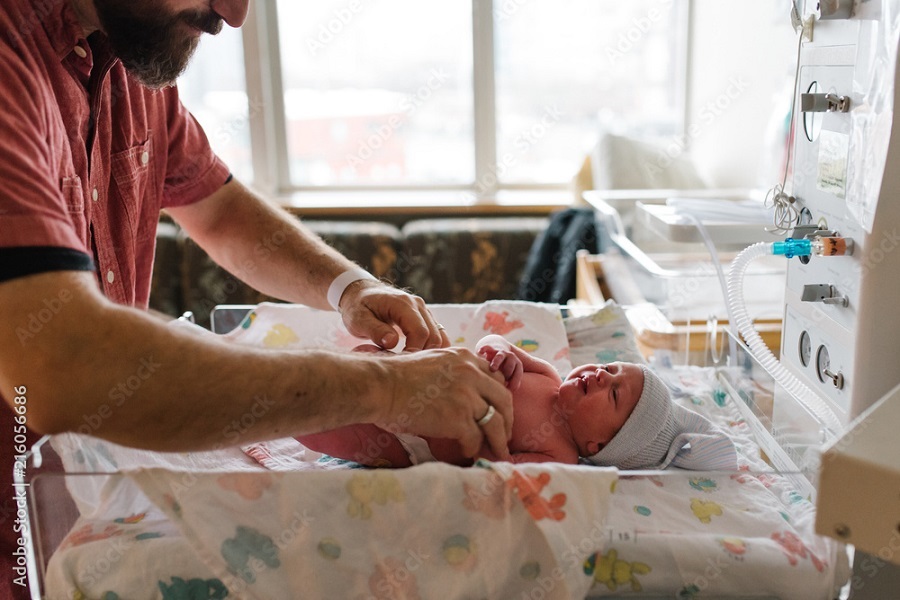
Under the directive, newborns with in-utero exposure to drugs have to remain in the hospital for treatment before CYFD takes custody. ACLU says the policy amounts to an unconstitutional blanket removal order that overlooks the unique contexts of families. “Taking a child away from its mother at birth has serious long-term consequences,” said Deanna Warren, a staff attorney with the ACLU and one of the lawyers behind the court filing.
ACLU filed the petition alongside two Democratic lawmakers, Rep. Micaela Cadena and Sen. Linda Lopez. The lawmakers argued that the state has bypassed the personalized investigations usually required before separating children from their parents.
“There’s an abundant amount of studies that speak to the effects and impacts of family separation,” Warren said. The ACLU lawyer said both parents and children have constitutional rights tied to family unity and care. The lawsuit seeks a writ of mandamus — a court order compelling state officials to halt enforcement of the directive while the court reviews its legality.
A broader question confronting states in the country lies at the core of the dispute: whether prenatal drug exposure alone is enough to merit state intervention, or whether child welfare agencies must first determine whether parents can safely care for their children. ACLU contended that the policy treats families as categories rather than individuals. “We can’t be treating families as categories,” Warren said. “They deserve individualized evaluations and assessments.”
Officials countered that the policy specifically protects children facing immediate medical and safety harms. State Sen. Nicole Tobiassen, a Republican, defended the removals as necessary state interventions for infants born into risky conditions. “That’s not a blanket approach,” Tobiassen said. “That is a targeted approach to help the whole family — the child first, who is the most vulnerable.”
Since the policy took effect, CYFD has taken custody of about 170 children, according to both supporters and critics of the directive. Tobiassen said many families had already challenged the removals in court, but did not succeed in demonstrating they had stopped using drugs. “We have a moral obligation to make sure that these children are in the safest environment possible,” she said. “If mom or dad cannot do that, then they do, for whatever time frame, forfeit that right.”
The case now puts the state’s High Court at the center of a controversial debate balancing child protection, addiction, public health, and constitutional rights. Its ruling could shape not only the future of the directive in New Mexico, but also how far the states can go in separating families when substance abuse occurs at birth.

