

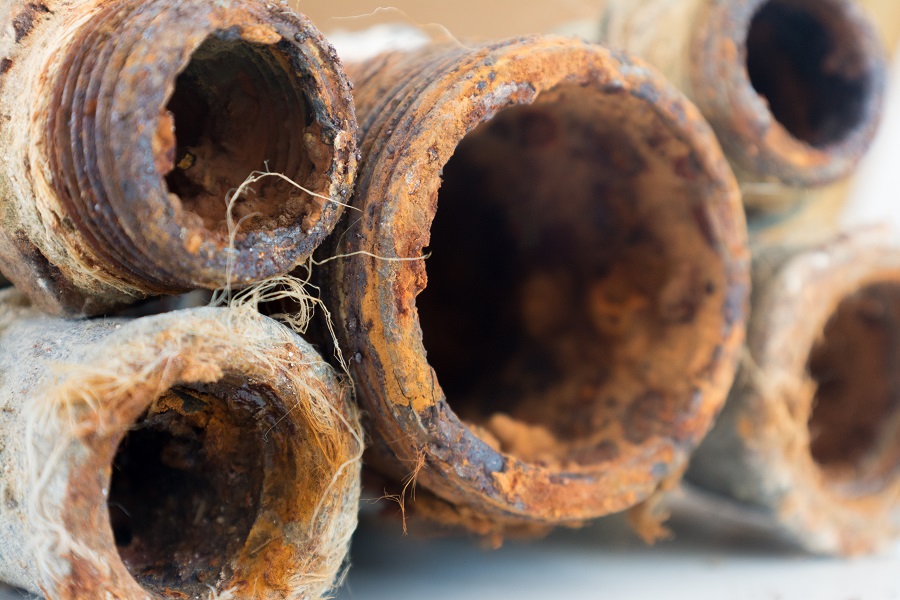
A silent hazard has streamed through the plumbing of millions of American homes for decades: lead service lines. Invisible and insidious, these aging lead pipes have leached a potent neurotoxin into drinking water, particularly putting the lives of children in danger.
New Mexico became one of the states to confront this hidden crisis as the Environmental Protection Agency (EPA) announced on May 20 that the state will receive $27,456,000 from the Drinking Water State Revolving Fund. The EPA funding is part of a broader distribution that includes four other states, namely: Arkansas ($27,456,000), Louisiana ($27,456,000), Oklahoma ($27,456,000), and Texas ($76,607,000). The money allocation is intended to locate lead pipes, design replacement projects, and ultimately replace them with safer materials.
“This funding will help keep children safe from lead exposure, give parents peace of mind, and protect the next generation of Americans,” said EPA Region 6 Administrator Scott Mason. The agency has emphasized that it will work closely with states to move the funds quickly into communities.
Decades of inaction on lead pipes change, decades of damage
Lead pipes, prized for their durability and malleability, were widely installed across the United States throughout most of the 20th century. The 1986 amendments to the Safe Drinking Water Act led the federal government to ban new installations. But the old infrastructure remained, gradually corroding and shedding lead particles— especially when water chemistry changes, or pipes are disturbed.
The consequences have been catastrophic and extensively documented. Even low levels of lead exposure in young children are tied to reduced IQ, behavioral patterns, learning disabilities, and enduring health issues. There is no safe level of lead in potable water, according to public health authorities. Highly publicized emergencies, most notably in Flint, Michigan, exposed how bureaucratic hurdles and cost-cutting can turn this risk into a public health emergency.
Across the U.S., the EPA estimates about 4 million lead service lines are still in use. Many of these service lines are concentrated in older cities and towns, mostly in lower-income and minority communities that have legacy vulnerabilities to environmental inequities. Replacing them is expensive, operationally complex, and politically sensitive. That is why, for years, progress has been slow despite repeated warnings from health scientists.
A flood of federal money meets local realities
The new EPA funding comes as part of a larger national drive, accelerated in recent years, to address America’s aging water infrastructure. States acted as administrators of the revolving funds, giving loans and grants to communities. In New Mexico, where vast rural territories sit alongside older urban centers like Albuquerque and Santa Fe, officials will now chart the locations of lead lines, which could be both difficult and costly because many records are incomplete and no longer exist.
Completely replacing these old lines is the only permanent solution. Partial measures, such as relying on chemical water treatments or implementing partial line replacements while leaving the private segment untouched, have proven not enough. Residents often face prohibitive out-of-pocket expenses to fund their portion of the pipeline upgrades, creating a patchwork of ongoing risk.
Confronting century-old systemic oversight
According to Government Accountability Office (GAO) audits and environmental policy analysts, past federal efforts frequently stalled due to slow disbursement, bureaucratic hurdles for small municipalities, and funding levels that fell starkly short of the crisis’s true scale. Even with this latest funding, questions remain: Will the money reach the lower-income neighborhood first? Can smaller towns handle the technical and logistical burdens? And how fast can pipes be pulled from the ground?
Environmental advocates and water policy organizations, such as the Natural Resources Defense Council (NRDC), described this federal investment as a long-overdue victory. But they maintain the initiative represents only a small fraction of the tens of billions of dollars required to eliminate lead lines across the country.
The hope is not only about safe water, as lead pipes arrive in New Mexico and four other states. It is about confronting a century-old systemic oversight that should never have been allowed to linger this long.

