

Screwworms are making a comeback across the Americas.
In New Mexico, officials reported its second case on September 17, involving a horse in Grant County. The detection comes only weeks after state officials declared the state NWS-free.
“We are working as quickly as possible to increase surveillance, inspect animals and monitor for additional cases in and around the affected area,” said State Veterinarian Dr. Samantha Holeck with the New Mexico Livestock Board.
There were over 50 animal cases reported nationwide, mostly in Texas, since June.
The state’s first confirmed NWS case involved a small dog in Lea County in early June, causing a 12-mile infested zone, door-to-door inspections, fly trapping, and the release of sterile insects.
Here are five facts every livestock owner and the public should know.
It does not spread simply by touching another animal
Screwworm does not spread through routine contact between animals. Instead, it spreads through the movement of infested animals and the natural movement of adult flies.
It can cross borders through migrating wildlife, livestock transport, and flies accidentally moved on vehicles or goods.
That makes surveillance and rapid detection critical.
It is not unstoppable
NWS is not unstoppable. Containing it, however, requires continued surveillance, strong veterinary services, border controls and the capacity to produce and release sterile flies on a large scale.
New Mexico officials have expanded surveillance amid the resurgence of NWS, urging animal owners to check their animals daily for wounds or unusual behavior, clean and cover injuries immediately, report suspicious cases and avoid moving animals that may be infested.
Scientists have beaten it before
The sterile insect technique is one of the most effective weapons against the screwworm.
This technique sterilized male flies using radiation and released them in huge numbers. These male flies mate with wild females, but their offspring do not survive. Repeated releases can reduce wild populations without relying on conventional pesticides.
This approach eradicated screwworm from the United States by 1966 and Mexico by 1984, before eliminating the pest from additional parts of Central America. The same approach was also used during a major outbreak in Libya in 1991.
The Food and Agriculture Organization and the International Atomic Energy Agency continue to support research and technical work using sterile insect techniques.
It is resurging across the Americas
Screwworms continue to persist in South America..
In recent years, it has pushed northward through Central America and into Mexico, with active cases have been reported in Belize, Costa Rica, El Salvador, Guatemala, Honduras, Mexico, and Panama.
The screwworm has also resurfaced in the United States.
Humans are not immune
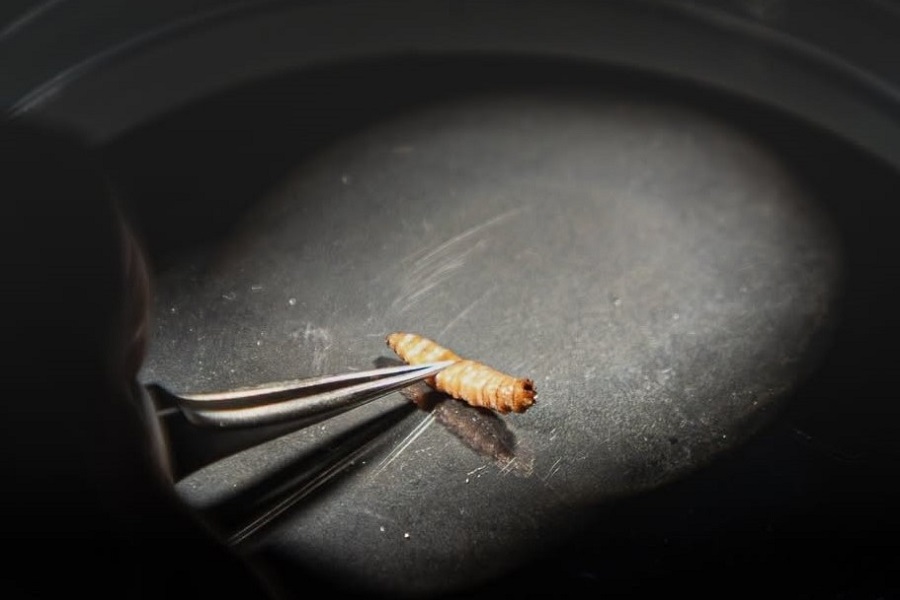
The New World screwworm is a type of fly. Its larvae can cause dangerous infestations among warm-blooded animals as female flies lay eggs in open wounds or on animals’ moist membranes. After the eggs hatch, the larvae dig into the tissue and feed on living flesh, causing an infestation called myiasis.
Vulnerable to infestation includes cattle, horses, pets, and wildlife. Newborn animals, however, are at higher risk. But experts warn that humans are not immune to infections.
“Early detection and prompt reporting are critical,” said New Mexico Agriculture Secretary Jeff Witte.
The New Mexico Department of Game and Fish is also closely monitoring wildlife and asking hunters to watch for suspicious wounds.
State and federal officials urged the public to report suspected cases to the New Mexico Livestock Board at 505-841-6161 or through the AgroGuard hotline.

