

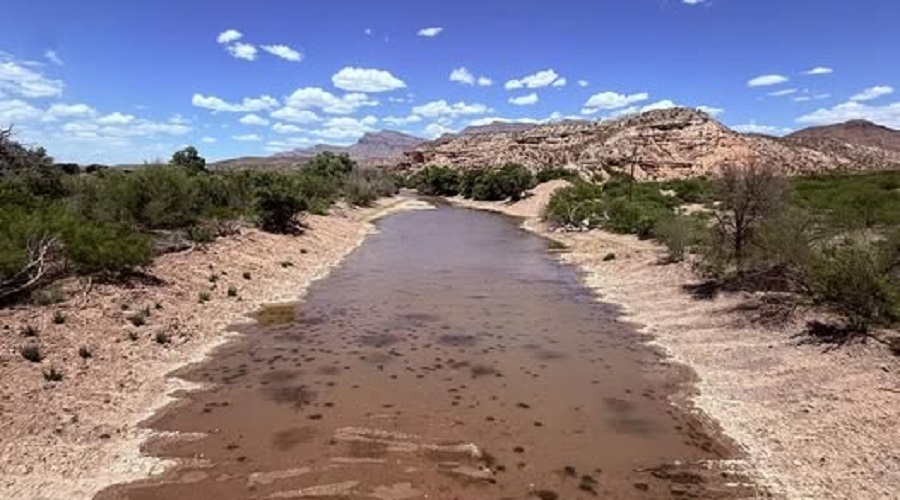
With fewer waterways recording “normal” flows than at any point since observations began in 1991, rivers worldwide in 2025 reached their driest level in 35 years, according to a new report.
The World Meteorological Organization (WMO), in its State of Global Water Resources 2025 report released on Thursday, says greenhouse gas emissions from burning fossil fuels have made the global water cycle stronger.
The report says about 36 percent, or nearly 4 in 10, of the world’s river basins had lower-than-usual water flow, while about 21 percent, roughly 2 in 10, had higher-than-usual flow, Only about a third of basins recorded normal water flow.
That continues a pattern of the past seven years, which have recorded the fewest rivers with usual flows since observations began in 1991. “We are depleting that savings account,” WMO Secretary-General Celeste Saulo said. That “savings account” refers to terrestrial water storage, the water held in groundwater, lakes, rivers, soil, vegetation, snow and ice.
Satellite observations show a persistent decline in land-based water storage since around 2014–2016, with most parts of the planet registering levels well below historical norms in 2025.
Alarming pace
Widespread ice loss continued for the fourth consecutive year since 2023, the report noted, totaling roughly 1,400 gigatonnes. That volume of water alone could fill about 560 million Olympic-sized swimming pools.
In the short term, melting glaciers can increase flood risk as surface runoff increases. Over time, however, glacier loss threatens the water supplies, which millions of people depend on seasonal snowmelt.
Asia and Africa suffered the most impacts, accounting for at least half of recorded water-related extreme events and more than 80 percent, or 8 in 10, of the people reported to have died in connection with these water-related extremes over the past five years, according to the WMO.
The WMO report says nearly two-thirds of monitored wells worldwide were outside their historical norms in 2025 and were increasingly drifting toward deficits. Wayne Jenkinson, the WMO’s director of hydrology and cryosphere, said the trend toward fresh water shortages on Earth has been clear for about a decade.
Beyond rivers and glaciers
The consequences are not merely statistical. Low river flows can disrupt agriculture, hydropower generation, navigation and ecosystems, the WMO warned. Retreating groundwater levels also threaten communities that rely on underground reserves, while melting glaciers undermine long-term water security.
The WMO says better monitoring, data sharing, and enhanced early-warning systems are crucial, along with stronger adaptation efforts and more resilient water management, as global temperatures continue to rise, warning that climate change has altered how the planet’s water resources move, endangering water security, economies and ecosystems.
The WMO’s report tracks river flows, groundwater, land water storage, glaciers, snow and major water-related extremes.

