Home Blog Page 10

Parents Can Breathe a Massive Sigh of Relief. Free Child Care Is Officially Here to Stay After a District Judge Says So.

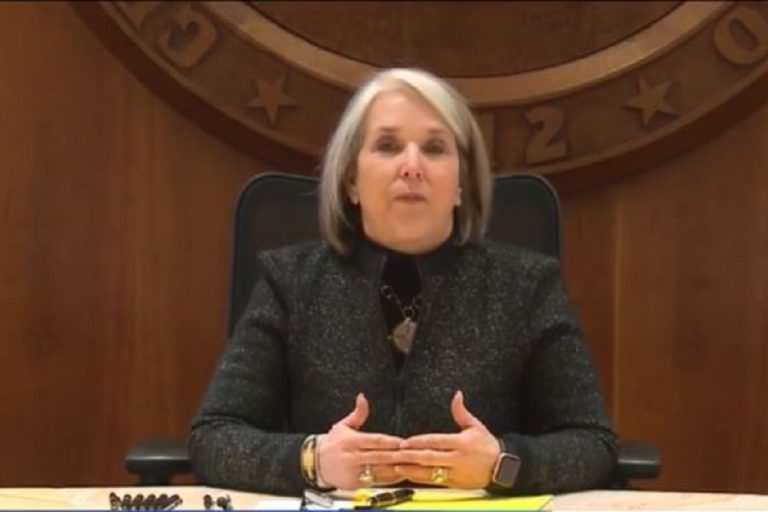
The legal battle over one of New Mexico’s most ambitious social programs ended Thursday with a clear win for parents who rely on free child care. A state district judge dismissed a lawsuit challenging the state’s Universal Child Care Program, paving the way for the benefit to continue serving families regardless of income. The decision is also a major political and policy win for Governor Michelle Lujan Grisham.

The ruling by Second Judicial District Judge Elaine Lujan preserved a flagship of the governor’s effort to help reduce the financial strain of raising children in a state where many families are facing steep child care costs.

Duke Rodriguez, a former Republican candidate for governor, filed the lawsuit arguing that Ms. Lujan Grisham had overstepped by expanding access to free child care through an executive order last year. Rodriguez’s attorneys contended that taxpayer funds could not legally be used for such a broad program launched without explicit legislative approval.

Earlier this year, the court ordered the Governor’s Office either to stop the program or to show why it should stay. The administration chose to defend the initiative in a public hearing.

By the time the case reached that stage, however, the regulatory environment had shifted. Attorneys representing the governor pointed out that state lawmakers had since approved and funded the child care initiative through the legislative process. The governor’s lawyers argued the lawmakers’ action had rendered Rodriguez’s constitutional objections moot. Judge Lujan agreed. She dismissed the lawsuit and allowed the program to continue uninterrupted.

In a statement posted on social media after the decision, Ms. Lujan Grisham sharply criticized the lawsuit. “Today, Second Judicial District Judge Elaine Lujan dismissed a frivolous challenge to New Mexico’s universal child care program,” the governor wrote. “This program is lawful, and it will continue to serve New Mexico families.”

She added that the legal challenge had caused unnecessary concern among parents who rely on the benefit. “New Mexicans deserved better than a lawsuit that put them through weeks of unnecessary anxiety over a program they count on,” she said. “The judge’s ruling makes it clear: New Mexicans can plan their families, finances and careers with the confidence that universal child care is here to stay.”

The case represents broader national debates over executive authority and the push by some states to expand public support for early childhood care. Advocates said that affordable child care enables parents to remain in the workforce and improves children’s outcomes. But the program’s critics questioned both the cost of such programs and the legal framework used to establish them.

Rodriguez’s attorneys said Thursday that they intend to appeal the ruling, signalling that the fight over one of New Mexico’s signature family policies is not yet over. Meanwhile, families across New Mexico can keep enrolling their children in the program, which many now view not as a political experiment but as a vital part of daily life.

New Wildfire on Mt. Taylor Ranger District

A forest fire broke out on June 8, 2026, in the Mt. Taylor Ranger District of New Mexico. Fire departments are currently working to contain and assess the fire, which is located in a U.S. Forest Service-managed forest.

Firefighters, Forest Service officials, and local citizens joined efforts to contain the newly started blaze. It also shows when it started (June 8, 2026) and where it is occurring (Mt. Taylor Ranger District in New Mexico). Furthermore, it demonstrates why this fire matters (to protect the communities and/or residents, natural resources, and Public Safety).

Similar to previous fires in New Mexico, such as those in the Santa Fe and Gila National Forests, crews responded rapidly to stop the spread. In addition, these types of wildfires illustrate that all areas of New Mexico with large amounts of timber are susceptible to having seasonal wildfires. This is especially true during dry summer months.

Communities will experience less significant destruction due to early detection and swift action to limit fire size and spread. Furthermore, fire management also provides greater protection for wildlife and preserves recreational lands. It reduces the need for evacuations and economic disruptions in adjacent communities.

The Mt. Taylor Fire highlights the broader challenge of effectively managing natural resources in fire-prone settings. In addition, this situation highlights the value of effectively preparing for and coordinating efforts. Specifically, it is important to provide a safe and resilient response across New Mexico’s forested areas.

Quickly mobilizing crews and maintaining current environmental conditions are part of officials’ strategy to prevent the Mt. Taylor fire from growing larger. Moreover, this incident underscores the ongoing need for constant community awareness. It also highlights the importance of managing natural resources, especially during wildfire season.

Students Experiencing Homelessness Can Secure Free Documents Needed for Education – Here’s How

0

Housing instability should not prevent students from obtaining the documents they need. That is the message behind a New Mexico policy that expands access to youth experiencing homelessness. The state is providing these young individuals free access to state IDs and birth certificates. This policy aims to equip them with essential documents for long-term stability. 

The initiative recognizes that obtaining these vital documents often becomes the first hurdle for students and youth experiencing homelessness. Without them, many struggle to enroll in school, secure housing, or access job training programs. By removing  financial and bureaucratic barriers, the law aims to help unaccompanied young people build a foundation for their future.

The state policy implements key measures to streamline access to essential documents for vulnerable youth, including:

  • Fee Exemptions: The initiative exempts youth experiencing homelessness from all fees for obtaining a state ID and birth certificate.
  • Staff Authorization: Local educational liaisons, counselors, nurses, and social workers can request birth certificates directly for homeless youth.
  • Youth Autonomy: Unaccompanied youth can request their own birth certificates without an adult’s signature.

Advocates call the policy a critical step in supporting young people who lack the support systems to navigate government agencies. 

Who Is Eligible for Fee Exemptions?

New Mexico defines a “homeless individual” as a person who lacks a fixed, regular, and adequate nighttime residence, including anyone who:

  • lives in the housing of another person due to that individual’s loss of housing, economic hardship, or other reason related to that individual’s lack of a fixed residence;
  • lives in a motel, hotel, trailer park, or camping ground due to the lack of alternative adequate accommodations;
  • lives in an emergency or transitional shelter;
  • sleeps in a public or private place not designed for or ordinarily used as a regular sleeping accommodation for human beings; or
  • lives in an automobile, a park, a public space, an abandoned building, substandard housing, a bus station, a train station or a similar setting.

How Can a Youth Obtain a Free State ID? 

  1. Complete an Attestation of Homelessness Status Form. A Spanish version is also available.

The form can be filled out by a youth or a:

  • Local educational agency homeless liaison;
  • School counselor, school nurse, or social worker;
  • Public or private governmental or nonprofit agency that provides services to homeless individuals. 
  1. Collect the required identification documents. These are the  documents required both for a REAL ID and Standard ID card.
  2. Bring the completed attestation form and required documents to a Motor Vehicles Division (MVD) Field Office. 

How to Get a Free Birth Certificate?

  1. Fill out a Homeless Self Attestation Form. A Spanish version is also available. 

The form can be filled out by a youth or a:

  • Local educational agency homeless liaison;
  • School counselor, school nurse, or social worker;
  • Public or private governmental or nonprofit agency that provides services to homeless individuals.
  1. Complete a Birth Record Application Form. A Spanish version is also available. 
  2. Apply in person at the local public health office. Bring the forms and required identification documents for the requester.  Applications can also be made via mail. Enclose the forms and a copy of valid identification for the requester. Mail them to New Mexico Vital Records, Post Office Box 26110, Santa Fe, NM 87502.

Visit the Department of Health website for more information on applying for a birth certificate. 

Heat Waves Continues; Flash Flood Risk Rises Near Ruidoso Burn Scars

The weather on Thursday will continue with hot weather before a backdoor front bring stronger winds, more moisture and higher flood risk near the Ruidoso burn scars.

Hot, dry, and breezy conditions will continue across the state Wednesday evening. The strongest winds will stay across northern part of the state, including Farmington, Taos, Raton, Las Vegas, and the high terrain of the Sangre de Cristo Mountains.

Wind gusts of 25 to 35 mph will continue through sunset before slowly weakening overnight. Skies will remain mostly clear with few weather concerns through the night.

Lows will fall into the 60s across the Rio Grande Valley, 70s in parts of southeast New Mexico and 40s to 50s in the higher terrain.

What To Expect With Thursday Heat

Thursday will bring another hot day across much of the state. A backdoor cold front will start dropping south through northeast state during the day, and Raton, Clayton, Springer, and Des Moines will see temperatures fall a few degrees compared to Wednesday.

Meanwhile, most of central, western, and southern part of the state will remain hot. 95 to 98 degrees will be expected at the afternoon in Albuquerque, 98 to 102 in Roswell, 95 to 100 degrees in Artesia, upper 90s to near 100 in Carlsbad and mid 90s in Socorro.

Concerns over heat impacts emerge even if temperatures stay just below official heat advisory criteria. Anyone who plans to extend their time outdoors should plan for their breaks, drink plenty of water, and limit strenuous activity during the hottest part of the day,

What About on Thursday Night?

The weather will begin to change Thursday night as backdoor front surges southwest across eastern part of the state. This will move through Clayton, Tucumari, Clovis, Portales, Roswell, and Las Vegas during the evening, then reach Santa Fe, the East Mountains and the Albuquerque metro overnight.

A gusty east canyon wind will develop along west and central mountain chain. The strongest winds will likely be on Tijeras Canyon, east Albuqueque, the foothills, Los Lunas, and parts of the Middle Rio Grande Valley, with wind gusts of 35 to 45 mph.

Low clouds will begin spreading into eastern part of state late Thursday night. Clovis, Portales, Roswell, Artesia, and Hobbs could have low clouds Friday morning with patchy fog or a little drizzle.

Data Centers Are Coming to the Desert. The Price Tag? Millions of Gallons of Water.

0

Hundreds of ranchers, retirees, and university staff crowded the auditorium at New Mexico Tech one warm evening in May, carrying signs that read “Big Data, Big Lie” and “NMT = No More Transparency.” Their grievance targeted a Canadian developer’s proposal for what could become one of the world’s largest ‘renewable‑led’ data centers—a sprawling complex covering up to 10,000 acres, with a massive solar array and atmospheric water generators designed to avoid draining local sources.

Barely a month later, on June 9, the Socorro County Board of Commissioners unanimously approved a one-year moratorium on new data centers and their supporting infrastructure. The decision came after New Mexico Tech withdrew from the partnership, citing insufficient contiguous land and growing community concerns.

The episode captures an increasing tension playing out across New Mexico. Recently, the state has pushed aggressively to diversify its economy beyond oil and gas. It courted the aerospace, film, tech, and renewable energy sectors. But the explosive growth of artificial intelligence is bringing a new kind of suitor: data centers hungry for land, power, and, critically, water in one of the driest states in the Southwest.

Lujan Grisham Champions Shift

Governor Michelle Lujan Grisham has championed the shift. She announced in early 2025 a $5 billion partnership with BorderPlex Digital for a “Digital Infrastructure Campus” in Santa Teresa, Doña Ana County, near the border with Mexico. Project Jupiter represents a transformative opportunity, offering thousands of temporary construction jobs, hundreds of long‑term positions paying $75,000–$100,000 annually, and significant economic output.

Project proponents highlight the potential. Oracle, a tenant for the Jupiter campus, projected significant boosts to the local economy, generating hundreds of millions in annual output while partnering with community colleges and universities for workforce development. Company officials argue the facilities represent the high-tech future of New Mexico, veering away from its dependence on volatile fossil fuel revenues.

The backlash, however, has been swift and loud. Socorro residents worry about big-sale industrial development blotting out the vast desert panorama, straining the electrical grid, and draining the aquifers. Similar concerns have led Santa Fe County to have its own moratorium. Data centers across the Western U.S. are confronting historic drought conditions.

“The Rio Grande is completely dried up in Albuquerque. We’re completely relying on groundwater. And you want to have this water-hungry data center in the middle of Socorro. It’s kind of offensive to even suggest that,” one resident said at a New Mexico Tech town hall.

Statewide Emergency

Lujan Grisham declared a statewide drought emergency on May 20 amid record-low snowpack and extreme fire danger. Much of the state remains in drought conditions, ranging from severe to extreme. Data centers, consuming millions of gallons of water annually for cooling, add new pressures to already strained systems

Western Resource Advocates and others have estimated that data centers in several Southwestern states could drain billions of gallons yearly by 2035 for their on-site needs alone. The estimate does not count the indirect thirst from power generation. Agriculture has historically been the largest consumer of water in New Mexico, yet it now confronts mounting pressures of its own. Officials and residents question whether the projected jobs justify the trade-offs.

“We really appreciate you guys. You listened to us,” Socorro resident Jon Hertz told commissioners after the moratorium vote. “I do believe and support the development of renewable resources, but not those that gobble up our local resources for the sheer benefit of billionaires and large cities outside of New Mexico.”

Developers like Green Data’s Jason Bak tried to allay fears. He proposed using solar energy alongside atmospheric water generation systems that extract moisture from the air. But skepticism runs deep. Bak admitted at public meetings that his company has yet to build a full-scale data center.

Debate Around Data Centers Echoes National Struggle

The debate echoes national struggles. With the surge in AI demand, data centers are multiplying, mostly in places with cheap land and power but with fragile environments. In New Mexico, the push comes as the state steers through an energy transition. On one hand, there is abundant sunshine and wind potential; on the other, an aging grid and drought.

County leaders in Socorro said the moratorium will give them time to study the project impacts and formulate regulatory measures in a locality lacking comprehensive zoning. They hope to balance openness to responsible business with safeguarding agriculture, ranching, and overall quality of life.

Some residents recognized the importance of economic development in a county with a declining population. That economic development, they insisted, must be calibrated.

The stakes are high for the state. Despite its natural resources and the presence of federal laboratories in Los Alamos and Sandia, New Mexico has long ranked near the bottom in economic indicators. Well-regulated data centers could mean diversification and high-wage jobs. But mishandling them risks repeating old patterns, with extractive industries delivering only short‑term gains and long-term costs to rural communities.

Bak told skeptical residents in Socorro: the concerns are real and shared nationwide. “We understand that some Socorro County residents are skeptical of our claims about the project,” Bak said. “That skepticism is being reflected by the opposition to other projects all across the country. But we’re not other projects all across the country.”

The question for New Mexico is whether it can write a different ending — a future that respects the desert’s boundaries while embracing the digital era. For now, in places like Socorro, the answer is a cautious moratorium.

145 New Violations Issued: Who Made It to New Mexico’s Environmental ‘Enforcement Watch’ List?

State regulators documented 145 additional violations on New Mexico’s public “Enforcement Watch” list in May, while resolving 93 cases, according to data released by the New Mexico Environment Department.

The monthly report is part of a transparency program launched in 2023. It highlights the scope of oversight across water quality, food safety, workplace hazards, and air emissions in a state where energy production, manufacturing, and retail operations have converged on delicate environments and public health risks. Seventy-five violation notices, the largest share of new actions, come from the Water Protection Compliance and Enforcement Bureau.

Food safety inspectors issued 38 violation notices to retail establishments. Twenty cases came from the Occupational Health and Safety Bureau. Smaller numbers involved resource conservation paired with expanded environmental oversight.

Among the resolved cases, food safety topped the list with 60 closures. Water protection cases added 12 resolutions.

Refinery Fire Draws $34,000 Penalty

One Occupational Health and Safety Bureau action involved a flash fire at the HF Sinclair refinery in Artesia last October. During scaffold setup, a pipe leak released a vapor cloud that caught fire. The incident left three workers injured.

State investigators found that insufficient worker training on compression fitting assembly, combined with the absence of a quality assurance system for safety equipment, had elevated the risks of equipment failure, hazardous chemical releases, and fires. The bureau issued a citation and notification of a fine amounting to $34,002 for serious violations.

“Safety must remain the highest priority in every New Mexican workplace,” said Bob Genoway, Deputy Director of the Compliance and Enforcement Division. “The HF Sinclair incident highlights the importance of assuring workers receive proper training, that safety-critical equipment is correctly installed and verified, and that employers maintain effective systems to identify and address hazards before an accident occurs.”

Other Violations Spotlight Diverse Concerns

Environmental regulators also issued a Notice of Violation to Matador of Dallas for allegedly exceeding the allowable emission limits at seven oil and gas facilities in southeast New Mexico. In the capital region, Santa Fe’s Trash Talk Hauling LLC received a notice for operating without required commercial hauler registration.

Occupational safety inspectors issued a notice to Gallatin Operational Solutions in Santa Fe over blocked exit routes that may hinder emergency evacuations. Several water-related actions included a notice to Cubero Elementary School near Grants for unaddressed deficiencies from the sanitary survey, and another notice to Lovington’s Lea County Electric Cooperative for missing required microbiological sampling.

Transparency Tool Enters Fourth Year

Introduced in May 2023, Enforcement Watch makes violation data publicly accessible online. It places the entities cited for violations on the lists until issues are corrected and penalties paid. Officials say the initiative promotes accountability through visibility, encouraging timely compliance while raising community awareness of potential risks.

The environment department publishes monthly reports detailing new actions and resolutions, with datasets available for download. As of mid-2026, the program continues to highlight routine compliance concerns, such as retail food handling, and major industrial incidents. Critics often push for stricter oversight, while business groups underscore regulatory burdens. NMED balanced these concerns by framing enforcement as a measure to protect health and the environment without unnecessary disruption.

The complete May 2026 list and data are publicly accessible online. Residents may visit the New Mexico Environment Department’s Enforcement Watch webpage.

How Optical Interferometer Could Change Space Warfare and Commercial Tracking Forever

0

Scientists at New Mexico’s desert observatory have displayed a capability that could reshape how humanity watches an increasingly crowded frontier. They have demonstrated that a ground-based optical interferometer can decipher details of a satellite stationed 22,000 miles above Earth. The feat comes at a crucial moment in the modern space age.

Governments and private companies launch thousands of satellites into orbit every year, crowding the skies above Earth with communications platforms, navigation systems, military assets, and commercial space vehicles. Knowing exactly where those satellites are, what condition they are in, and what they are doing has progressed from mere technical curiosity into an urgent strategic need.

Researchers at the Magdalena Ridge Observatory Interferometer (MROI) declared that they had successfully secured observational data from a communications satellite in geostationary orbit. The achievement marks a breakthrough in using an optical interferometer to investigate a human-made object at such great distances.

Geosynchronous satellites occupy an orbital lane roughly 35,786 kilometers, or about 22,236 miles, above Earth. At that distance, their orbital period matches Earth’s rotation, enabling them to remain fixed over the same longitude. That orbital lane hosts many of the world’s most critical assets, including communications and weather satellites.

Novel Use of Optical Interferometer

Until recently, many considered obtaining information about those satellites from the ground to be beyond reach. But the MROI team accomplished what was impossible through optical interferometry, a technique that combines light collected by a vast array of telescopes. Together, these telescopes serve as a single giant “virtual telescope,” achieving an angular resolution impossible for traditional instruments of similar size.

“This is a moment highlighting long-term development efforts,” said Dr. Van Romero, professor of physics at New Mexico Tech and principal investigator for MROI. “There has long been skepticism that a ground-based optical system could resolve a man-made object in geosynchronous orbit. This evaluation provides data indicating that it can be done.”

Over the years, astronomers have used interferometry to study distant stars and galaxies, but employing the technique on satellites orbiting Earth posed a different challenge altogether. “Many in the astronomy community believed this was not possible,” said Dr. Michelle Creech-Eakman, MROI project scientist and professor of physics. “Others have attempted it previously. This evaluation provides data on both the instrument and the underlying technique.”

The implications may reverberate far beyond scientific prestige. Modern satellites are becoming sophisticated, equipped with expansive solar arrays, sensitive antennas, and, in some cases, maneuvering systems. Some analysts at the Modern War Institute warned that next‑generation spacecraft might feature concealment and possess adversary‑interference capabilities.

In that environment, tracking a satellite’s orbital coordinates is no longer enough. Military planners and commercial operators need to know whether a satellite has exhibited anomalies or configuration changes. “We want to quickly assess a satellite’s position and orientation — and understand its behavior,” Romero said. “This is an evaluation toward providing that level of insight.”

Low-Earth Orbit Transformation

The critical nature of this mission continues to intensify. Large satellite constellations of hundreds or even thousands of spacecraft have transformed low-Earth orbit, while vital infrastructure has crowded the geosynchronous belt. Collisions, technical malfunctions, and intentional disruptions present risks with far‑reaching global impacts.

That scenario makes precise monitoring a cornerstone of space security and economic resilience. Such capabilities strengthen space domain awareness among governments. Commercial operators, on their part, can deploy high‑resolution imagery to diagnose technical issues, evaluate aging spacecraft, and guide decisions on insurance, servicing, and replacement.

Previously, researchers noted that it remains unclear whether the optical interferometer can produce usable satellite images at such vast distances from the ground. “We have now gathered data showing that the technology works,” Romero said.

Wider Horizon

But the scientists behind the project see a wider horizon. The same technology that may help monitor crowded orbital lanes could also transform astronomy itself. Creech-Eakman said future expansions of the observatory’s telescope array could eventually produce real-time images, creating moving pictures of deep-space events. “With this level of resolution, we will be able to measure changes across the universe in great detail,” she said. “Ultimately, we aim to produce time-resolved imaging — even ‘movies’ of distant astrophysical systems.”

The MROI is a major astronomical facility led by New Mexico Tech, in collaboration with the University of Cambridge and the U.S. Air Force Research Laboratory. It was built with expansion in mind. Additional telescopes could enhance the facility’s sensitivity and imaging precision.

The desert observatory stands at the junction of two realities of the modern era. On one hand, humanity’s dependence on space is growing. On the other, the desire to better understand the cosmos continues to deepen. The same instrument that helps scientists safeguard satellites essential to today’s world also opens new frontiers in discovery. It may provide unparalleled glimpses into some of the universe’s deepest mysteries.

Smoke Shops to Uphold Same Standards as Dispensaries – City Councilor

0

Albuquerque City Councilor Renée Grout said she want smoke shops father apart, including a proposed 1,3200-foot buffer between shops. This is because she wanted to have smoke shops same standards similar to cannabis dispensaries before more open across the city.

Jose Vialpando, owner of Chronic Kings on Lomas said he used to run part of the business as a smoke shop says the updated ordinance would mean less competition near his dispensary.

“I don’t really like it. I would like some distance, you know. It’s kind of clutter full of dispensaries. It’s good for the customer, maybe they have options, so it’s not totally bad,” he said.

He said he love to help the medical people out as well as the recreational people out. He also pointed out the issue is smoke shops clustering in one area, not the cannabis dispensaries themselves.

Meanwhile, Grout clarified the issue is smoke shops clustering in one area, not cannabis dispensaries themselves.

“They need to be away from cannabis, and smoke shops need to be at least 1,320 feet from another smoke shop,” said Grout.

Grout said the proposal will add more restrictions on where smoke shops can operate.

What Is In The Proposal?

In the proposal, the smoke shops have to be at least 350 feet away from a school or a daycare. Nicotine products and paraphernalia shouldn’t be displayed within five feet of a window or a door. They can’t have a dive-through, and they can’t be in main street corridors.

“They also need to be at least 350 feet away from a school or a daycare. Nicotine products and paraphernalia shouldn’t be displayed within five feet of a window or a door. They can’t have a drive-through, and just like we made some changes to the IDO in the spring with this, we kind of, we left this one out, we needed to put in smoke shops, they can’t be in the main street corridors,” she said.

Grout clarified Central and San Pedro are included in the new proposed ordinance.

Vialpando sees this as a good opportunity to open a business but also worries that they might end up hurting each other because they’re all opening by each other.

“I just think it’s just a good business for them to open. I guess it’s good, profitable business for them to open. So everybody’s trying it, but they’re also hurting each other, because they’re all opening by each other,” said Vialpando.

The Land Use Planning and Zoning Committee will hear the proposed changes on Wednesday and by next Monday, the proposal could reach the City Council agenda.

The initiative is good as it can prevent students from buying from smoke shops, creating a better environment for students. However, it also has its downside on businesses since their earnings would decrease or become stagnant.

10 First Responders Hospitalized in a Single Call: The Terrifying New Reality on the Front Lines of the Fentanyl Crisis

A routine welfare check for a possible overdose in a simple trailer park in Silver City turned into a hazmat-level emergency. First responders arrived at the scene and found one resident dead, but the disturbance sent powder into the air. Within minutes, an emergency medical worker collapsed. By the end of the response on June 1, officials hospitalized 10 first responders — firefighters, sheriff’s deputies, and paramedics — for medical examination.

Laboratory results later confirmed the presence of fentanyl, methamphetamine, and cocaine in the home. Doctors treated and released all 10 responders. But the incident heightened alarms across the state about a growing occupational hazard linked to exposure to potent synthetic drugs during daily calls.

Only weeks earlier, a similar scene unfolded in Mountainair with even graver consequences. Three people died inside a home, and 18 first responders fell ill with symptoms including nausea and dizziness after exposure to powdered fentanyl, methamphetamine, and para-fluorofentanyl. The incident affected more than two dozen people, prompting decontamination and hospital evaluations.

A Pattern Emerges in a Hard-Hit State

These back-to-back incidents do not stand isolated. New Mexico has ranked among the states with the highest drug overdose rates. Recently, the state has had to confront a dual crisis: the prevalence of fentanyl-laced drugs on the streets and the dangers those substances pose to emergency responders.

State officials have observed an increase in suspected powdered fentanyl exposures. The drug’s extreme potency — just a few grains can be lethal. It can affect multiple people quickly when responders handle, disturb, or aerosolize it during chaotic scenes. In both the Silver City and Mountainair cases, responders complained of symptoms similar to opioid exposure.

According to the New Mexico Health Department, opioids, particularly fentanyl and its analogs, have driven a significant share of overdose deaths in the state. These substances, mixed with meth or cocaine, have complicated responses and escalated risks for law enforcement and emergency medical services.

Heightened Precautions, Lingering Questions

Departments across New Mexico are now emphasizing enhanced personal protective equipment, specialized training, and on-scene caution. Hazmat teams, including those from the Drug Enforcement Administration, are increasingly called in to process contaminated scenes. The incidents, however, raise uncomfortable questions about the adequacy of standard protocols when facing powdered synthetics.

Some experts have historically downplayed the risk of casual skin or airborne exposure to fentanyl. But recent events have prompted local officials to treat every overdose call with caution. “Fentanyl is particularly dangerous because it requires only a tiny amount to cause an overdose. The tiniest possible dose of fentanyl can cause serious symptoms in an exposed individual,” Steve McLaughlin, chief medical officer at the University of New Mexico hospital, said.

Fentanyl Overdose: Broader Implications

The psychological and physical toll has heightened for first responders. Each call now carries the possibility of not only finding dead bodies but also of becoming casualties themselves. Health officials emphasize the importance of Naloxone availability as a critical overdose prevention measure, proper decontamination, and interagency coordination.

Silver City investigation continues, and Mountainair’s aftermath settles as officials confront a stark reality that the fentanyl crisis has blurred the line between drug users and responders. A new reality has emerged in New Mexico’s rural towns and trailer parks: the front line of the drug overdose crisis now includes the emergency responders themselves.

How a Retired Professor Honored His Late Wife Through a Reading Fund

0

Even after leaving the classroom, some educators continue to influence students’ lives in meaningful ways. In Albuquerque, a retired professor is carrying on that mission–to honor his wife and preserve their shared legacy in education.

Retired University of New Mexico professor Richard Van Dongen paved the way for a new literacy chapter in Albuquerque Public Schools. Earlier this month, he donated $100,000 to the APS Education Foundation. The donation established the “Van Dongen Books Kids Want to Read Fund.” 

He created the fund to honor his late wife, Barbara Chamberlin Van Dongen, and their lifelong partnership in education. Demonstrating his enduring devotion to the district, Richard also pledged part of his legacy gift to support the fund.

The effort highlights the commitment and generosity of two of Albuquerque’s most dedicated educators.

“This is an extraordinary gift for our students,” said APS Superintendent Gabriella Durán Blakey. “Literacy is the foundation for everything we do, and this donation will help us engage students and foster their love of reading. Words cannot express how grateful we are to the Van Dongens for this generous gift.”

Partners in Education

Richard and Barbara grew up in Albuquerque. They spent their professional lives championing student learning.

Barbara, who passed away in 2016, earned her undergraduate degree at Stanford University. She then received a PhD in Library and Information Sciences from the University of Maryland. She worked as a classroom teacher and librarian at APS before becoming the head of District Library Services. 

Richard began his career in elementary education at APS. He later returned to UNM to earn a doctorate in education. He then stepped into senior leadership in UNM’s College of Education.

“Both educators dedicated their long careers to the education of teachers and students in Albuquerque and beyond,” said APS Education Foundation Executive Director Shannon Barnhill. “This spirit of commitment continues through the Van Dongen Books Kids Want to Read Fund.”

How the Fund Benefits School Libraries

The initiative addresses a persistent challenge in education: keeping school library collections current, relevant and engaging. The fund provides resources directly to library staff. It allows them to purchase popular literature, graphic novels, the latest nonfiction, and other genres that resonate with today’s students.

“This gift will provide APS students a say in the books they have in their school libraries,” said Rachel Altobelli, senior director of Library Services at APS. “Keeping school library collections current, relevant and inspiring can be a challenge without easily accessible funding.”

The fund is designed to be user-friendly for educators. It will be administered by the APS Education Foundation. School librarians can access the resources through a simple application process. The process enables them to tailor acquisitions to the specific interests and needs of their school communities.

The library serves as one of the most vital learning spaces in school. It acts as an extension of the classroom, where students expand upon their lessons and explore new ideas. The new fund keeps these environments dynamic and aims to inspire a lasting love of reading.

Community members can support this ongoing legacy by donating directly to the fund through the APS Foundation.