

Severe weather is often associated with tornadoes, hurricanes, or winter storms. The North American Monsoon, however, spanning the summer months, is New Mexico’s most lethal climatic event. The interplay of diverse extreme weather risks, defined by geography and climate variability, culminates in the region’s deadliest season.
The danger of the monsoon lies in New Mexico’s unique combination of terrain and arid climate. In early summer, intense heat bakes the desert floor, creating widespread weather disruption. The system works like a giant pump, pulling in humid tropical air from the Gulfs.
The sudden monsoon rains overwhelm dry, hardened soil. The water immediately rushes into the region’s widespread “arroyos”—the dry, sandy creek beds across the state. Within seconds, a dry ditch can become a violent river, flowing at speeds over 30 miles per hour. These floods can strike under clear skies. A storm over a mountain peak can send a wall of water rushing into a canyon some 10 miles away.
Wildfires and Climate Change
A study by Michael Crimmins and associates shows that drought and amplified moisture imbalance driven by climate change have escalated wildfires in New Mexico. These fires leave behind burn scars and degraded soils that magnify monsoon flooding and erosion risks. Longer, hotter droughts drive catastrophic fires across the state’s alpine forests; they leave behind burned swaths of land, altering the soil’s chemical composition.
The result is almost apocalyptic when monsoon downpours hit the land. Instead of a regular flash flood, the rainwater mixes with tons of ash, soot, and loose soil, creating a concrete-like flow of debris.
Monsoon poses multiple threats
Flash flooding is the primary killer. But the monsoon weather poses multi-front threats to the state: ferocious lightning and dust storms.
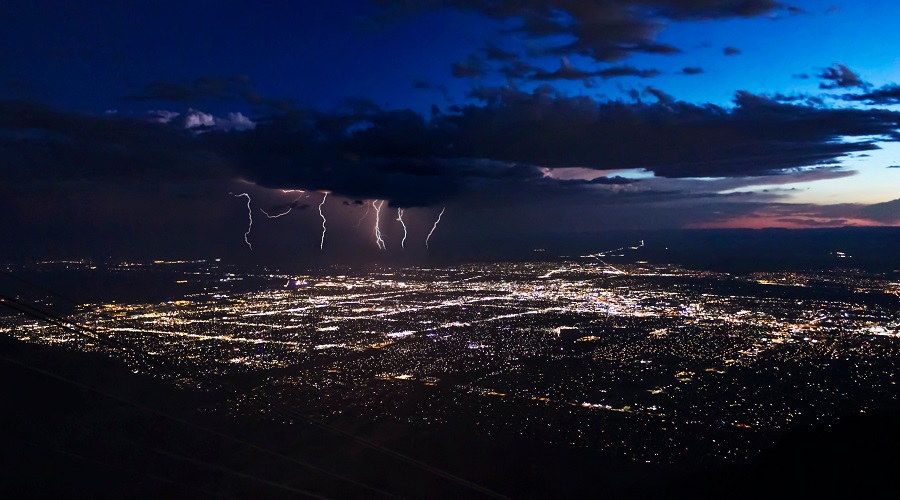
Intense daytime temperatures generate highly volatile, unstable storms. New Mexico’s sprawling open spaces and mountainous terrain leave outdoor recreationists vulnerable to cloud-to-ground lightning strikes.
In the early stages of the monsoon, on the other hand, rain often evaporates before reaching dry ground—a phenomenon known as virga. It quickly cools the air, causing it to fall steeply to earth and rush outward as “microbursts.” These winds, in flat southern regions, kick up blinding walls of dust that reduce visibility on major interstates to zero in seconds, potentially causing multi-vehicle pileups.
State officials have launched awareness campaigns, urging “all residents and visitors to become familiar with the hazards associated with the Summer Monsoon,” advising them to review safety rules that could be life-saving or help prevent injury.

