


Albuquerque smashed its monthly rainfall record, with Santa Fe recording the highest reported totals in the latest round of late-September storms, bringing relief to New Mexico after months of droughts.
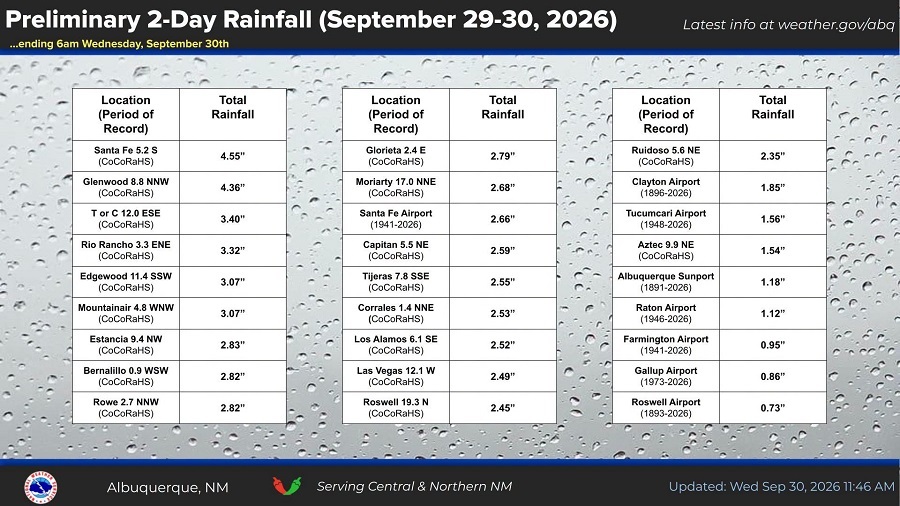
According to reports published September 30, the Albuquerque International Sunport recorded a total of 4.49 inches of rain in September, surpassing the previous September record of 3.97 inches set in 2013. Over the course of Tuesday and Wednesday alone, the airport has recorded 1.18-inch rain.
Santa Fe among hardest-hit communities
Santa Fe recorded 4.55 inches of rainfall in reports covering the recent storm, topping the state’s reported totals. Glenwood followed with 4.36 inches, Truth or Consequences received 3.4 inches, Rio Rancho recorded 3.32 inches, while Edgewood and Mountainair each received 3.07 inches of rainfall.
Other communities also experienced significant rainfall: Los Alamos recorded 2.52 inches; Las Vegas, 2.49 inches; Roswell, 2.45 inches; and Ruidoso, 2.35 inches. Rainfall varied considerably across the state, with some locations recording less than an inch.
The totals show how storms can unevenly affect New Mexico, where communities separated by relatively short distances can experience varying amounts of rainfall.
Heavy rain brings new flood risks
The rainfall has immediate challenges as well as potential benefits. For instance, storms in early September triggered flooding and water rescues across parts of New Mexico. Some locations received more than five inches of rain in a day, according to reports.
Heavy rainfall can overwhelm drainage systems, flood roads, and threaten homes, particularly in parts where runoff collects quickly. Areas affected by wildfires face additional risks as burned hillsides may have difficulty absorbing water, allowing rain to rush downhill and carry sediment and debris.
Authorities urged residents to follow local emergency alerts, avoid flooded roads, and never attempt to drive through moving floodwater.

