

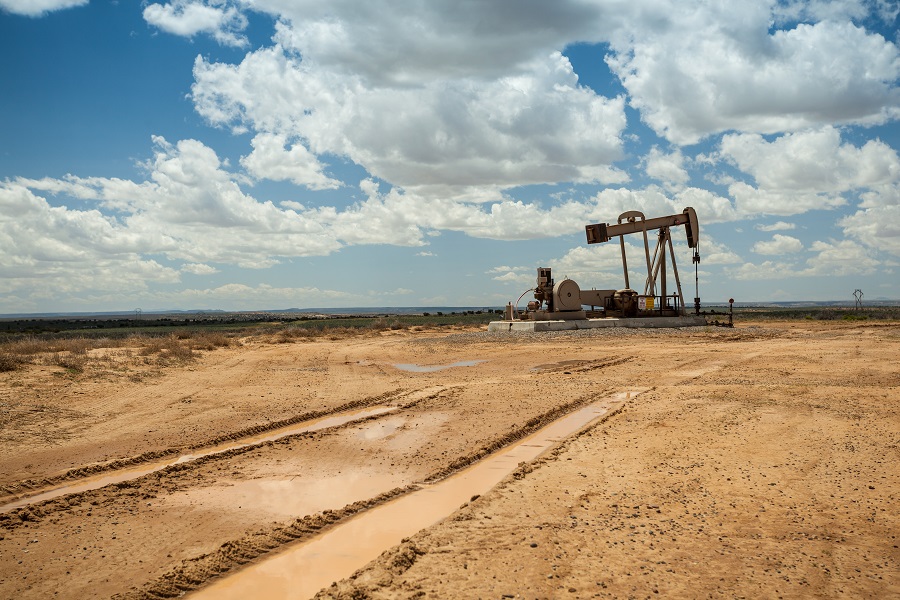
The Trump administration’s Bureau of Land Management sold drilling rights to 33,530 acres of federal land for almost $4.01 billion across New Mexico and Texas in a record-shattering afternoon auction. It underscored the growing appetite of oil firms for access to some of the nation’s most abundant energy reserves, even as environmental concerns and long-term climate commitments loom.
BLM held the quarterly lease sale on Wednesday, offering 74 parcels — almost all of them snapped up — primarily in New Mexico’s portion of the Permian Basin. The Basin is the engine of American oil production, powering the U.S. to its status as a top global producer. Cumulative bonus bids and first-year rental payments reached approximately $4,007,944,870, according to the Department of the Interior. The federal government and the states will share the revenue, providing a bonanza for New Mexico’s coffers in particular.
The sheer magnitude of the windfall dwarfs recent history. Industry observers described it as one of the largest single-day BLM oil and gas lease sales in years, dwarfing the prior high-water mark of around $972 million set in 2018.
Devon Energy and others poured in aggressive bids
Devon Energy alone accounted for more than half the total, according to preliminary reports. The enthusiasm mirrors confidence in the Permian’s output potential amid advances in technology on hydraulic fracturing and horizontal drilling that have shaped the region’s transformation.
Interior Secretary Doug Burgum said the results have validated the administration’s “American Energy Dominance Agenda.” Burgum, in a statement, said, “America is sitting on some of the richest energy resources in the world, and President Donald J. Trump is committed to putting those resources to work for the American people.”
At the core of the momentum is a policy shift embedded in the Working Families Tax Cuts Act. The legislation reduced the federal royalty rate for new onshore oil and gas production on public lands to 12.5 percent, representing a 4.17 percent reduction from the Biden-era Inflation Reduction Act benchmark. Trump administration officials contend the cut lowers barriers for producers, encourages investment, and ultimately generates more activity — and revenue — over time.
Proceeds from the sale under the framework of Executive Order 14154, “Unleashing American Energy.” The order directs federal agencies to hasten development while maintaining compliance with the National Environmental Policy Act. All leases carry a standard 10-year term. The lease can be extended with production.
A different calculus
But critics see a different calculus. Environmental advocates have argued that scaling up fossil fuel leasing on public lands exacerbates the climate crisis by locking in fossil fuel production for decades, even as the world grapples with warming targets.
Advocates question whether the lower royalty rate represents a giveaway to the industry at the expense of taxpayers and future generations, potentially shortchanging taxpayers. Previous analyses of federal leasing have sometimes underscored discrepancies between immediate cash proceeds and the enduring asset value of extracted resources and externalities.
Officials counter that local production on public lands bolsters energy independence, supports jobs in transportation and manufacturing, shields prices for families and businesses, and generates revenue to fund conservation projects or other priorities. Improved output also bolsters national security by reducing reliance on foreign supplies.
The Permian Basin’s federal parcels sit on top of a tapestry of private, state, and tribal lands that have already seen tremendous growth. Only time will tell if this record sale will yield continued drilling, new infrastructure, and measurable economic gains—or succumb to delays from litigation, permitting bottlenecks, or market volatility. BLM officials stressed that leasing is only the first step. They say actual development requires additional approvals and must comply with environmental reviews.
The $4 billion bonanza stands as a strong argument in the nation’s ongoing debate over energy policy, at least, for now. The true costs and benefits to taxpayers, local communities, and the climate will play out acre by acre across the desert landscapes of the American Southwest as development moves forward.

