

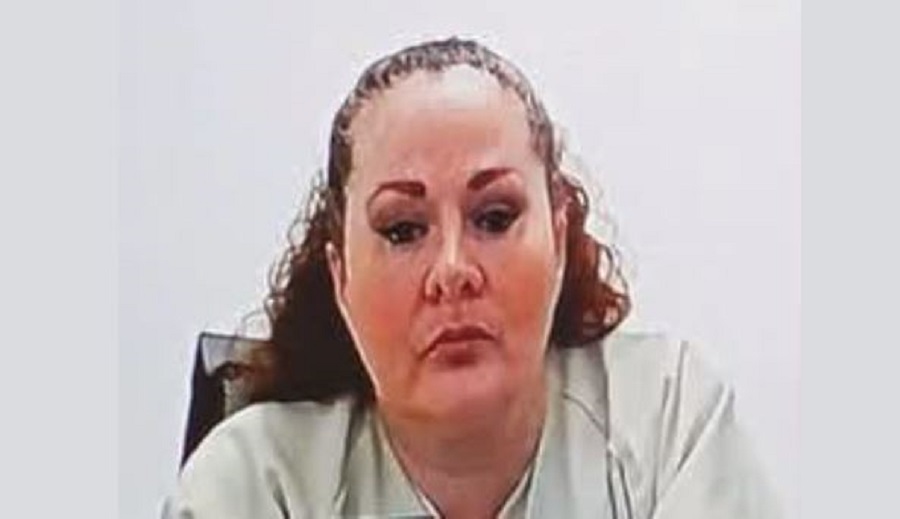
Tennessee’s attempt to execute Christa Gail Pike descended into a medical and procedural crisis Wednesday night after the death-row inmate remained alive following two rounds of lethal-injection drugs.
Pike, 50, was administered two doses of pentobarbital at Riverbend Maximum Security Institution in Nashville. But she remained alive hours after the procedure began, according to her attorneys and multiple media witnesses.
She was eventually taken by ambulance to a hospital for treatment. Her lawyers said they had not been told of her condition.
The Tennessee Department of Correction said Pike was transported to a medical facility to receive medical care, but maintained that officials had followed the state’s established execution protocol.
Following the failed execution, Gov. Bill Lee announced that no further executions will take place in Tennessee for the remainder of 2026. He said an independent third party review will look into the incident.
The decision came after a day of legal turmoil that had already placed Pike’s execution in doubt.
Pike survived two doses
Pike’s execution began at about 7:27 p.m. CDT. The curtain to the execution chamber was opened for media witnesses.
The death-row inmate was strapped to a gurney. According to accounts from witnesses, she remained conscious during parts of the procedure. At one point she raised her head and asked prison officials whether her arm was supposed to feel the way it did.
The second dose of pentobarbital was administered at about 8:26 p.m., according to witnesses. But Pike did not die.
Witnesses heard Pike still snoring behind a curtain that blocked their view of the execution chamber.
At 8:53 p.m., the microphone was cut off and the media witnesses were ordered to leave. They were unable to see what was happening inside the chamber during crucial portions of the procedure.
“We have not been informed as to her condition,” Pike’s attorneys said after she was taken to the hospital.
An execution already delayed by the courts
Pike’s execution had originally been scheduled for 10 a.m. Wednesday. But about an hour before the scheduled execution, the 6th U.S. Circuit Court of Appeals issued a stay while it considered whether evidence concerning Pike’s childhood sexual abuse and other circumstances had been adequately considered when she was sentenced to death.
The state appealed the stay. And the U.S. Supreme Court later overturned the stay, clearing the way for Tennessee to proceed with the execution.
Pike’s lawyers subsequently filed emergency motions seeking to stop the execution after she remained alive following the injections.
Second failed execution this year
The Pike episode is the second failed Tennessee execution in 2026. In May, officials abandoned the execution of Tony Von Carruthers after medical personnel were unable to establish the required intravenous access. Gov. Lee subsequently granted Carruthers a one-year reprieve.
The state had already revised its lethal-injection protocol following an earlier independent review ordered by Lee. The revised protocol adopted single-drug pentobarbital for executions.
With that as the backdrop, the Pike failure will now face scrutiny beyond the question of what happened inside the execution chamber.
Meanwhile, Pike remains alive and under medical care. Her immediate medical condition has not been publicly disclosed.