

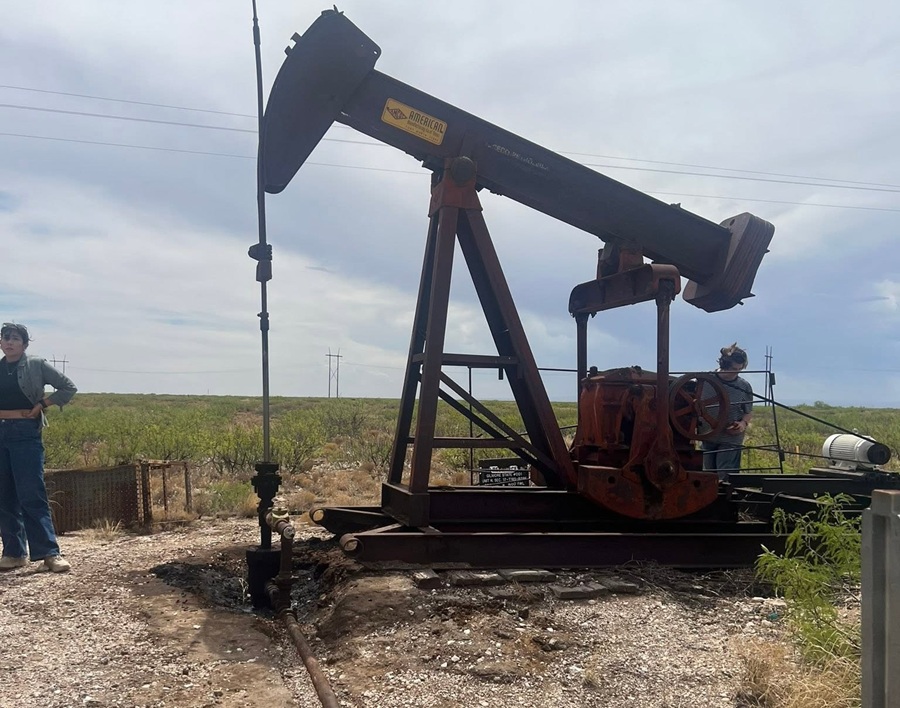
Conservation groups take a stand against a federal land management plan that could pave the way for more than 12,000 new oil and gas wells in southeastern New Mexico. They argue the proposal ignores the ongoing impacts of drilling, pollution, and the threats they pose to water supplies and public health.
Several conservation groups, including the Western Environmental Law Center, Center for Biological Diversity, and WildEarth Guardians, filed a formal protest against the BLM’s proposed Carlsbad Resource Management Plan. The plan would keep nearly 97% of federal mineral estate open for leasing, potentially allowing 12,096 new oil and gas wells across more than 2 million acres in southeastern New Mexico over the next two decades.
The groups argue the plan fails to address cumulative impacts on groundwater, water availability, public health, air quality, and climate, citing concerns about contamination, toxic waste, emissions, and weakened protections near homes. They are demanding the BLM withdraw the proposal, prepare a supplemental environmental review, and expand public and Tribal consultation before finalizing decisions.
On Tuesday, several organizations, including the Western Environmental Law Center, the Center for Biological Diversity, Citizens Caring for the Future, Earthworks, Sierra Club Rio Grande Chapter, and WildEarth Guardians, filed a formal protest against the Bureau of Land Management’s (BLM) proposed Carlsbad Resource Management Plan.
The groups urged the agency to withdraw the proposal, update its environmental review, and reopen public comments, including consultation with Tribal communities.
The proposed plan would keep nearly 97% of the federal mineral estate available for oil and gas leasing, potentially allowing for the drilling of 12,096 new federal wells over the next two decades. This extensive planning area covers over 2 million acres of federal surface land and 2.76 million acres of federal mineral estate, including desert ecosystems, groundwater and cave systems, wildlife habitats, and public lands adjacent to Carlsbad Caverns National Park.
The BLM began revising its 1988 management plan back in 2010, and last sought public input on a draft environmental impact statement in 2018. However, conservation groups believe the agency has not kept pace with the changes in oil and gas development or effectively considered new evidence about its environmental and health impacts.
Concerns raised included potential groundwater contamination, increased water demand, toxic oilfield waste, air pollution, earthquakes related to wastewater injection, and rising greenhouse gas emissions. The groups also argue that the proposed plan weakens protections for local communities and sensitive natural areas, claiming that some firm restrictions have been replaced with more ambiguous language.
For instance, a standard that prohibited surface disturbances within a quarter-mile of occupied buildings has been altered to allow disturbances “up to” that distance, which could lead to drilling activities being closer to homes.
Rebecca Sobel, the climate and health program director at WildEarth Guardians, warned that continued oil and gas expansion in the Permian Basin—a major oil-producing region—could worsen environmental and public health concerns. She emphasized that the plan could lock in billions of tons of greenhouse gas emissions and heighten the risks of spills, water shortages, and air pollution.
A recent report from WildEarth Guardians, titled “Drilling Past Disaster,” estimates that the projected oil and gas activity could require 375 billion gallons of water and generate 1.26 trillion gallons of contaminated waste over the coming decades. The organization said these figures are based on BLM projections.
The groups highlighted existing pollution issues in New Mexico, noting that oil and gas operators reported over 17,000 spills statewide in the first half of 2026. Furthermore, air quality monitors in southeastern New Mexico recorded violations of federal ozone health standards across several days.
The conservation organizations argue that the BLM’s environmental review fails to adequately assess the cumulative impacts of current and future drilling on groundwater, water availability, public health, air quality, and the climate. Taylor McKinnon, the Southwest Director at the Center for Biological Diversity, pointed the plan leaves only a small portion of the federal mineral estate off-limits to the fossil fuel industry.
As of now, the BLM has not commented on the allegations made by the groups. The conservationists are calling for the agency to prepare a supplemental environmental impact statement, consider alternatives that would significantly limit new oil and gas leasing, and enhance opportunities for public and Tribal input before finalizing any decisions.
The protest is one of many challenges facing the proposed management plan as southeastern New Mexico grapples with the complex balance between oil and gas development, water resource management, pollution prevention, and the preservation of public lands.