

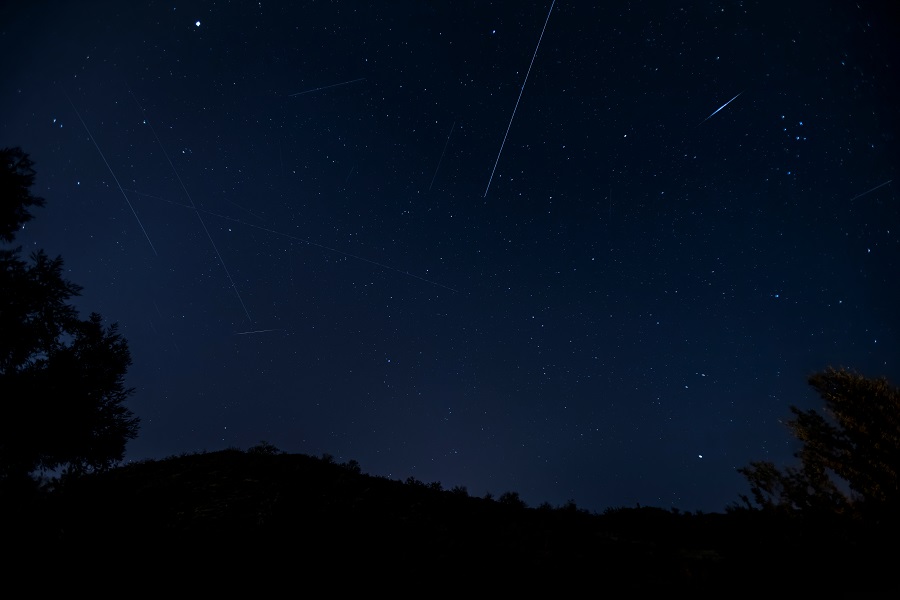
New Mexicans are getting ready to look up — way up — for a celestial spectacle that includes shooting stars, a glowing full moon, and the state’s famously dark, star-filled skies as July comes to an end.
The Southern Delta Aquarids meteor shower, popularly known as shooting stars, peaks around July 28-31, offering the chance to see meteors streak across the night sky as the Full Buck Moon rises on July 29. Although the bright moonlight might dim the display, New Mexico’s exceptional dark skies provide residents and visitors with a great view of this summer celestial spectacle.
The Delta Aquarids, which originate from debris left by comets, typically produce 10 to 20 meteors per hour at their peak, provided conditions are ideal. The radiant, or the point in the sky from which the meteors appear to come, is located near the constellation Aquarius. Skywatchers at southern New Mexico latitudes usually have a better view than those farther north, with some meteors leaving faint, glowing trails behind them.
This year, the nearly full Buck Moon — named for the season when deer grow new antlers — will cast a silvery light across the sky, making it harder to see fainter meteor streaks. Dedicated observers are encouraged to focus on the hours after midnight or just before dawn, when the brightest meteors may still be visible despite the moonlight. Additionally, a smaller meteor shower, the Alpha Capricornids, may produce a few extra flashes.
The full moon will rise on July 29, illuminating the high desert landscapes shortly after sunset. This dramatic light is perfect for photographers seeking that quintessential New Mexico moonrise over mesas or mountains.
Late July is the perfect time to witness the summer splendor of the Milky Way, particularly beyond the shower and moon. In areas with dark skies, the galactic core rises high overhead, creating a hazy river of billions of stars that can be seen with the naked eye, far away from city lights. New Mexico is home to several International Dark Sky Parks and sanctuaries, including Chaco Culture National Historical Park and the remote Cosmic Campground, where light pollution is minimal.
In summer, amateur astronomers from the Albuquerque Astronomical Society and park rangers at locations like Valles Caldera and Capulin Volcano often host star parties, providing telescopes and guidance for families and beginners.
Jon Spargo, an astronomy educator with the New Mexico Tech Astronomy Club, highlights the Delta Aquarids in his monthly sky guides, emphasizing their significance in the state’s vibrant summer meteor season. He encourages the public to observe the meteor shower from dark locations, such as the Etscorn Observatory.
The Perseid meteor shower, typically the highlight of summer, will peak in early August, especially with dark skies this year. However, the Delta Aquarids provide a great opportunity for stargazing in the meantime. You don’t need any special equipment—just bring a blanket, some bug spray, find a dark spot, and be patient.
For those pursuing the perfect shot or a moment of awe, the message remains clear: Look up. The New Mexico sky is putting on a display of shooting stars, a Full Buck Moon, and more.

