Home Blog Page 4

CNM is Future-Proofing Its Campus, One Geothermal Loop At A Time

0

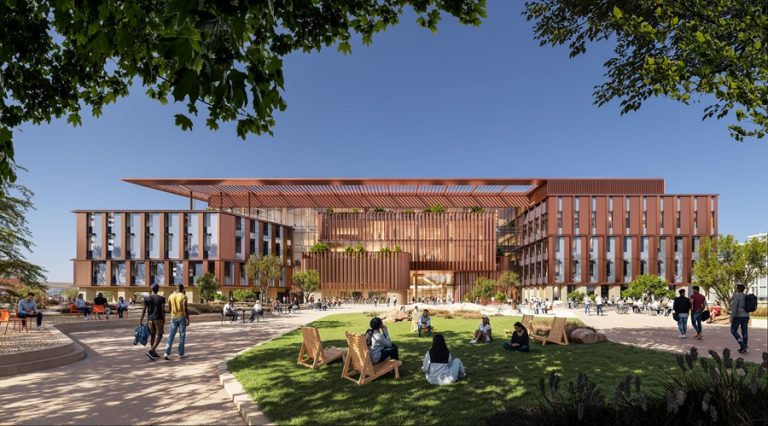
Central New Mexico Community College is tapping the energy beneath the earth to cut energy use and boost sustainability on its campuses — one geothermal loop at a time.

New Mexico’s largest community college has installed geothermal heat pump systems in three buildings across its Rio Rancho, Westside, and Main Campus in Albuquerque. The systems provide steady all-year-round comfort, keeping temperatures at 72 degrees even during large events at Smith Brasher Hall.

CNM uses the buildings as “living laboratories,” with instructional signage explaining geothermal technology, daylighting, water reuse, and recycling to students, faculty, and visitors. The college requires all facilities, new or renovated, to meet at least the standards of Leadership in Energy and Environmental Design (LEED) Silver Certification.

Rio Rancho was built in 2011. It earned LEED Gold and is one of New Mexico’s largest higher education buildings to achieve the distinction. CNM’s Westside Campus, completed in 2013, achieved LEED Silver. CNM redesigned Smith Brasher Hall in 2017 into an all‑electric LEED Gold facility.

Adopting geothermal technology has challenges. CNM grappled with the absence of local contractors to do the work and continues to train staff to manage building automation and HVAC controls. The college solved the gap by offering courses in geothermal system operation and maintenance.

Despite early hurdles, CNM officials say the investment will pay off. “We build our buildings to last 50 years,” said Marvin Martinez, Physical Plant Executive Director. “These geothermal heat pump systems will operate throughout the buildings’ lifetimes, which will make a huge difference for the college.”

Mountains That Claim Planes: New Mexico’s Deadly Aviation Legacy, From 1955’s Sandia Horror to This Year’s Fatal MedEvac Crash

0

The Sandia Mountains rise like a jagged wall east of Albuquerque, postcard‑perfect in daylight but perilous in shadow. Pilots have long learned that beauty can become something else entirely for aviation: clouds, darkness, and sudden winds transform the range into a barrier that has claimed aircraft and lives.

Trans World Airlines Flight 260 on February 19, 1955, climbed out of Albuquerque’s airport bound for Santa Fe—a short hop expected to take nearly half an hour. Aboard the Martin 4-0-4 airliner were 13 passengers and three crew members. Only minutes after liftoff, in wintry conditions with low clouds, the plane slammed into a granite cliff in the Sandias. All 16 onboard perished. It remains to this day the deadliest commercial aviation disaster in New Mexico history.

Investigators later pointed to navigational error and possible instrument issues compounded by the terrain and weather. The incident, recalled by Albuquerque Historical Society Board Member Terry Owen, was a grim early chapter in a pattern that has echoed across the state’s rugged landscape for decades.

A Persistent Risk in Rugged Country

New Mexico’s vast skies, high-elevation airports, sudden weather shifts and mountainous regions — including the Sandia Mountains, Capitans and more — have created challenges for aviators over the years. Commercial airline travel remains statistically one of the safest ways to fly. But general aviation, medical transport, and flights in remote or difficult territory face significantly higher risks. Military training flights during World War II added hundreds of incidents to the historical tally.

In his research paper, Geoarchaeology of WWII Aircraft in New Mexico, USA, Adrian Hunt wrote: Several crashes occurred in mountainous terrain throughout New Mexico.

The state has witnessed dozens of documented crashes over the years; many of these cases involved small aircraft. Causes frequently cited in NTSB investigations nationwide and mirrored in New Mexico include pilot spatial disorientation, controlled flight into terrain (CFIT), weather, mechanical issues, and decision-making under constraints. Night operations and mountainous terrain have complicated these dangers.

A Modern Echo: The 2026 Capitan Mountains Tragedy

Seventy-one years after the TWA crash, another aircraft suffered a similar fate in the darkness.

A Beechcraft King Air C90 operating as a medical transport flight, in the predawn hours of May 14, 2026, lifted off Roswell Air Center bound for Sierra Blanca Regional Airport near Ruidoso. Aboard were two pilots, Keelan Clark and Ali Kawsara, and two flight nurses, Sarah Clark and Jamie Novick. No patients were listed on the manifest.

The plane crashed into the Capitan Mountains, igniting the Seven Cabins Fire in the Lincoln National Forest. All four crew members perished. Preliminary NTSB findings highlighted a confluence of factors: military GPS jamming that caused loss of GPS signals early in the flight. The agency’s preliminary report also mentioned out-of-service weather reporting and instrument approach equipment at the destination; night flight shifting to a visual approach in mountainous terrain; and an impact at approximately 9,950 feet.

“Those they lost more than just coworkers… they were family, caregivers, aviators and friends who dedicated their lives to serving others,” Trans Aero Medevac and Generation Jets said in a joint statement.

The fatal crash underscored ongoing challenges for air ambulance operations, which often fly under tight schedules and in varied conditions to support rural hospitals.

Patterns, Progress and Persistent Challenges

Four other notable incidents have dotted New Mexico’s aviation history. These include TWA Flight 260 in 1955; the Magdalena HC-130P Wing Failure in 1986; the 2007 Southwest Med Evac Crash in Ruidoso; and the F-35 Lightning II Crash near ABQ Sunport in 2024. Albuquerque has ranked among areas with higher volumes of historical crashes in some national datasets. Exact numbers, however, fluctuate with reporting and flight activity.

Aviation safety has advanced dramatically since 1955, with better terrain awareness systems, improved weather data, mandatory training, and technologies such as improved ground proximity warning systems. But New Mexico’s geography — remote airstrips, rapid shifts of mountain weather, and overlapping military airspace — could pose risks for smaller operations.

Victims’ families, first responders, and communities continue to feel the impact long after the debris is cleared. Memorial hikes, a steep climb into the Sandia Mountains, lead to the TWA site, where wreckage still exists as a somber reminder.

Federal investigators have yet to finalize reports on the latest tragedy; a question lingers. Pilots, regulators, and those who rely on New Mexico’s skies may have asked: How many warnings will the state’s mountains need to give before the aviation lessons fully take hold?

Editor: This feature depends on NTSB records, historical accounts, and official statements. Aviation incidents are investigated thoroughly to improve safety for all who fly.

Medical Plane Crashed After Military Signals Jammed GPS, Investigators Say

Federal investigators say a medical transport plane that crashed into New Mexico’s Capitan Mountains last month experienced GPS interference linked to military signal jamming. The National Transportation Safety Board has not yet determined, however, whether it caused the accident.

The twin-engine aircraft, based at Roswell Air Center, was flying to Albuquerque shortly after midnight on May 14 when it crashed near Ruidoso, according to a preliminary NTSB report. The plane hit terrain at about 9,950 feet after descending to roughly 9,400 feet during its approach.

All four people onboard were killed. The report listed the medical plane as destroyed. Authorities identified the victims as Generation Jets pilots Keelan Clark and Ali Kawsara and Trans Aero MedEvac flight nurses Sarah Clark and Jamie Novick. They were transporting a patient to Albuquerque.

The aircraft, according to the preliminary report, encountered GPS interference while military signal jamming operations were underway in the area. The Federal Aviation Administration (FAA) had issued notices to pilots warning of possible GPS disruptions associated with scheduled military activity.

Air traffic controllers, during the flight, asked the military to stop the jamming, the report said. After the crew told controllers they had the airport in sight and intended to land visually, controllers authorized the military to resume the operation.

The NTSB said the ill-fated medical plane had to approach the airport in mountainous terrain and darkness when it crashed. Its impact also sparked a wildfire in the Capitan Mountains that burned for weeks.

The agency’s preliminary report details the sequence of events but does not determine a cause. Investigators are continuing to examine the details surrounding the crash. The NTSB will address, if any, the role that GPS interference played in its final report.

Triple-Digit Heat Grips New Mexico: Heat Advisories Issued as Temperatures Soar Above 100° and Storms Loom Later This Week

Hot and dry conditions will continue across New Mexico through Monday, with heat advisories remaining in effect for Chaves and Eddy counties. Most areas are to remain dry overnight, with light breezes across northern New Mexico.

On Sunday, hot and dry weather will prevail statewide. Temperatures in Albuquerque will reach the upper 90s, while parts of eastern and southeastern New Mexico will see highs exceeding 100 degrees.

Heat advisories are in effect from noon to 8 p.m. Sunday for Chaves and Eddy counties.

The extreme heat could increase the risk of heat-related illnesses. Residents should drink plenty of fluids, stay in air‑conditioned rooms, avoid prolonged exposure to the sun, and check on relatives and neighbors who may be vulnerable to the heat.

Hot and mainly dry conditions will continue Monday, with temperatures again reaching the upper 90s in Albuquerque and climbing above 100 degrees in southeastern New Mexico.

There is, however, a slight possibility of afternoon showers and thunderstorms beginning Tuesday or Wednesday. Those chances will continue into late next week for parts of central and eastern New Mexico.

Mandatory Evacuation: Smoke Pushes Toward Mountainair, Mayor Warns of Dangerous Air Quality

0

Blazing heat continues to prevail in Deer Canyon, Southern Mountain Air, prompting a mandatory evacuation order for residents in northern Deer Canyon and Jumano Trail.

Officials urged residents on Lunaro Trail and northern Deer Canyon to evacuate immediately. Meanwhile, all other residents in Deer Canyon remain on “READY” status and should prepare to evacuate if conditions change.

Mountainair Mayor, Peter Nieto said current wind conditions are pushing smoke from Deer Canyon fire toward Mountainair and nearby areas. This instance may reduce air quality and increase smoke across town.

Residents who have asthma, COPD, allergies, and other respiratory conditions, as well as those who use oxygen, young children, and elderly, should stay indoors, keep windows and doors closed and limit outdoor activity.

Where can evacuees go?

The Mountainair Multi-purpose Building 106 N Sunset is open to evacuees. According to Torrance County Sheriff’s Office a livestock shelter is available at Mountainair Rodeo Grounds.

Mayor Nieto said multiple agencies are at the scene working to contain the fire and protect nearby properties. In a Facebook post, Nieto said residents have to stay alert, follow instructions from authorities, and monitor verified updates. “Please stay alert, follow directions from emergency personnel, and monitor official updates. Keep our firefighters, first responders, and affected residents in your thoughts and prayers as they work to protect lives and property,” said Nieto.

What Happened?

At 4 P.M. of Saturday, June 20, a fire was discovered in Deer Canyon, south of Mountainair. The fire is exhibiting extreme behavior, is currently active, and is crowning in piñon-juniper and grass fuels. It has prompted aerial firefighting resources, including FLRD76, TKR914, and additional aircraft and helicopter crews, to provide support from the air.

The total area affected by the fire is around 350 acres; the cause remains unknown. The fire has zero containment.

Update As Of June 23, 9:20 P.M.

Firefighters have reached 15 percent containment on the Deer Canyon Fire near Mountainair. But evacuation orders remain in place as crews continue battling the blaze that has scorched nearly 120 acres.

Residents along Jumano Trail in Deer Canyon remain under a “Set” status, meaning they should be ready to leave at a moment’s notice. The rest of the area remains under a “Ready” status.

The fire was discovered on Saturday, June 20. Fire officials believe lightning sparked the blaze.

Authorities said evacuation notices remain in effect despite progress in containing the fire.

Last and Final Update As Of June 24, 4:47 P.M.

The crews made an improvement with fire suppression activities, raising its containment to 50%. The fire activity has remained low and resources continue to secure the perimeter and cleaned up.

Meanwhile, interior pockets are sending up some smoke but doesn’t pose a threat.

Since the situation is improving, evacuation has been lifted and the structure threat has passed.

Sundays in Santa Fe: Where High-Desert Light Meets Handmade Magic, Green Chile Brunch, and Timeless Art

0

The Railyard, under the vast New Mexico sky, where the Sangre de Cristo Mountains rise like a painted canvas, beats with a different rhythm on Sundays. Neither the hurried weekday pulse of the bustling commerce nor the crowds of visitors at the historic Plaza. But something slower, more intentional: The shuffle of feet on pavement, the muted conversations between makers and browsers, the aroma of piñon smoke and roasting green chile lingering from nearby stalls.

At its core is the Railyard Artisan Market, held every Sunday from 10 a.m. to 3 p.m. inside the Santa Fe Farmers’ Market Pavilion at 1607 Paseo de Peralta. Here, over 60 local artisans showcase their work directly — jewelry fashioned from silver and turquoise, hand-thrown pottery with earthy glazes, handwoven textiles, and glasswork catching the desert light. Their artworks are inspired by the surrounding landscape just beyond the railyard tracks.

The place is one of New Mexico’s oldest and best-loved art markets. It is where the transaction feels less like shopping. But it is more like stewardship of the creative ecosystem that has shaped Santa Fe for generations.

The market embodies Santa Fe’s branding, “The City Different” — a fusion of Native American, Hispanic, and Anglo influences framed by the vast high desert. Visitors hang around at their tables, asking artists about their process: how they source their clay, what inspiration they derive for their crafts, or simply the quiet mornings when the light hits just right for a new series. Free parking nearby and the indoor pavilion make it comfortable year-round, even during summer monsoons or winter chill.

From Market to Masterpieces

Step out of the pavilion, and the Railyard itself unfurls as a modernized industrial-chic district. Once a literal railyard, it is now a contemporary arts and entertainment hub. Galleries line the streets, showcasing work that moves beyond the traditional Southwest aesthetic into abstraction, integration, and global exchange.

The district has become a counterpoint to the more historic Canyon Road, just a short walk or quick drive away. It is where “more than a hundred galleries, boutiques, and restaurants in one half mile” are lined with trees. Many Canyon Road venues open their doors to browsers curious about everything from Native American pottery to bold contemporary canvases.

The art scene here is not exclusive or intimidating. Gallery owners and artists chat casually, sharing the interplay of land and light that has inspired artists such as Georgia O’Keeffe for generations. A visitor might move from a market booth featuring ceramics into a gallery exhibiting massive-scale pieces that recast familiar themes with greater magnitude.

A Table Awaits

A Sunday in Santa Fe is not complete without yielding to its celebrated food scene. Near the Railyard, choices abound for New Mexican-infused brunch or lunch. Visitors have a wide array of options, from stalls serving green chile cheeseburgers at Second Street Brewery to innovative Southwestern plates. Or they may pick classics like huevos rancheros and blue corn enchiladas.

The market itself often tempts with nearby bites from vendors — spicy and delicious. Move toward spots known for Sunday brunch, where patio seating offers lingering under the sun, for a more leisurely meal.

A Suggested Sunday Itinerary: The Perfect Slow Day

Below are the itineraries in Santa Fe on Sundays:

  • 10 a.m.: Arrive at the Railyard Artisan Market. Begin early for the best selection and parking space. Wander the pavilion, chat with makers, and sample a unique piece — a small pottery bowl or silver earrings.
  • Noon: Stroll the Railyard District. Browse local shops, public art, and any pop-up events. On a patio, grab coffee or a craft beer.
  • Early Afternoon: Canyon Road or Downtown Plaza. Drive or stroll toward Canyon Road for gallery immersion. Even passersby find the adobe light enchanting. Alternatively, go back toward the historic Plaza, watching people and more shops.
  • Lunch/Brunch: Dine at a local restaurant for New Mexican flavors — indulge in chile-smothered dishes that awaken the palate.
  • Late Afternoon: Optional add-on is a casual visit to a museum, such as the Georgia O’Keeffe or one on Museum Hill. If not, find a bench in the Railyard Park to watch the light shift across the mountains.

The day ends not with exhaustion. It ends with restoration: hands full of treasures, mind buzzing with conversations, and a happy tummy. That is why Santa Fe has long been a sanctuary for artists, dreamers, and those seeking something authentic in a fast world.

The Railyard’s Sunday ritual of market, art, food, and exploration feels like a gentle revolt in an era of chain stores and digital noise. It is leisure as it ought to be: connected, creative, and deeply rooted in place. The City Different, at least for a day, invites you to move at its unhurried pace.

APS Nurse Earns Distinguished Service Award for Advocacy and Commitment to Student Health

0

Albuquerque Public Schools honored a nurse who served nearly 40 years for her decades of supporting student health and wellness.

The New Mexico School Nurses Association presented Deborah Hill with the Marlene McDowell Distinguished Service Award during its annual conference in Red River in June. Hill is APS’s resource nurse for chronic health.

Hill said the recognition she received humbled her. “Receiving this award is both humbling and deeply meaningful as I near the close of nearly 40 years in nursing, public health and spiritual care,” Hill said. “This recognition reflects not just my work, but the work of my colleagues and the impact of students and families who have shaped and inspired me throughout my career.”

The association cited Hill’s evidence-based guidance to APS and her contribution to the New Mexico Department of Health.

Cheri Brubaker, executive director of Nursing Services at APS, cited Hill as having had an “incredibly positive impact” on students and fellow nurses. She credited Hill with updating the APS Nursing Manual and contributing to the revisions of the state’s School Health Manual and diabetes order set. “She is perpetually striving to find ways to serve better the students and families in the state,” Brubaker said. “She has served and continues to serve with distinction.”

The Marlene McDowell Distinguished Service Award recognizes registered school nurses who advocate for children’s health care access and promote student well-being.

Hill previously worked at Bandelier Elementary. Collaboration and service have defined her career, she said. “I have valued supporting fellow nurses and building connections across New Mexico to strengthen student care,” she said. “Supporting the health and well-being of children, families and vulnerable communities and collaborating with others has truly been the heart of my work.”

Big Win for APS: Six Students Earn National Merit Honors, Highland Grad Secures Scholarship

0

A graduate of Highland High School has earned a $1,000 scholarship from the New Mexico School Boards Association in recognition of his academic achievement, leadership and service to the community.

Eighteen-year-old Emanuel Salazar received the award after the Albuquerque Public Schools Board of Education nominated him. The scholarship recognizes students who demonstrate excellence in academics, leadership and community involvement.

Salazar maintained a 3.2 GPA while completing five Advanced Placement courses at Highland High School. He also emerged as a student leader, serving as co-president of the school’s Peer Helpers Club and founding Highland’s chapter of the NM Dream Team.

In those roles, the 18-year-old graduate advocated for immigrant rights and organized student demonstrations. He also volunteered with MEChA and participated in local food distribution efforts.

Dedicated Student

His artistic work explores themes of identity and the immigrant experience. Local art galleries and district publications have featured Salazar’s pieces as he had collaborated with fellow students on murals at Highland High School.

Salazar plans to attend the University of New Mexico this fall. He intends to study education and eventually return to his community as an art teacher.

School officials cited Salazar for balancing rigorous academics with advocacy and community engagement, describing him as a dedicated student who is consistent in supporting others.

More Scholarship Opportunities

Meanwhile, six Albuquerque Public Schools students have received National Merit Scholarships sponsored by colleges and universities, according to APS.

More than 2,500 students nationwide received the awards, which offered between $500 and $2,000 annually for up to four years of undergraduate study at participating institutions.

The APS recipients are:

• Dylan James Dencklau, an Eldorado High School graduate, who received a National Merit University of New Mexico Scholarship and plans to study aerospace engineering.

• Ally M. Jones of La Cueva High School, who earned a National Merit University of Minnesota Scholarship and plans to study environmental science.

• Nathan T. Lupinetti of La Cueva High School, who received a National Merit University of Southern California Scholarship and plans to study music performance.

• Rubaina Reza of La Cueva High School earned a National Merit University of Texas at Dallas Scholarship. Reza plans to study international relations.

• Philip Satterthwait of Eldorado High School received a National Merit Texas A&M University Scholarship. He is considering pursuing mechanical engineering.

• Giles C. Yarrington of La Cueva High School, who earned a National Merit University of Central Florida Scholarship and plans to study computer engineering.

According to APS, 138 colleges and universities are sponsoring Merit Scholarship awards this year, including 69 public and 69 private institutions in 42 states and the District of Columbia. By the end of the 2026 competition, there will be about 6,700 students nationwide who are going to receive National Merit Scholarships worth about $24 million.

WNMU Nursing Students Join Multi-University Simulation to Tackle Complex Clinical Ethics

0

Western New Mexico University nursing students recently joined peers from the Burrell College of Osteopathic Medicine and Florida Gulf Coast University in a virtual simulation designed to prepare next generation healthcare professionals to address ethical and medicolegal challenges in patient care.

The two-day Interprofessional Education (IPE) session, held in April, brought together medical, nursing and respiratory therapy students in a simultaneous simulation, enabling them to address complex ethical challenges while working collaboratively in high-pressure scenarios.

According to WNMU, the initiative aimed to break down professional silos and strengthen collaboration among students from different disciplines. Virtual breakout rooms created interdisciplinary teams modeled after intensive care and emergency department settings.

“This innovative program gave students firsthand experience in high-level interprofessional collaboration,” said Lorenzo Saenz, WNMU lab simulation coordinator. “It proved how essential teamwork is for managing complex ethical scenarios in healthcare today.”

The experience began with a virtual orientation in which students established rapport, clarified professional roles and developed communication strategies needed for high-stakes decision-making.

Teams then entered a live simulation featuring three patient cases, challenging both their clinical decision-making and ethical reasoning.

Inside the Simulation Scenarios

In the first scenario, students managed a septic pregnant patient and balanced critical decisions affecting both mother and child survival. The second case involved a post-cardiac arrest patient with a poor neurological prognosis, requiring teams to evaluate care plan with simulated family members.

The final scenario focused on crisis standards of care and the managing ICU shortages when emergencies strike. Students applied principles of justice and institutional policy in making decisions.

Throughout the session, WNMU nursing students stressed holistic care and patient advocacy. Teams used structured case studies, applying the four pillars of healthcare ethics — autonomy, beneficence, nonmaleficence and justice.

Medical students focused on diagnosis and treatment pathways, while respiratory therapy students concentrated on maintaining physiological stability. Nursing students gave insights on family support, patient rights and the legal consequences of bedside decisions.

The exercise concluded with a debriefing session. It allowed participants to review clinical outcomes, team dynamics, and communication effectiveness. Organizers said the process stressed the importance of clear roles and illustrated how each discipline contributes to patient safety.

WNMU said the experience enabled constructive dialogue across diverse professional fields. The collaboration also emphasized the growing role of virtual simulation in healthcare education.

The university is assessing the program’s impact and its potential inclusion in the nursing curriculum. WNMU, by partnering with the Burrell College of Osteopathic Medicine and Florida Gulf Coast University, aims to ensure graduates are workplace-ready and able to collaborate in increasingly complex healthcare settings.

Wildfire Again. This Time It’s in the Sandia Mountains.

Fire crews responded Friday to the Osha Canyon Fire in the northern Sandia Mountain Wilderness, where the blaze had grown to an estimated half-acre with no containment reported.

Officials with the Cibola National Forest and National Grasslands reported the fire at 1:22 p.m. in the northern Sandia Mountain Wilderness, south of Placitas and west of Forest Service Road 165 on the Sandia Ranger District.

Authorities deployed aerial resources, including a Type 1 helicopter and a large air tanker, to help contain the fire. Ground crews planned to begin direct suppression efforts after they completed air operations.

The smoke may be visible around Placitas and Bernalillo. No one reported injuries or damage to the structure due to the fire. The cause of the blaze is yet to be known.

Firefighters are applying direct extinguishment strategies to combat the blaze, supported by aerial operations. “The health and safety of firefighters and the public are always the priority,” officials said. The members also urged the public to avoid the Osha Canyon Fire Area.

Apart from that, officials also warned that drones pose a serious risk to firefighting efforts and can cause operations to stop, reminding the public, “If you can’t fly, we can’t.”

U.S. Forest Service Engine 652, Prevention 4, and several aircraft are now working the fire, with more crews on the way. Officials report the blaze is not threatening communities or other values at risk at this time. It is burning through mixed conifer fuels and showing active fire behavior, with potential for growth under westerly winds.

Authorities advised residents to remain vigilant and monitor any updates in the area.